
The Cooling Challenge in Kensington’s Historic Homes
Older homes in Kensington face a unique cooling dilemma. Many houses built before 1950 lack ductwork entirely, featuring lathe-and-plaster walls that crumble when disturbed. The coastal microclimate means summer temperatures rarely exceed 85°F, but humidity levels often hover around 70%, creating that uncomfortable “sticky” feeling. You need cooling that works with your home’s character, not against it. Humidity Issues Indoors.
Before making any decisions, understand that San Diego County requires HERS testing for all new HVAC installations under California Title 24 energy standards. This means your system must meet specific efficiency requirements, regardless of which route you choose. The question becomes: how do you add modern comfort without destroying historic charm? California Title 24 Energy Standards.
Option 1: Ductless Mini-Splits – The Non-Invasive Solution
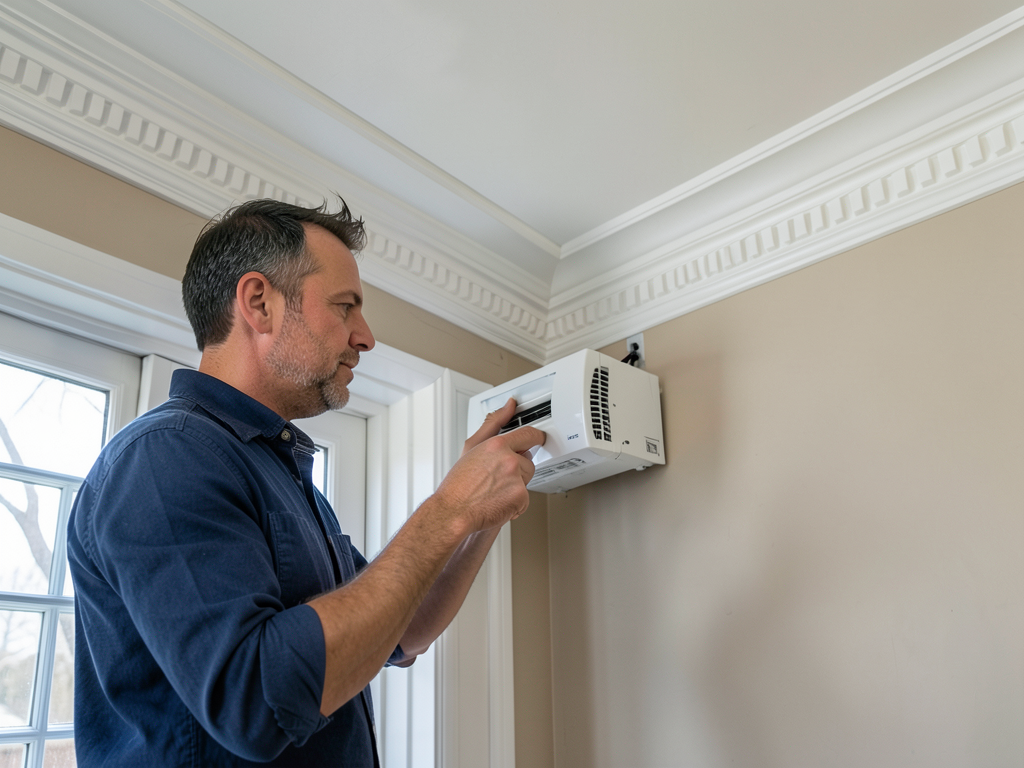
Ductless mini-splits use inverter technology to provide zoned cooling without any ductwork. These systems consist of an outdoor compressor connected to one or more indoor air handlers mounted on walls or ceilings. For Kensington’s craftsman bungalows and Spanish revival homes, this means no demolition of original plaster walls. Ductless Mini-Split Installation for Coastal La Jolla Homes.
The indoor units come in various styles. While standard wall-mounted units are most common, floor-mounted models work well in historic homes, sitting discreetly along baseboards like radiators. Ceiling cassette units hide entirely above the ceiling grid, with only a small grille visible.
Modern mini-splits achieve SEER2 ratings up to 28, exceeding California’s Title 24 requirements. They also provide excellent humidity control, removing up to 3 pints of moisture per hour during cooling cycles. This matters in Kensington where the marine layer creates persistent dampness.. Read more about The Best Silent Cooling Solutions for North Park Home Recording Studios and Art Spaces.
However, the wall-mounted units create a visual impact. Some homeowners find the sleek white boxes clash with vintage woodwork. The outdoor units also need proper placement – San Diego Municipal Code Section 59.0306 limits outdoor unit noise to 60 decibels at the property line. San Diego Historical Resources Board.
Option 2: Central Air & High-Velocity Systems
Traditional central air requires extensive ductwork, which poses problems in historic homes. Installing ducts means either tearing into walls or building out soffits that eat into room space. The San Diego Historical Resources Board (HRB) often requires preservation of original architectural features, making ductwork challenging to approve. How to Retrofit Central Air into Older North Park Homes.
High-velocity systems offer a middle ground. These use 2-inch flexible tubing instead of standard 6-inch ducts. The smaller size allows installation in existing wall cavities, floor joists, and ceiling spaces with minimal demolition. Unico and SpacePak are the main manufacturers offering these systems in Southern California.
High-velocity systems operate at 200-400 CFM per ton, compared to 400-450 CFM for conventional systems. This higher velocity creates the “aspiration effect” – the system pulls air through the room more effectively, eliminating hot spots. However, the smaller ducts create more noise – typically 50-55 decibels versus 40-45 for conventional systems.
Installation requires careful planning. The tubing must maintain proper slope for condensate drainage. Any sag creates standing water that breeds mold. A technician uses a digital manometer to verify pressure drops across the system, ensuring each room receives proper airflow.
Side-by-Side Comparison: Making the Right Choice
| Feature | Ductless Mini-Split | High-Velocity Central Air |
|---|---|---|
| Installation Time | 1-2 days per zone | 3-5 days for whole house |
| Aesthetic Impact | Visible wall units | Hidden ductwork |
| SEER2 Rating | Up to 28 | Up to 21 |
| San Diego Permit Complexity | Standard mechanical permit | HRB review likely |
| Preservation of Original Crown Molding | 100% preserved | May require modification |
Navigating Kensington’s Historic Preservation Requirements
The San Diego Historical Resources Board oversees properties in designated historic districts like Burlingame and portions of Kensington. Any exterior modifications require HRB approval. This includes the location of outdoor condenser units and any penetrations through exterior walls.
For ductless systems, the HRB typically approves wall-mounted units if they’re not visible from the street. Floor-mounted units in historic colors (bronze, antique white) often receive faster approval. The board examines whether the installation would damage original lathe-and-plaster walls.
High-velocity systems face stricter scrutiny. While the small ducts minimize wall damage, the HRB examines return air pathways carefully. Some approvals require return air grilles that match original vent covers. The board may also require that any new ceiling registers match existing patterns.
California Title 24 mandates specific insulation levels for new HVAC installations. In historic homes, this creates tension – you cannot add insulation to lathe-and-platster walls without destroying them. The workaround involves focusing on duct sealing and high-efficiency equipment to meet energy codes. Stop Salt Air from Destroying Your Ocean Beach AC Unit.
Cost Considerations Beyond Installation
Ductless systems typically cost $3,500-5,000 per zone installed. A whole-house solution might require 3-4 zones, totaling $12,000-20,000. Operating costs depend on usage – at SDG&E’s current rates around $0.45/kWh, a 12,000 BTU unit running 8 hours costs approximately $1.80 per day.
High-velocity systems run $15,000-25,000 for whole-house installation. While the upfront cost exceeds ductless, they often prove more economical for cooling entire homes simultaneously. The smaller ductwork also reduces energy losses – conventional ducts lose 25-30% of conditioned air through leaks, while high-velocity systems lose only 5-10%.
Both systems qualify for California’s energy efficiency rebates. The California Energy Commission offers up to $1,000 for systems meeting specific SEER2 thresholds. These rebates require post-installation HERS testing to verify performance.
Making Your Decision: Key Questions to Ask
Start by identifying your cooling priorities. Do you need whole-house cooling or just specific rooms? Are you adding air conditioning to a home that never had it, or replacing an existing system?
Consider your home’s layout. Multi-story homes benefit from ductless zoning – keep upstairs cool at night without freezing downstairs. Single-story homes might prefer the whole-house approach of central air.
Think about future plans. If you’re planning a kitchen remodel next year, coordinate HVAC installation to minimize disruption. Some homeowners install ductless now, then add central air during major renovations.
Finally, factor in noise tolerance. Ductless indoor units operate around 25-30 decibels – quieter than a whisper. High-velocity systems generate more noise but distribute air more evenly, potentially eliminating the need for noisy floor fans. The Best Quiet Air Conditioners for Hillcrest Apartments and Condos.
Professional Installation Matters More Than You Think
Both systems require precise installation. For ductless, proper line-set insulation prevents condensation that can damage walls. The refrigerant charge must match manufacturer specifications exactly – overcharging by just 10% reduces efficiency by 20%.
High-velocity installation demands even more precision. The tubing requires specific bending radii – too tight a bend restricts airflow and causes noise. Each register must be sized for its room’s cooling load. An undersized register creates whistling sounds that drive homeowners crazy.
Professional installers use thermal imaging cameras to verify even cooling distribution. They measure supply and return temperatures with digital thermometers, calculating the temperature differential to ensure the system moves the right amount of heat.. Read more about Choosing the Right HVAC Setup for a New Detached ADU in Chula Vista.
Post-installation, both systems need commissioning. This involves running the system for 24-48 hours while monitoring pressures, temperatures, and humidity levels. Many homeowners skip this step, but it catches problems before they become expensive repairs.
Maintenance Requirements: What to Expect
Ductless systems need annual maintenance – cleaning filters monthly and professional servicing yearly. The indoor units collect dust on their coils, reducing efficiency by up to 30% if neglected. Professional cleaning involves removing the cover, cleaning the evaporator coil with a foaming cleaner, and checking the condensate drain.
High-velocity systems require similar maintenance but with additional ductwork inspection. The small ducts can accumulate debris over time. Professional cleaning uses specialized brushes and vacuum systems designed for 2-inch tubing. This service costs $300-500 versus $150-250 for standard ductless maintenance.
Both systems benefit from programmable thermostats. Smart thermostats learn your schedule and adjust temperatures automatically, potentially saving 15-20% on cooling costs. They also provide maintenance alerts when filters need changing or when performance drops.
The coastal environment in Kensington creates additional maintenance needs. Salt air corrodes outdoor units faster than inland areas. Professional technicians apply anti-corrosion coatings to protect condensers, extending equipment life by 3-5 years.
Frequently Asked Questions
Can I install HVAC myself to save money?
No. California requires licensed HVAC contractors for all installations. DIY installation voids warranties and may violate building codes. Improper installation can cause water damage, electrical hazards, or carbon monoxide risks with other equipment.
How long do these systems typically last?
Ductless mini-splits last 15-20 years with proper maintenance. High-velocity systems often reach 20-25 years since the indoor components experience less wear. Coastal homes may see 3-5 year shorter lifespans due to salt corrosion.
Will these systems increase my home’s value?
Yes. Energy-efficient HVAC systems typically return 70-80% of installation cost in home value. For historic homes, modern climate control makes properties more attractive to buyers who want character without sacrificing comfort.
What about tax credits or rebates?
California offers various incentives through the Energy Commission and local utilities. Federal tax credits may apply for high-efficiency equipment. Your contractor should handle rebate paperwork as part of the installation process.
How do I choose between single-zone and multi-zone ductless?
Single-zone works for one room or open area. Multi-zone systems connect multiple indoor units to one outdoor compressor. For whole-house cooling in historic homes, multi-zone often proves more cost-effective than installing separate single-zone systems.
Ready to Make Your Kensington Home Comfortable?
Choosing between ductless mini-splits and central air for your Kensington remodel requires balancing historic preservation with modern comfort. Each option offers distinct advantages depending on your home’s layout, your aesthetic preferences, and your budget.
The right choice preserves your home’s character while providing reliable cooling for San Diego’s coastal climate. Whether you need help navigating HRB requirements or want a professional assessment of your home’s cooling needs, experienced local contractors understand the unique challenges of Kensington’s historic properties.
Don’t let another sticky summer night make you regret your decision. Call (619) 304-5777 today to schedule your free consultation. Our technicians will evaluate your home, discuss your options, and provide a detailed proposal with no pressure or hidden fees.
Pick up the phone and call (619) 304-5777 before the next heat wave hits. Your historic home deserves cooling that respects its past while embracing modern comfort.
You may also find this helpful. Mitsubishi vs Fujitsu — Which Ductless Brand Is Best for the Encinitas Climate?.
{
“@context”: “https://schema.org”,
“@type”: “BlogPosting”,
“headline”: “Deciding Between Ductless Mini Splits and Traditional Central Air for Your Kensington Remodel”,
“description”: “Kensington’s historic homes need cooling solutions that preserve character. Compare ductless mini-splits vs central air for your remodel with local building code insights.”,
“wordCount”: 1691,
“datePublished”: “2026-06-14T13:14:00.000Z”,
“dateModified”: “2026-06-14T13:14:00.000Z”,
“inLanguage”: “en-US”,
“mainEntityOfPage”: {
“@type”: “WebPage”,
“@id”: “https://elitehvacsandiego.com”
},
“publisher”: {
“@type”: “LocalBusiness”,
“name”: “Elite HVAC San Diego”,
“url”: “https://elitehvacsandiego.com”
},
“author”: {
“@type”: “Organization”,
“name”: “Elite HVAC San Diego”,
“url”: “https://elitehvacsandiego.com”
},
“image”: {
“@type”: “ImageObject”,
“url”: “https://elitehvacsandiego.com/wp-content/uploads/2026/03/deciding-between-ductless-mini-splits-and-traditio-1.png”
}
}
{
“@context”: “https://schema.org”,
“@type”: “HVACBusiness”,
“name”: “Elite HVAC San Diego”,
“url”: “https://elitehvacsandiego.com”,
“address”: {
“@type”: “PostalAddress”,
“addressLocality”: “San Diego”
},
“areaServed”: {
“@type”: “City”,
“name”: “San Diego”
}
}
{
“@context”: “https://schema.org”,
“@type”: “FAQPage”,
“mainEntity”: [
{
“@type”: “Question”,
“name”: “Can I install HVAC myself to save money?”,
“acceptedAnswer”: {
“@type”: “Answer”,
“text”: “No. California requires licensed HVAC contractors for all installations. DIY installation voids warranties and may violate building codes. Improper installation can cause water damage, electrical hazards, or carbon monoxide risks with other equipment.”
}
},
{
“@type”: “Question”,
“name”: “How long do these systems typically last?”,
“acceptedAnswer”: {
“@type”: “Answer”,
“text”: “Ductless mini-splits last 15-20 years with proper maintenance. High-velocity systems often reach 20-25 years since the indoor components experience less wear. Coastal homes may see 3-5 year shorter lifespans due to salt corrosion.”
}
},
{
“@type”: “Question”,
“name”: “Will these systems increase my home’s value?”,
“acceptedAnswer”: {
“@type”: “Answer”,
“text”: “Yes. Energy-efficient HVAC systems typically return 70-80% of installation cost in home value. For historic homes, modern climate control makes properties more attractive to buyers who want character without sacrificing comfort.”
}
},
{
“@type”: “Question”,
“name”: “What about tax credits or rebates?”,
“acceptedAnswer”: {
“@type”: “Answer”,
“text”: “California offers various incentives through the Energy Commission and local utilities. Federal tax credits may apply for high-efficiency equipment. Your contractor should handle rebate paperwork as part of the installation process.”
}
},
{
“@type”: “Question”,
“name”: “How do I choose between single-zone and multi-zone ductless?”,
“acceptedAnswer”: {
“@type”: “Answer”,
“text”: “Single-zone works for one room or open area. Multi-zone systems connect multiple indoor units to one outdoor compressor. For whole-house cooling in historic homes, multi-zone often proves more cost-effective than installing separate single-zone systems.”
}
},
{
“@type”: “Question”,
“name”: “Ready to Make Your Kensington Home Comfortable?”,
“acceptedAnswer”: {
“@type”: “Answer”,
“text”: “Choosing between ductless mini-splits and central air for your Kensington remodel requires balancing historic preservation with modern comfort. Each option offers distinct advantages depending on your home’s layout, your aesthetic preferences, and your budget.”
}
}
]
}
{
“@context”: “https://schema.org”,
“@type”: “BreadcrumbList”,
“itemListElement”: [
{
“@type”: “ListItem”,
“position”: 1,
“name”: “Home”,
“item”: “https://elitehvacsandiego.com”
},
{
“@type”: “ListItem”,
“position”: 2,
“name”: “Blog”,
“item”: “https://elitehvacsandiego.com/blog”
},
{
“@type”: “ListItem”,
“position”: 3,
“name”: “Deciding Between Ductless Mini Splits and Traditional Central Air for Your Kensington Remodel”
}
]
}
{
“@context”: “https://schema.org”,
“@type”: “Service”,
“serviceType”: “HVAC”,
“provider”: {
“@type”: “LocalBusiness”,
“name”: “Elite HVAC San Diego”,
“url”: “https://elitehvacsandiego.com”
},
“areaServed”: {
“@type”: “City”,
“name”: “San Diego”
},
“description”: “Kensington’s historic homes need cooling solutions that preserve character. Compare ductless mini-splits vs central air for your remodel with local building code insights.”
}