




Menu

Iced Up Evaporator Coil in San Diego – Expert Diagnosis and Permanent Repair

When your air conditioner coil freezes up, you need more than a temporary thaw. Elite HVAC San Diego identifies the root cause of frozen cooling coils and delivers lasting solutions that prevent repeat failures.

Slider Image 1
Slider Image 2
Slider Image 3
Slider Image 4
Slider Image 5
Slider Image 7
Slider Image 8
Slider Image 9
Slider Image 10
Slider Image 11

Why Your AC Evaporator Coil Keeps Freezing in San Diego Homes

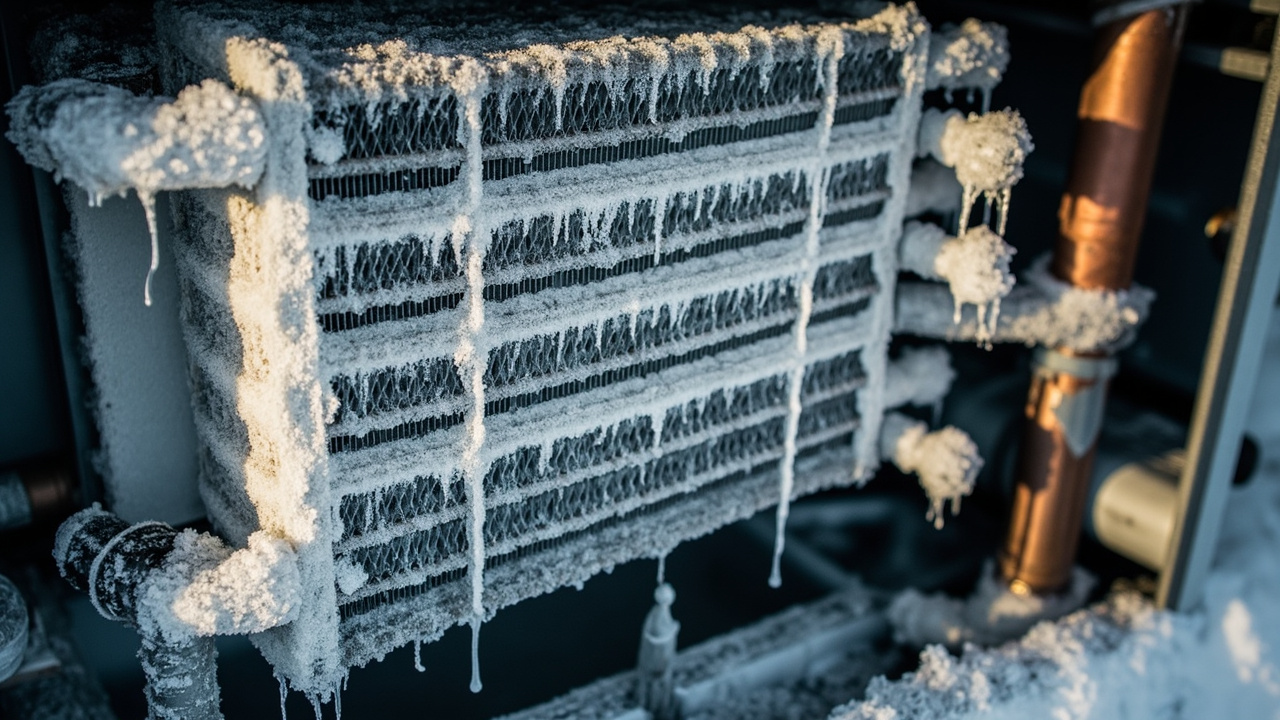
You walk past your air handler and notice ice coating the evaporator coil. The air coming from your vents feels weak or nonexistent. Your system runs constantly but your home stays warm. This is not normal operation, and it is not a problem you can ignore.

San Diego's coastal proximity creates specific challenges for HVAC systems. The marine layer brings moisture-laden air that interacts with your cooling system differently than dry inland climates. When refrigerant flow becomes restricted or airflow drops below design specifications, the evaporator coil temperature plummets below freezing. Condensation turns to ice, blocking heat transfer and forcing your compressor to work harder.

A frozen ac evaporator coil signals one of several underlying failures. Refrigerant undercharge from slow leaks creates pressure imbalances. Dirty filters choke airflow across the coil surface. Failed blower motors cannot move enough air volume. Clogged condensate drains cause humidity buildup that accelerates icing. Each cause requires a different repair approach.

Many San Diego homeowners discover their ac evaporator iced over during peak cooling months when the system runs longest. The ice formation follows a predictable pattern. It starts at the refrigerant inlet where the coil is coldest, then spreads across fins and tubes. By the time you see ice on the exterior panels, the entire coil is compromised.

The immediate danger is not just comfort loss. Ice expansion can bend delicate aluminum fins, reducing efficiency permanently. Liquid refrigerant flowing back to the compressor causes mechanical damage. Running a system with frozen cooling coils shortens equipment life and increases energy consumption by 30 percent or more.

Air conditioner coil freezing up is a symptom, not a diagnosis. The repair starts with identifying which system component failed first.

Why Your AC Evaporator Coil Keeps Freezing in San Diego Homes
How Elite HVAC San Diego Diagnoses and Repairs Frozen Evaporator Coils

How Elite HVAC San Diego Diagnoses and Repairs Frozen Evaporator Coils

We do not just thaw the ice and leave. That approach guarantees you will call again in two weeks. Our diagnostic process identifies the actual failure point so the repair sticks.

First, we measure suction line temperature and pressure simultaneously. This gives us the superheat value, which tells us if refrigerant charge is correct. Low superheat indicates overcharge or expansion valve failure. High superheat points to undercharge or restriction. We compare these readings against manufacturer specifications for your exact model and outdoor temperature.

Next, we measure static pressure across the evaporator coil with the blower running. Pressure drop beyond design parameters confirms airflow restriction. We inspect the filter, check ductwork for collapsed sections, and verify blower wheel cleanliness. San Diego homes near the coast accumulate salt-laden dust that cakes onto blower wheels, reducing air volume without obvious filter blockage.

We inspect the metering device. Thermostatic expansion valves can stick partially closed, starving the coil of refrigerant. Fixed orifice pistons can clog with contamination from a failed compressor. We check for temperature differential across the device to verify proper operation.

Refrigerant leaks require pressure testing and leak detection. We use electronic leak detectors and ultraviolet dye to find pinhole leaks in the evaporator coil itself. Leaks in the coil often occur at the U-bends where vibration causes metal fatigue. We pressurize the system with nitrogen to verify the leak location before opening refrigerant lines.

Once we identify the root cause, we repair or replace the failed component. If the evaporator coil leaked, we replace it and flush the line set to remove contamination. If airflow was restricted, we clean or replace the blower assembly and verify duct integrity. If the expansion valve failed, we install the correct replacement and verify proper superheat after startup.

Every repair includes verification testing. We run the system through a complete cooling cycle and monitor coil temperature, airflow, and refrigerant pressures to confirm normal operation.

What Happens During Your Frozen Coil Service Call

Iced Up Evaporator Coil in San Diego – Expert Diagnosis and Permanent Repair
01

Emergency System Shutdown

We shut down your system immediately to prevent compressor damage from liquid refrigerant slugging. The evaporator coil needs to thaw completely before diagnostic testing can begin. We remove access panels and position fans to accelerate thaw time without applying direct heat that could damage refrigerant lines. This passive thaw typically takes 45 to 90 minutes depending on ice thickness.
02

Diagnostic Pressure Testing

Once the coil thaws, we connect manifold gauges and measure operating pressures. We compare suction pressure, discharge pressure, and subcooling values against manufacturer specifications. We measure temperature split across the evaporator coil and verify blower motor amperage draw. These measurements tell us exactly which component failed. We document all readings for your records and future reference.
03

Verified Repair and Testing

After completing the repair, we run your system for a minimum of 20 minutes while monitoring all performance parameters. We verify proper superheat, confirm adequate airflow at the registers, and check that coil temperature stays above freezing. We provide you with before and after readings so you can see exactly what changed. You get documentation of the failure cause and the repair performed.

Why San Diego Homeowners Choose Elite HVAC for Frozen Coil Repairs

Most HVAC companies in San Diego will thaw your coil, check the filter, and call it fixed. That is not a repair. That is a temporary pause before the next failure. We find the actual problem because we use diagnostic equipment and follow manufacturer service protocols.

San Diego's building stock ranges from 1960s beach cottages to modern developments in Scripps Ranch and Carmel Valley. Each era has different ductwork design, insulation requirements, and equipment specifications. We maintain service history for systems across every San Diego neighborhood. We know which subdivisions have undersized duct returns and which builders used inferior refrigerant line sets.

Coastal proximity affects more than just humidity. Salt air corrodes outdoor condenser units faster than inland locations. Homes in Pacific Beach, Ocean Beach, and La Jolla need more frequent coil cleaning because salt accumulation reduces heat transfer efficiency. We account for these location-specific factors when diagnosing why your evaporator coil froze.

We stock replacement parts for major residential HVAC brands on every service vehicle. When we diagnose a failed expansion valve or blower motor, we complete the repair the same day. You do not wait three days for parts while your home stays hot.

Our technicians receive ongoing training on refrigerant handling, pressure diagnostics, and airflow measurement. This is not basic troubleshooting. This is precision HVAC repair that requires understanding thermodynamics, psychrometrics, and electrical systems. We explain what failed, why it failed, and what you can do to prevent future failures.

We provide written documentation of all diagnostic findings and repairs. You receive pressure readings, temperature measurements, and airflow calculations. If you need this information for warranty claims or insurance purposes, you have complete records.

Elite HVAC San Diego operates throughout San Diego County, from downtown lofts to Rancho Bernardo estates. We respond to frozen coil calls in Hillcrest, North Park, Mission Valley, and every neighborhood between the coast and inland valleys.

What to Expect When You Call Elite HVAC for a Frozen Evaporator Coil

Same-Day Emergency Response

We understand that a frozen coil means no cooling, and San Diego summers do not wait. We dispatch technicians the same day you call, often within two to four hours for emergency service requests. Our service vehicles carry diagnostic equipment, refrigerant, and common replacement parts so we can complete most repairs in a single visit. You will receive a call 30 minutes before arrival with the technician's name and estimated arrival window.

Comprehensive System Diagnostics

We perform a complete system evaluation, not just a visual inspection. Our diagnostic process includes refrigerant pressure testing, superheat and subcooling calculations, airflow measurement at the registers, blower motor amperage verification, and ductwork inspection. We test the thermostat, check electrical connections, and measure voltage at the condensing unit. This thorough approach identifies problems that basic troubleshooting misses. You receive a detailed explanation of findings before any repair work begins.

Permanent Repairs with Verification

We repair the actual failure point, not just the symptoms. If your coil froze due to a refrigerant leak, we locate and repair the leak, then recharge to manufacturer specifications. If airflow restriction caused the problem, we clean or replace the blower assembly and verify proper CFM delivery. Every repair includes post-service testing to confirm the system operates within design parameters. We provide written documentation of all pressure readings, temperature measurements, and performance metrics.

Service Documentation and Maintenance Planning

You receive complete service records including diagnostic findings, parts replaced, and system performance data. We explain what caused the coil to freeze and what maintenance steps prevent recurrence. Many frozen coil failures result from deferred maintenance like dirty filters or skipped annual tune-ups. We offer maintenance plans that include coil cleaning, refrigerant charge verification, and airflow testing. Regular maintenance catches small problems before they cause system failures.

Frequently Asked Questions

You Have Questions,
We Have Answers

What causes ice on an evaporator coil? +

Ice forms on your evaporator coil when airflow drops or refrigerant pressure shifts. Restricted airflow from a clogged air filter, blocked return vents, or a failing blower motor prevents warm air from reaching the coil. This causes the coil temperature to drop below freezing. Low refrigerant levels also cause ice buildup by lowering evaporator pressure. In San Diego homes, dust accumulation from dry coastal air clogs filters faster than you think. A dirty coil itself restricts airflow. Thermostat issues can cause your system to overcool. You need to address the root cause, not just the ice.

What is the best way to thaw out an iced up evaporator coil? +

Turn off your AC immediately at the thermostat. Switch the fan to ON mode to circulate air and accelerate thawing. This pushes warm air across the frozen coil. Do not use heat guns, hairdryers, or sharp tools. You risk damaging delicate aluminum fins or copper tubing. Thawing takes two to eight hours depending on ice thickness. Place towels under your air handler to catch meltwater. In San Diego's mild climate, opening windows and allowing natural airflow can help. Once thawed, replace your air filter before restarting. If ice returns within 24 hours, you have an underlying problem that requires professional diagnosis.

Will low refrigerant cause an evaporator to ice up? +

Yes. Low refrigerant directly causes evaporator coil icing. When refrigerant charge drops below design levels, the remaining refrigerant expands too much inside the evaporator. This expansion creates abnormally low temperatures. The coil surface drops below 32 degrees, freezing condensation instantly. Refrigerant does not get used up. If you have low levels, you have a leak somewhere in your system. Common leak points include service valves, coil joints, and line set connections. San Diego's coastal salt air can accelerate corrosion on outdoor components. A technician must find and repair the leak, then recharge to manufacturer specifications. Simply adding refrigerant without fixing the leak wastes money.

How to melt ice on an evaporator coil? +

Turn off cooling mode immediately. Set your thermostat fan to ON, not AUTO. This forces air circulation without running the compressor. Let the system sit for four to eight hours. Do not attempt to physically scrape or chip ice off the coil. You will bend fins or puncture refrigerant lines. Do not pour hot water on the coil. Thermal shock can crack components. In San Diego's temperate climate, opening windows and doors speeds natural thawing. Check your air filter while waiting. A clogged filter likely caused the problem. Once melted, inspect the drain pan for proper drainage. If ice reforms after restart, call a technician to diagnose airflow or refrigerant issues.

What is the likely cause for heavy icing in the evaporator coil? +

Heavy ice buildup signals severe airflow restriction or significant refrigerant loss. A completely blocked air filter is the most common culprit in San Diego homes, especially during high pollen seasons. A failed blower motor or capacitor stops air movement entirely. Closed or blocked supply registers in multiple rooms choke airflow. A collapsed or disconnected duct in your attic starves the system. On the refrigerant side, a large leak drops pressure fast, causing aggressive icing. Dirty evaporator coils act like insulation, preventing heat transfer. A malfunctioning expansion valve or reversing valve can also cause refrigerant flooding. Heavy ice means you ignored early warning signs like weak airflow or reduced cooling.

Can I turn my AC back on after it thaws? +

Not immediately. After thawing completes, you must identify and fix the root cause first. If you restart without addressing the problem, ice will reform within hours. Replace your air filter if dirty. Check that all supply vents are open and unblocked. Inspect the condensate drain pan for clogs. Turn on cooling mode and monitor the system for 30 minutes. Feel the airflow from your vents. It should be strong and cold. Listen for unusual sounds from the air handler. If airflow feels weak or ice starts forming again, shut down and call a technician. San Diego homeowners who restart prematurely often face compressor damage from liquid refrigerant slugging.

What are the six common causes of evaporator freezing? +

The six common causes are clogged air filters, dirty evaporator coils, low refrigerant charge, failed blower motors, closed supply vents, and malfunctioning thermostats. A blocked filter restricts airflow immediately. Dust-coated coils act as insulation. Low refrigerant from leaks drops evaporator temperature below freezing. A failing blower motor or bad capacitor reduces air circulation. Closed vents in unused rooms force air through fewer pathways, increasing static pressure. In San Diego, homeowners often close vents in guest rooms or garages, creating system imbalance. A faulty thermostat can short-cycle or run continuously, not allowing defrost periods. Undersized ductwork or kinked flex ducts also contribute to freezing.

What is the 3 minute rule for AC? +

The three-minute rule prevents compressor damage during rapid cycling. After your AC shuts off, wait at least three minutes before restarting. This delay allows refrigerant pressures to equalize between the high and low sides of your system. Starting the compressor with unequalized pressure forces it to work against extreme resistance. This strains internal components and can burn out the motor or damage valves. Modern systems have time-delay relays built into the control board. If your breaker trips or you lose power, respect the three-minute wait. San Diego residents who rapidly flip thermostats on and off during mild weather shorten compressor lifespan significantly.

Can you run AC with frozen coils? +

No. Running your AC with frozen coils causes serious damage. Ice blocks airflow completely, forcing your compressor to run without proper heat absorption. The compressor overheats while pumping refrigerant through a blocked system. Liquid refrigerant can flood back to the compressor, causing hydraulic lock and internal damage. Your blower motor strains against restricted airflow, overheating windings. Ice-covered coils provide zero cooling to your San Diego home, wasting energy while you damage equipment. Continuing to run risks a complete system failure requiring expensive compressor replacement. Shut down immediately when you spot ice. Running frozen costs you thousands in repairs versus hundreds for proper diagnosis and fix.

What is the $5000 AC rule? +

The $5,000 AC rule is informal guidance for repair-versus-replace decisions. Multiply the equipment age by repair cost. If the result exceeds $5,000, replacement makes better financial sense. For example, a $600 repair on a 10-year-old unit equals $6,000, suggesting replacement. A $400 repair on an 8-year-old unit equals $3,200, favoring repair. This rule considers that older systems have higher future failure risk and lower efficiency. San Diego homeowners should factor in SEER ratings and utility costs. Modern systems use 30 to 50 percent less energy than 15-year-old units. Also consider refrigerant type. R-22 systems face expensive, scarce refrigerant. The rule provides a starting framework, not absolute guidance.

How San Diego's Marine Layer Affects Evaporator Coil Performance

San Diego's coastal climate creates unique challenges for air conditioning systems. The marine layer brings moisture-laden air that increases humidity levels throughout coastal neighborhoods and inland valleys. When outdoor air mixes with conditioned air, your evaporator coil works harder to remove moisture. Systems operating in high humidity conditions are more susceptible to coil freezing when airflow becomes restricted or refrigerant charge drops below specifications. The condensate that forms on your evaporator coil during normal operation increases in volume during foggy mornings and humid evenings. If your condensate drain line clogs or your blower motor slows down, ice formation accelerates rapidly.

Elite HVAC San Diego understands how local climate conditions affect HVAC performance because we have serviced thousands of systems across every San Diego microclimate. We know that homes in coastal areas need more frequent condensate drain maintenance than inland properties. We understand that systems in older neighborhoods with limited attic ventilation run hotter and work harder. Our technicians account for these location-specific factors when diagnosing frozen coil problems. We are not a national chain following generic troubleshooting scripts. We are local HVAC specialists who understand how San Diego's climate, building codes, and architectural styles affect cooling system performance.


HVAC Services in The San Diego Area

Located in the heart of Phoenix, Horizon proudly serves the entire metro area with responsive HVAC services you can trust. Our team is strategically based for fast dispatch across neighborhoods, business districts, and surrounding communities. Whether you’re in need of a quick repair or planning a full system upgrade, we’re just a call away. Use the map below to see our coverage zone or visit our office for a consultation. We’re local, experienced, and ready to help, wherever you are.

Address:
Elite HVAC San Diego, 10620 Treena St Suite 230, San Diego, CA, 92131

Additional Services We Offer

Our news updates

Latest Articles & News from The Blogs

Do Smart Vents Actually Help Fix Cold Spots in Large Rancho Bernardo Houses? \n Smart vents can reduce hot and…

Do Smart Vents Actually Help Fix Cold Spots in Large Rancho Bernardo Houses?

Do Smart Vents Actually Help Fix Cold Spots in Large Rancho Bernardo Houses? \n Smart vents can reduce hot and…

Why Thermostat Placement Matters More Than You Think in Your Carmel Valley Two Story Home

Your thermostat controls your entire HVAC system but where you mount it can make the difference between consistent comfort and…

Choosing the Right HVAC Setup for a New Detached ADU in Chula Vista

Choosing the Right HVAC Setup for a New Detached ADU in Chula Vista Building a detached accessory dwelling unit in…

Contact Us

Your AC should not have ice on it. Call Elite HVAC San Diego now at (619) 304-5777 for same-day diagnosis and repair. We identify the root cause and fix it right the first time.