




Menu

Furnace Repair & Heating Service in San Diego | Expert Diagnosis and Reliable System Restoration

When your furnace fails or your heating system underperforms, you need accurate diagnosis and skilled repair from technicians who understand San Diego's unique climate demands and can restore comfort fast.

Slider Image 1
Slider Image 2
Slider Image 3
Slider Image 4
Slider Image 5
Slider Image 7
Slider Image 8
Slider Image 9
Slider Image 10
Slider Image 11

Why San Diego Homes Experience Heating System Failures

San Diego's mild winters mislead many homeowners into neglecting heating system maintenance. You might only run your furnace a few weeks each year, but that infrequent use creates specific failure patterns. When coastal moisture seeps into ductwork and furnace cabinets during dormant months, corrosion develops on heat exchangers and blower assemblies. The salt air that drifts inland from the Pacific accelerates oxidation on burner components and electrical connections.

When temperatures drop into the 40s and 50s during December and January, neglected furnaces fail at the worst possible moment. Pilot assemblies clog with debris. Ignition systems corroded by months of humidity refuse to spark. Blower motors seize from lack of lubrication. What seems like a simple heater repair often reveals deeper problems with central heating maintenance that went unaddressed for years.

The temperature swings between sunny 70-degree afternoons and cold 45-degree mornings stress furnace components through rapid expansion and contraction cycles. Heat exchangers crack under this thermal stress. Gas valves stick. Thermostats miscalibrate. Residential furnace repair in San Diego requires understanding these climate-specific failure modes.

Many homes in neighborhoods like North Park, Normal Heights, and Clairemont feature original heating systems from the 1960s and 1970s. These aging units lack modern safety controls and efficiency standards. When they fail, home heating service becomes urgent because parts are scarce and repairs often cost more than replacement. You need a diagnostic approach that accounts for both immediate failure and long-term system viability.

Why San Diego Homes Experience Heating System Failures
How Professional Furnace Diagnostics Identify Root Causes

How Professional Furnace Diagnostics Identify Root Causes

Effective heating system repair starts with systematic diagnosis, not guesswork. We begin with combustion analysis to measure flue gas composition, draft pressure, and carbon monoxide levels. This reveals whether your burners are firing efficiently or wasting gas through incomplete combustion. A yellow flame instead of blue indicates a dangerous air-fuel mixture problem. High CO readings signal cracked heat exchangers that require immediate shutdown.

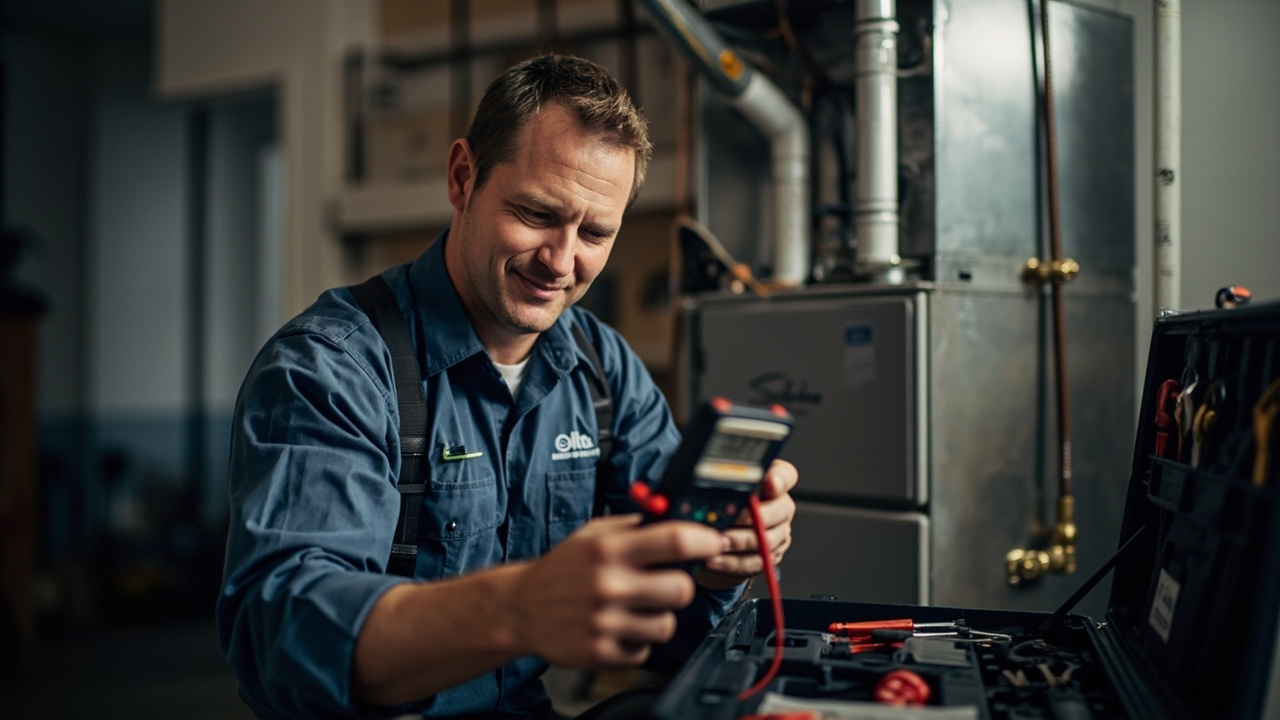
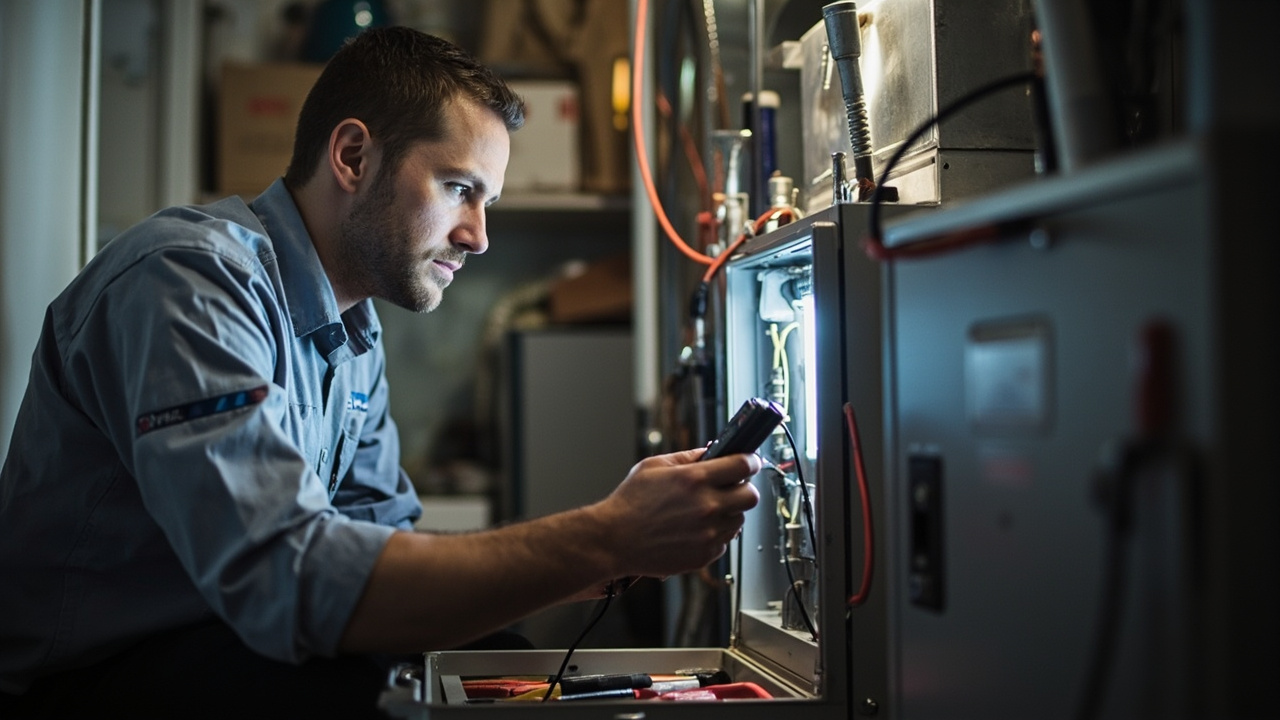
We test electrical components under load conditions because intermittent failures only appear when the system runs. We measure voltage drop across contactors, verify capacitor microfarad ratings, and check amp draw on blower motors. A motor pulling higher amps than its nameplate rating will fail soon. We catch it before you face a midnight emergency.

Static pressure testing across the supply and return plenums tells us whether ductwork restrictions are forcing your furnace to work harder than designed. Undersized returns create negative pressure that pulls unconditioned air through envelope gaps. Crushed flex ducts in attics reduce airflow to specific rooms. We measure actual CFM delivery against manufacturer specifications to determine if the blower assembly can meet heating demand.

Gas pressure testing at the manifold ensures proper input BTU delivery. Low gas pressure from the meter or a partially closed valve starves burners and creates long ignition cycles. We verify that pressure regulators maintain correct settings under firing conditions. For heat pumps serving as heating systems, we measure refrigerant superheat and subcooling to diagnose compressor efficiency and refrigerant charge accuracy. Proper heater repair services require this technical depth, not surface-level parts swapping.

What Happens During Your Heating System Service Call

Furnace Repair & Heating Service in San Diego | Expert Diagnosis and Reliable System Restoration
01

System Assessment and Safety Check

We start by documenting your specific heating complaint and testing system response. Our technician verifies thermostat operation, checks gas supply, and runs a complete ignition sequence while monitoring for abnormal sounds, odors, or performance issues. We perform a carbon monoxide test in your living space and inspect the heat exchanger for cracks or rust-through that could leak combustion gases into your home.
02

Component Testing and Diagnosis

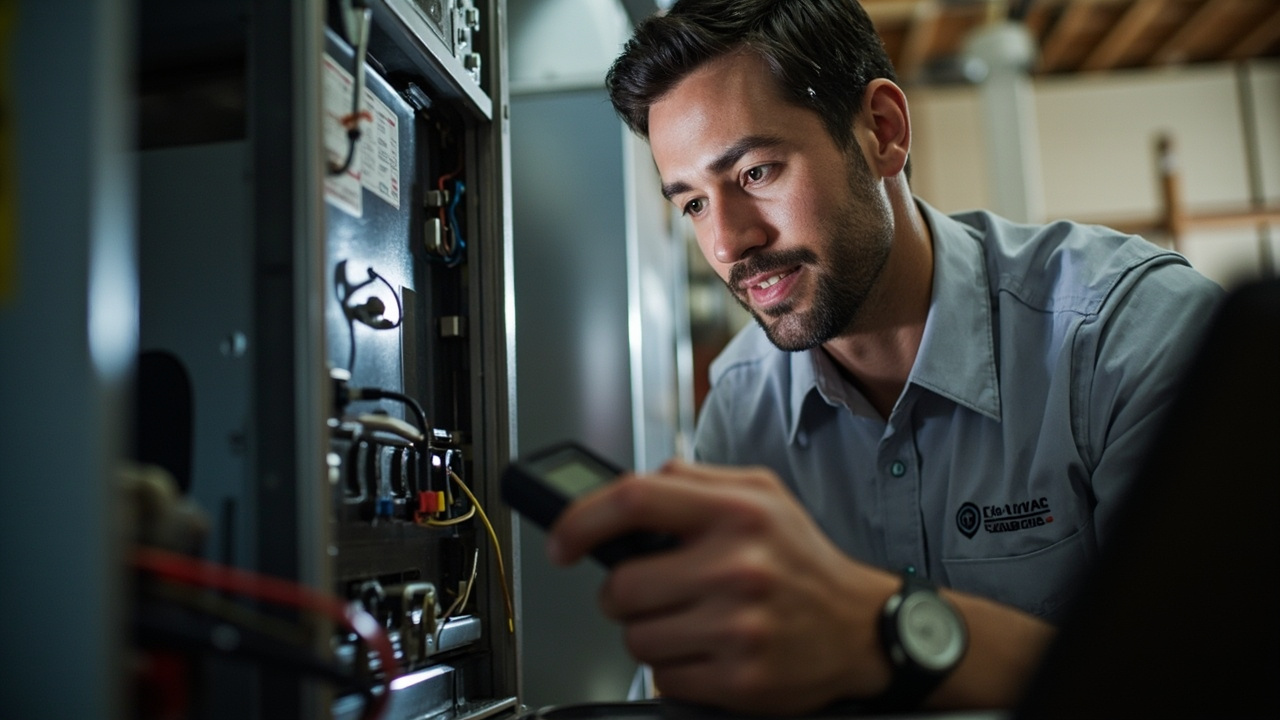
Using calibrated meters and diagnostic tools, we test ignition systems, flame sensors, gas valves, blower motors, and capacitors under operating conditions. We measure temperature rise across the heat exchanger to verify it falls within manufacturer specifications. We inspect ductwork for leaks and restrictions. This systematic approach identifies the actual failure point rather than treating symptoms, saving you money on unnecessary parts replacement.
03

Repair Execution and Verification

After explaining our findings and getting your approval, we complete the necessary repairs using quality replacement parts. We reassemble the furnace, restore gas and electrical connections, and run multiple heating cycles to verify proper operation. Before leaving, we retest combustion efficiency and safety controls, then show you the furnace operating correctly. You receive documentation of all work performed and recommendations for preventing future issues.

Why San Diego Homeowners Choose Elite HVAC for Heating Repairs

You need technicians who understand how San Diego's climate affects heating equipment differently than in Phoenix or Las Vegas. Our team knows that coastal humidity creates corrosion patterns not seen in desert climates. We stock parts for the specific furnace brands common in San Diego housing stock, from older Carrier and Trane units in Mission Hills bungalows to newer Lennox systems in Scripps Ranch developments.

We understand local building code requirements for furnace installations and modifications. San Diego's 2022 energy code amendments require specific efficiency standards for replacement equipment. When repairs exceed a certain cost threshold, code may mandate full system replacement rather than continued repairs on inefficient units. We guide you through these decisions with honest assessments of repair viability versus replacement economics.

Our technicians maintain ongoing training on both legacy equipment and modern high-efficiency systems. This matters when you own a 20-year-old furnace that still has service life remaining but needs occasional component replacement. We can source parts and perform repairs that other companies dismiss as not worth their time. We also excel at diagnosing and repairing newer modulating furnaces with complex control boards and variable-speed blowers.

You get transparent pricing before we start work. We explain what failed, why it failed, and what options you have. Emergency residential furnace repair does not mean emergency pricing designed to exploit your discomfort. We provide the same fair rates whether you call at noon or midnight. When your heating system needs attention, you want a company that treats your home with respect, completes work correctly the first time, and stands behind the repairs we perform for San Diego families.

What to Expect From Our Heating System Repair Service

Fast Response for Heating Emergencies

We dispatch technicians quickly when your furnace stops working, particularly during cold snaps when you need heat most. Our trucks carry common repair parts so we can complete most furnace repairs during the first visit. You get a clear arrival window, and our technician calls when en route. For non-emergency central heating maintenance and tune-ups, we schedule at your convenience and arrive on time. We respect your schedule whether you need immediate emergency service or planned preventive maintenance.

Thorough Diagnosis Before Repairs Begin

You receive a complete system evaluation, not a rushed guess at the problem. Our technician tests all furnace components, checks safety controls, measures airflow and combustion efficiency, and inspects ductwork condition. We explain what we find in clear terms, show you the failed component when possible, and provide a written estimate before starting repairs. You make informed decisions about your heating system based on facts and transparent pricing, not pressure tactics.

Quality Repairs That Restore Full Function

We complete repairs using manufacturer-specified parts and proper installation procedures. You get a furnace that heats your home effectively and safely, not a quick fix that fails again next month. We clean up our work area, test the system through multiple heating cycles, and verify that all safety controls function correctly. Before we leave, you see your furnace operating properly and understand what we repaired and why it matters for your comfort and safety.

Maintenance Guidance to Prevent Future Failures

After completing repairs, we provide recommendations for maintaining your heating system between service calls. You learn which maintenance tasks you can handle yourself and which require professional attention. We explain warning signs that indicate developing problems so you can address issues before they become expensive failures. Regular filter changes, annual tune-ups, and attention to unusual sounds or performance changes extend furnace life and prevent emergency breakdowns during cold weather.

Frequently Asked Questions

You Have Questions,
We Have Answers

What is the average cost to have your furnace serviced? +

The average furnace service in San Diego ranges from $80 to $150 for a standard tune-up. This includes inspection, filter replacement, and basic cleaning. Costs vary based on furnace type, age, and accessibility. If repairs are needed, expect additional charges for parts and labor. San Diego's mild winters mean many homeowners skip annual maintenance, but neglecting service leads to higher energy bills and premature failure. Coastal humidity and dust infiltration stress systems differently than inland areas. Regular maintenance catches small issues before they become expensive breakdowns, especially important for older homes in neighborhoods like North Park or Ocean Beach.

What is the $5000 rule for HVAC? +

The $5000 rule helps you decide between repair and replacement. Multiply the repair cost by your furnace's age. If the total exceeds $5000, replace the unit. For example, a $400 repair on a 10-year-old furnace equals $4000, so repair makes sense. A $600 repair on a 12-year-old unit equals $7200, so replacement is smarter. This rule accounts for diminishing returns on aging equipment. In San Diego, where furnaces experience less wear than colder climates, units often last 18 to 20 years. However, coastal salt air accelerates corrosion, affecting longevity in beach-adjacent communities.

What is the most common furnace failure? +

The most common furnace failure is a faulty ignitor or pilot light assembly. Ignitors crack or wear out from repeated heating cycles, preventing gas from lighting. In San Diego, dust accumulation from dry inland conditions clogs sensors and flame rods, causing intermittent failures. Dirty or clogged air filters are the second most common issue, restricting airflow and causing overheating shutdowns. Thermocouple failures also rank high, especially in older furnaces. Many San Diego homeowners experience these failures during the first cold snap in November or December after months of inactivity. Regular maintenance prevents 80 percent of these common failures.

Is it cheaper to fix a furnace or replace it? +

If your furnace is under 10 years old and repair costs less than half the replacement price, fixing makes financial sense. Repairs exceeding 50 percent of replacement cost signal it's time for a new unit. San Diego's mild climate extends furnace lifespan, so a well-maintained 12-year-old unit might justify repair. However, older furnaces lack energy efficiency, costing you $20 to $40 more monthly in utility bills. Factor in potential rebates for high-efficiency models through SDG&E programs. Repeated repairs within 12 months indicate systemic failure. Consider replacement when facing heat exchanger cracks, which are unsafe and expensive to fix.

What is the most expensive part to fix on a furnace? +

The heat exchanger is the most expensive furnace component, costing $1200 to $2500 for parts and labor. A cracked heat exchanger poses carbon monoxide risks and often warrants full system replacement due to cost. The blower motor ranks second at $400 to $600, while control boards run $300 to $600. In San Diego's coastal zones, salt air corrodes heat exchangers faster, particularly in older units without protective coatings. Gas valves and pressure switches cost $200 to $500. When facing heat exchanger replacement on a furnace over 12 years old, replacement delivers better long-term value than repair.

What does a furnace service include? +

A complete furnace service includes inspection of the heat exchanger, burner assembly, and ignition system. The technician tests gas pressure, checks electrical connections, and measures combustion efficiency. Filter replacement, blower cleaning, and thermostat calibration are standard. Flue inspection ensures proper venting, critical for San Diego homes with original 1970s installations. The technician lubricates moving parts, tightens connections, and tests safety controls like limit switches. Carbon monoxide testing protects your family. In coastal San Diego areas, technicians inspect for salt corrosion. The service concludes with airflow measurements and recommendations. Quality service takes 60 to 90 minutes, not 20-minute drive-bys.

Is HVAC system cost tax deductible? +

HVAC costs are not typically tax deductible for homeowners as personal expenses. However, energy-efficient system upgrades may qualify for federal tax credits under the Inflation Reduction Act. High-efficiency furnaces meeting ENERGY STAR criteria can qualify for credits up to $600. San Diego homeowners also access SDG&E rebates for qualifying equipment, reducing net costs. If you operate a home office, you may deduct a proportional amount as a business expense. Rental property owners can depreciate HVAC systems over 27.5 years. Consult a tax professional for specific guidance, as rules change annually. Medical necessity documentation rarely qualifies HVAC as deductible.

What are signs my HVAC needs replacing? +

Replace your HVAC when repair costs exceed 50 percent of replacement value, or when the system exceeds 15 years old. Frequent breakdowns, rising energy bills, and uneven heating signal decline. Strange noises like banging or squealing indicate mechanical failure. In San Diego, watch for poor humidity control, excessive dust, or weak airflow. Yellow pilot light flames suggest incomplete combustion and carbon monoxide risk. If rooms vary more than 4 degrees in temperature, your system struggles. Rust or cracks on the heat exchanger require immediate replacement. San Diego's coastal homes face accelerated corrosion. Modern systems offer 30 to 40 percent better efficiency than 15-year-old models.

Do HVAC companies give free quotes? +

Reputable HVAC companies provide free quotes for system replacement or major repairs. Basic service calls typically include a diagnostic fee of $75 to $150, often credited toward repairs. In San Diego, avoid companies advertising free inspections, then pressuring you into unnecessary replacements. Legitimate contractors assess your home's heating load, ductwork condition, and insulation before quoting. Free quotes should include equipment options, efficiency ratings, warranty details, and installation timeline. Beware of quotes provided without physically inspecting your system. Quality contractors spend 30 to 45 minutes evaluating your home, not 10 minutes quoting over the phone. Multiple quotes help identify fair pricing.

Which brand of furnace is most reliable? +

Carrier, Lennox, Trane, and Rheem consistently rank as the most reliable furnace brands based on warranty claims and longevity data. Carrier and Trane excel in coastal San Diego environments due to corrosion-resistant components. Lennox offers superior efficiency ratings for inland areas with extreme temperature swings. Goodman and American Standard provide solid value for budget-conscious homeowners. Brand matters less than proper installation and maintenance. A lower-tier brand installed correctly by a skilled technician outperforms a premium brand installed poorly. San Diego's mild climate stresses furnaces less than northern regions, so most quality brands last 18 to 22 years with annual service.

How San Diego's Mild Climate Creates Unique Furnace Maintenance Challenges

San Diego's Mediterranean climate means your furnace sits idle most of the year, operating perhaps 500 hours annually compared to 2,000-plus hours in cold-climate regions. This infrequent use allows dust to settle on burners, moisture to corrode electrical connections, and lubricants to dry out in blower bearings. When you finally need heat during a cold January morning, dormant systems fail at higher rates than regularly used equipment. Coastal humidity accelerates this deterioration, particularly in neighborhoods within five miles of the ocean where salt air penetrates furnace cabinets. Heater repair services in San Diego must account for corrosion and dormancy-related failures that technicians in dry inland climates rarely encounter.

Local HVAC professionals who understand San Diego conditions provide better residential furnace repair outcomes because we recognize climate-specific failure patterns. We know which furnace brands hold up best in coastal environments and which components corrode fastest in salty air. We understand that San Diego's older housing stock in areas like City Heights and Golden Hill often contains original heating systems that require specialized knowledge to repair. Choosing a local company for home heating service means working with technicians familiar with regional equipment, local parts suppliers, and San Diego building codes that govern furnace modifications and replacements.


HVAC Services in The San Diego Area

Located in the heart of Phoenix, Horizon proudly serves the entire metro area with responsive HVAC services you can trust. Our team is strategically based for fast dispatch across neighborhoods, business districts, and surrounding communities. Whether you’re in need of a quick repair or planning a full system upgrade, we’re just a call away. Use the map below to see our coverage zone or visit our office for a consultation. We’re local, experienced, and ready to help, wherever you are.

Address:
Elite HVAC San Diego, 10620 Treena St Suite 230, San Diego, CA, 92131

Additional Services We Offer

Our news updates

Latest Articles & News from The Blogs

Do Smart Vents Actually Help Fix Cold Spots in Large Rancho Bernardo Houses? \n Smart vents can reduce hot and…

Do Smart Vents Actually Help Fix Cold Spots in Large Rancho Bernardo Houses?

Do Smart Vents Actually Help Fix Cold Spots in Large Rancho Bernardo Houses? \n Smart vents can reduce hot and…

Why Thermostat Placement Matters More Than You Think in Your Carmel Valley Two Story Home

Your thermostat controls your entire HVAC system but where you mount it can make the difference between consistent comfort and…

Choosing the Right HVAC Setup for a New Detached ADU in Chula Vista

Choosing the Right HVAC Setup for a New Detached ADU in Chula Vista Building a detached accessory dwelling unit in…

Contact Us

Do not wait for your heating system to fail completely. Call Elite HVAC San Diego now at (619) 304-5777 for fast, professional furnace diagnosis and repair. We provide honest assessments and quality work that restores comfort to your home.