




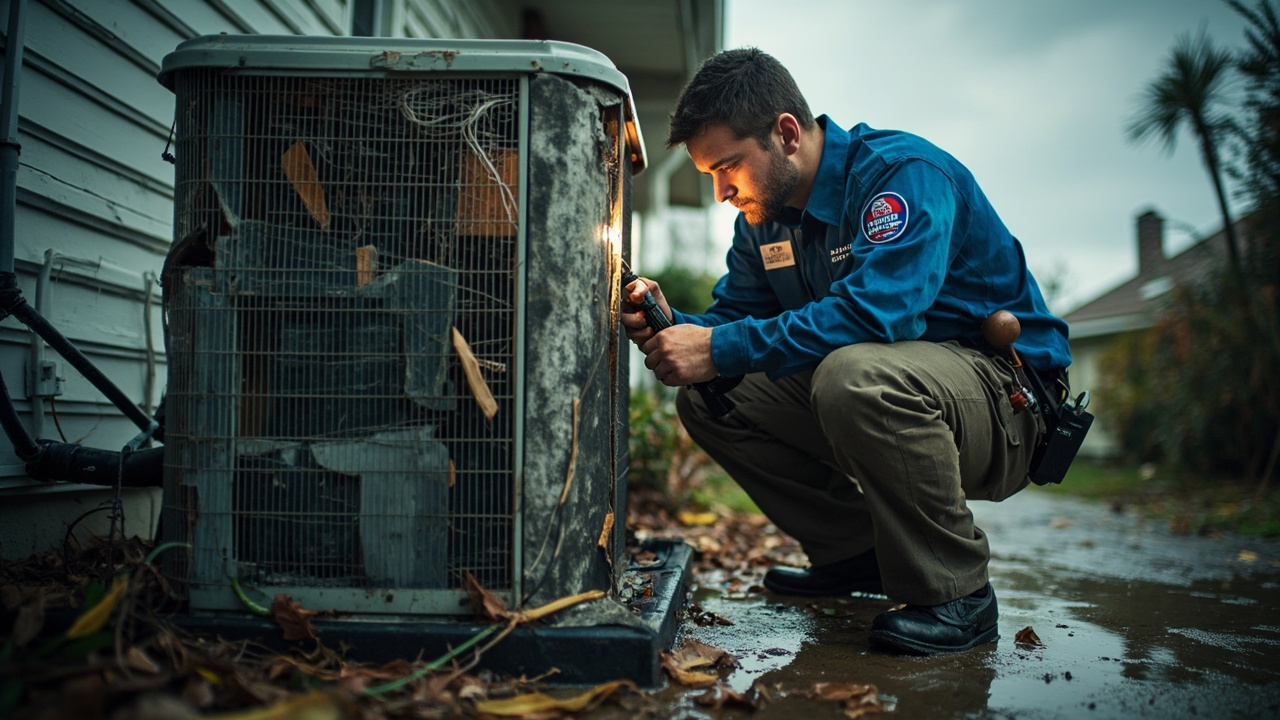
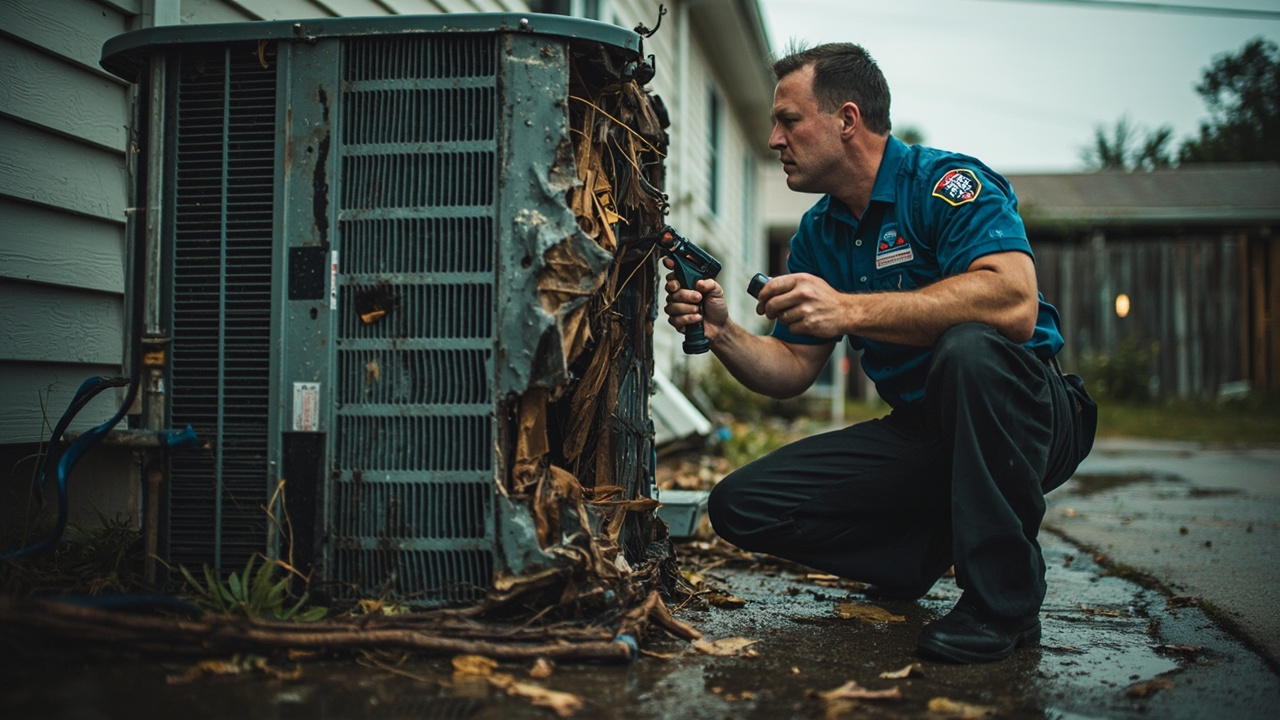
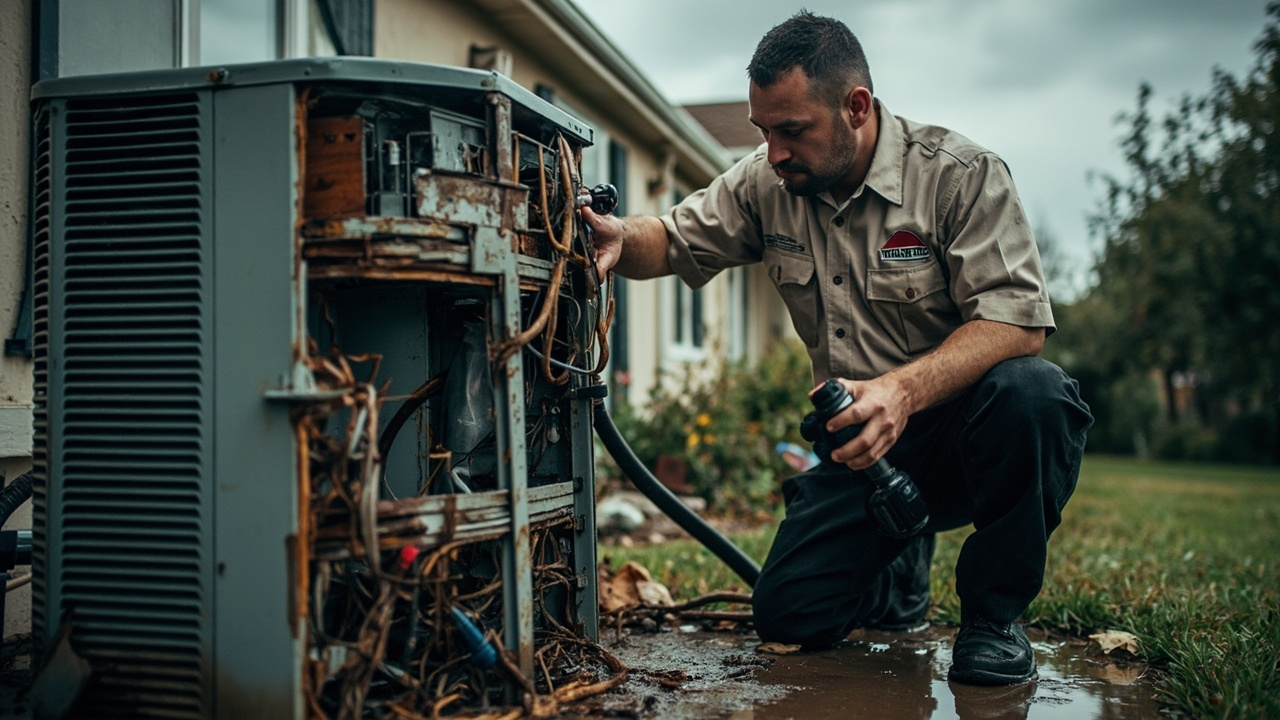
San Diego receives 70 percent of its annual rainfall between November and March, often delivered in short, intense atmospheric river events that dump three to five inches in 24 hours. These sudden deluges overwhelm storm drains, flood low-lying areas, and create standing water around ground-level HVAC equipment faster than most drainage systems can handle. Unlike gradual rain events, atmospheric rivers hit with such intensity that condensate drains back up, exterior disconnect boxes fill with water, and improperly graded condenser pads become submerged islands. HVAC storm restoration services in San Diego must account for these rapid-onset flood conditions and the saltwater corrosion that follows when coastal wind drives ocean spray inland during the same storm systems.
San Diego County enforces specific building codes for HVAC installations in flood-prone areas, particularly in communities near the San Diego River, Mission Bay, and coastal zones. Property owners who install replacement equipment after storm damage must comply with updated elevation requirements and electrical disconnect placement standards that did not exist when older systems were originally installed. Working with a local HVAC contractor who understands these evolving code requirements prevents costly permit failures and ensures your storm damage repair qualifies for insurance reimbursement. We maintain active relationships with San Diego building inspectors and stay current on code amendments that affect heating and cooling storm damage repair throughout the county.