




Menu

Emergency Frozen AC Coil Repair in San Diego – 24/7 Fast Response When Your System Ices Up

When your air conditioner freezes, every minute counts. Elite HVAC San Diego dispatches certified technicians within the hour to fix frozen air conditioner coils and restore cooling before compressor damage occurs.

Slider Image 1
Slider Image 2
Slider Image 3
Slider Image 4
Slider Image 5
Slider Image 7
Slider Image 8
Slider Image 9
Slider Image 10
Slider Image 11

Why AC Coils Freeze in San Diego's Coastal Climate

You walk past your AC and see ice forming on the copper lines or evaporator coil. The vents blow weak, warm air. Your system runs nonstop but the house stays hot.

This happens fast in San Diego, especially in coastal neighborhoods from Pacific Beach to Point Loma. When marine layer moisture combines with restricted airflow or refrigerant issues, your evaporator coil temperature drops below freezing. Water vapor in the air condenses and freezes instantly on the coil surface.

The problem compounds quickly. Ice blocks airflow. Your compressor works harder. Internal pressure builds. Within hours, you risk compressor failure, which turns a $300 emergency AC freeze up repair into a $3,000 replacement.

Three causes create 90% of frozen coils in San Diego homes. Clogged air filters restrict airflow across the evaporator. Low refrigerant from pinhole leaks drops coil temperature. Failed blower motors stop air circulation entirely. Each scenario requires different AC evaporator coil icing repair protocols.

Stop running your system if you see ice. Continuing operation damages the compressor and floods your drain pan when the ice melts. Turn off the AC immediately. The ice needs to thaw before diagnosis begins, which takes 2-4 hours depending on ice thickness.

Iced up air conditioner service requires fast action. The longer ice sits, the more water damage spreads to surrounding components. Drain pans overflow. Insulation soaks through. Electrical connections corrode from moisture exposure.

Elite HVAC San Diego arrives equipped for complete repair frozen HVAC evaporator scenarios. We diagnose the root cause, not just the symptom.

Why AC Coils Freeze in San Diego's Coastal Climate
Our Emergency Frozen Coil Repair Protocol

Our Emergency Frozen Coil Repair Protocol

We do not guess. Our technicians use digital manifold gauges to measure refrigerant pressures across both the suction and discharge lines. Subcooling and superheat calculations tell us if your charge is low, your metering device is failing, or your airflow is restricted.

Temperature differential measurements across the evaporator coil reveal airflow problems. A properly functioning system shows a 15-20 degree split between supply and return air. Differentials below 10 degrees indicate severe airflow restriction. Differentials above 25 degrees signal refrigerant overcharge or condenser issues.

For refrigerant leaks, we inject nitrogen and use electronic leak detectors calibrated to 0.1 ounces per year sensitivity. Most residential pinhole leaks in San Diego occur at the evaporator coil itself, where corrosion from humidity attacks the aluminum fins. We also check flare connections, service valves, and the outdoor unit's condenser coil.

Blower motor testing includes amp draw measurement under load. A 1/3 horsepower blower should draw 3-4 amps. Higher readings indicate bearing failure. Lower readings suggest capacitor problems. We test the run capacitor with a digital meter, not the old analog testers that give false readings.

Drainage system inspection catches secondary damage. If your coil froze and thawed before we arrived, water likely backed up in the drain pan. We check the primary drain line, secondary overflow switch, and pan integrity. Many San Diego homes have PVC drain lines that clog with algae in the humid ocean air.

We fix the cause, not just the ice. That means replacing the clogged filter, repairing the refrigerant leak and recharging to manufacturer specs, or replacing the failed blower motor and capacitor.

What Happens During Your Emergency Service Call

Emergency Frozen AC Coil Repair in San Diego – 24/7 Fast Response When Your System Ices Up
01

Immediate System Shutdown

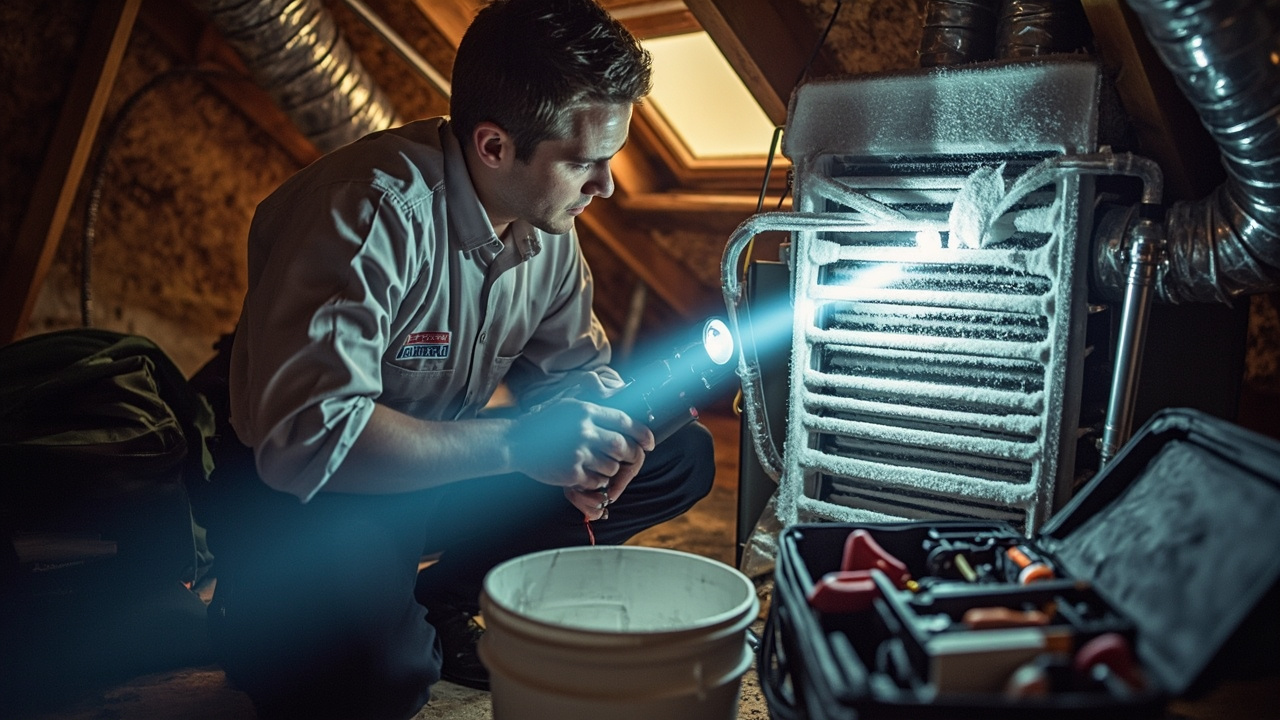
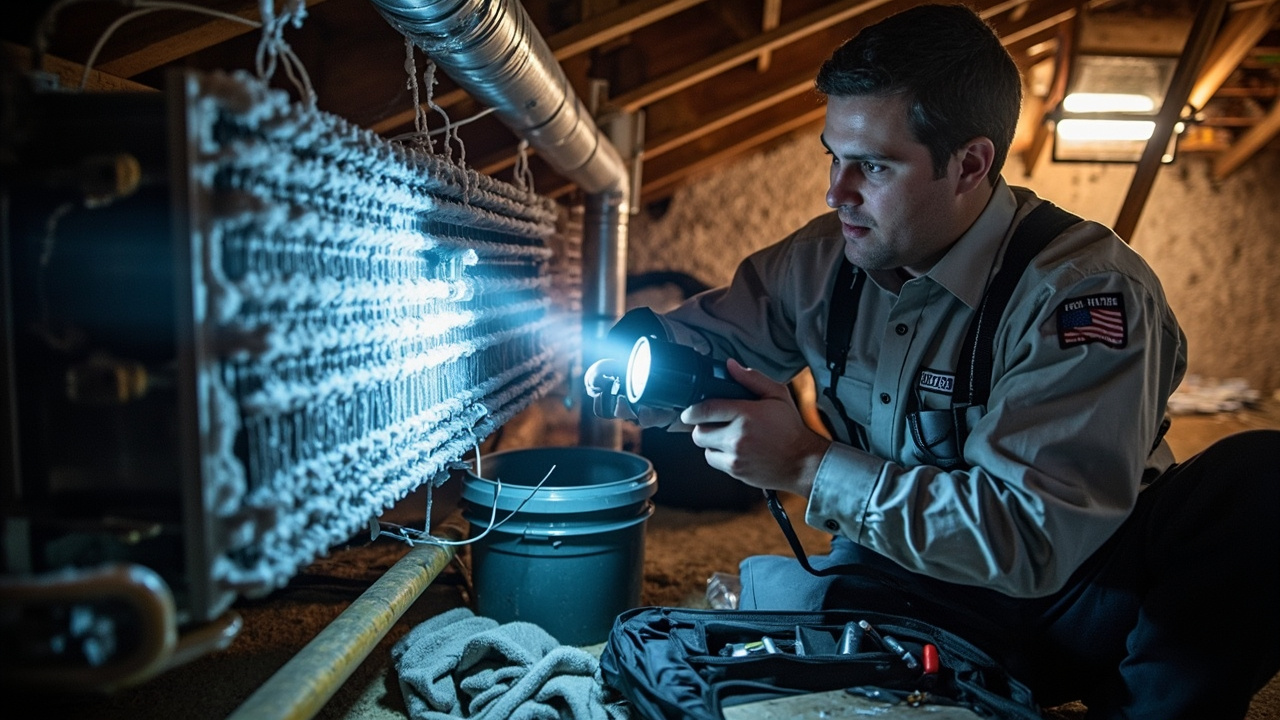
Our technician confirms your AC is off and begins the thaw process using ambient temperature only. We inspect ice thickness and placement to determine preliminary cause. The evaporator coil location, whether on the air handler plenum or inside the furnace cabinet, affects thaw time. We set up containment for meltwater and verify your drain pan handles the volume without overflow.
02

Diagnostic Testing Phase

Once the ice melts completely, we run the system under controlled conditions while monitoring refrigerant pressures, temperatures, and amp draws. Digital gauges track suction pressure at the evaporator and discharge pressure at the condenser. We measure airflow at each supply register using a hot wire anemometer. This data isolates whether your problem stems from mechanical failure, refrigerant loss, or airflow restriction.
03

Repair and Verification

After completing repairs, we run a full cooling cycle for 20-30 minutes and verify proper operation. Temperature split between supply and return air should stabilize at 16-18 degrees. Refrigerant pressures match manufacturer specifications for current outdoor temperature. We document baseline performance metrics so you have proof your system operates correctly. You receive a detailed service report showing before and after readings.

Why San Diego Residents Call Elite HVAC for Frozen Coil Emergencies

We answer our phones 24/7 because AC emergencies do not wait for business hours. When you call at 2 AM because your house hit 85 degrees, you talk to a dispatcher who sends a technician, not an answering service that takes a message.

Our trucks carry the parts that fail most often in San Diego's coastal climate. Blower motors, run capacitors, TXV metering devices, refrigerant, and filter driers sit in inventory on every service vehicle. We do not leave to pick up parts while your house heats up.

Elite HVAC San Diego technicians train specifically on the refrigeration cycle and airflow dynamics that cause coil icing. We do not send generalists who replace parts until something works. Our team understands subcooling, superheat, and how humidity affects evaporator temperature in coastal microclimates from La Jolla to Chula Vista.

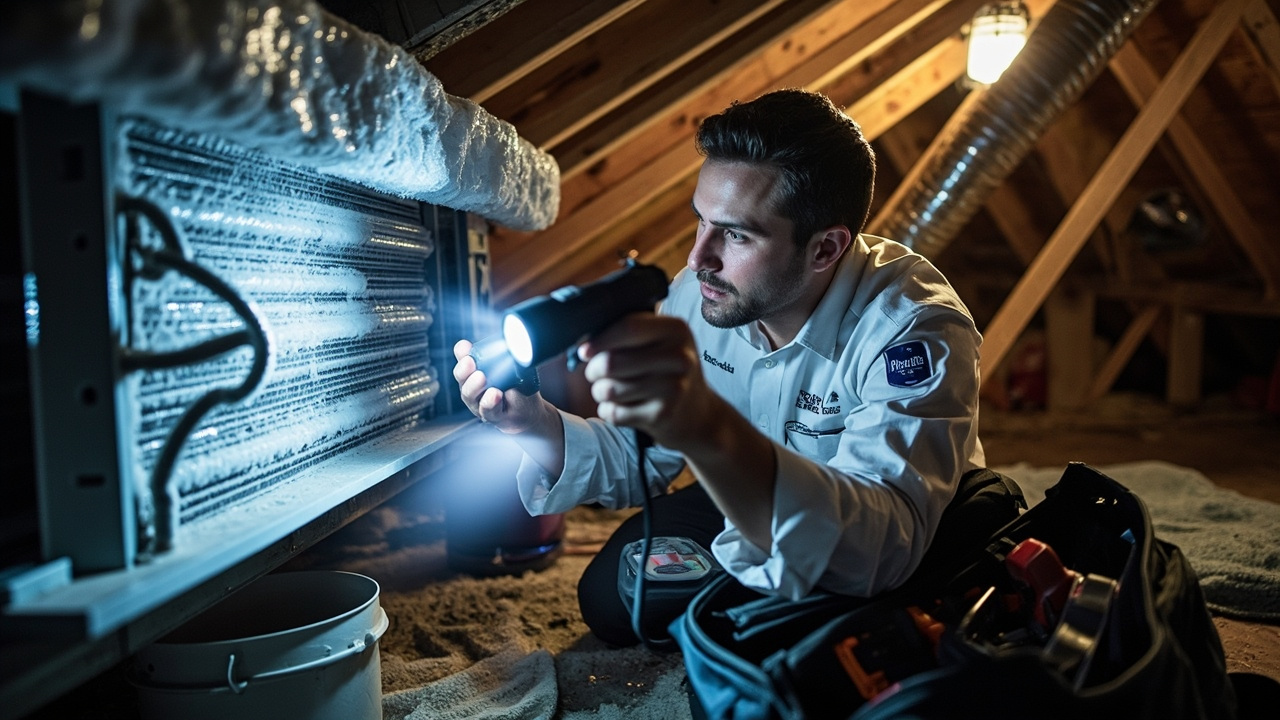
We work on the AC systems common to San Diego housing stock. Many homes here were built in the 1960s-1980s with 2-3 ton split systems in cramped attic spaces. We know how to access these units, diagnose them in tight quarters, and repair them without tearing out drywall.

Local building inspectors know our work. When repairs require permits for refrigerant line replacement or electrical work, we pull them correctly. Our installations pass inspection the first time because we follow San Diego Municipal Code requirements and California Title 24 energy standards.

You get transparent diagnosis. We show you the gauge readings, explain what they mean, and let you decide on repairs. No scare tactics about catastrophic failure. No pressure to replace when repair works fine.

Your comfort matters more than our convenience. If we arrive and your coil needs four hours to thaw, we schedule a return visit rather than rushing diagnosis on a partially frozen coil.

What to Expect During Frozen Coil Service

Response Time and Availability

We dispatch within one hour of your call for emergency frozen coil situations. Standard service windows run 8 AM to 8 PM daily. Emergency overnight service operates from 8 PM to 8 AM with premium rates. Most frozen coil repairs take 2-4 hours total, including thaw time, diagnosis, repair, and verification testing. If your coil froze overnight and thawed before we arrive, diagnosis begins immediately and most repairs complete within 90 minutes. Complex refrigerant leak repairs requiring brazing or line replacement may extend to 4-6 hours depending on access and system configuration.

The Diagnostic Process

Your technician starts with a visual inspection of the evaporator coil, blower assembly, and refrigerant lines. We check your air filter first since restricted airflow causes 60% of frozen coils. Next comes refrigerant pressure testing using digital manifolds connected to your system's service ports. We measure suction pressure, discharge pressure, subcooling, and superheat against manufacturer specifications. Blower motor amp draw testing identifies failing motors before they seize. We inspect the drain system for clogs and verify your condensate pump operates correctly. Temperature measurements at each supply register confirm balanced airflow through your ductwork.

Repair Quality Standards

All refrigerant work follows EPA Section 608 protocols for recovery, evacuation, and charging. We pull vacuum to 500 microns and hold for 10 minutes before charging refrigerant. Leak repairs use silver solder brazing, not quick-fix sealants that clog metering devices. Replacement parts match or exceed OEM specifications. Blower motors include permanently lubricated bearings rated for continuous duty. Capacitors carry 50,000-hour ratings. After repairs, we run your system through a complete cooling cycle and document performance with temperature and pressure readings. You receive a service report showing the problem found, repairs completed, and verification that your system operates within manufacturer specifications.

Maintenance and Prevention Plans

Frozen coils rarely happen once and never repeat. The conditions that caused the first freeze will cause another without correction. We offer maintenance agreements that include filter changes, coil cleaning, and refrigerant pressure checks every six months. Spring maintenance before cooling season prevents most emergency breakdowns. Our technicians clean your evaporator coil with alkaline coil cleaner that removes biological growth without damaging aluminum fins. We treat drain lines with biocide tablets that prevent algae clogs common in San Diego's humid climate. You receive reminder calls before each scheduled service and priority response if emergency repairs become necessary between maintenance visits.

Frequently Asked Questions

You Have Questions,
We Have Answers

How do you fix a frozen AC coil? +

Turn off your AC immediately to prevent compressor damage. Switch the thermostat to fan mode to circulate air and speed thawing. Check your air filter and replace it if dirty, as restricted airflow is the main culprit. Once ice melts completely (usually 2-8 hours), inspect the evaporator coil for damage. If the coil refreezes after restart, you have a refrigerant leak, blocked condensate line, or failed blower motor. Don't run a frozen unit. Call a licensed technician right away to diagnose the root cause and prevent expensive compressor failure.

How long does it take for AC coils to unfreeze? +

Expect 2 to 8 hours for complete thawing, depending on ice buildup thickness. San Diego's mild climate helps, but thick ice still takes time. Never rush the process with heat guns or tools, as you risk coil damage. Switch your system to fan-only mode to circulate warm air across the coil. Place towels beneath the unit to catch meltwater. Thaw time varies based on ambient temperature, ice thickness, and airflow capacity. If ice remains after 8 hours or refreezes immediately after restart, you have a deeper issue requiring professional repair.

Can an air conditioner coil be repaired? +

Yes, but repair viability depends on damage type. Small refrigerant leaks can be patched and recharged. Bent fins can be straightened with a fin comb. However, corrosion, major punctures, or widespread deterioration usually require full coil replacement. San Diego's coastal moisture accelerates coil corrosion, especially in older units. A technician will pressure-test the coil to locate leaks and assess structural integrity. Repairing a coil costs less upfront but may fail again soon. Replacement offers longer-term reliability. Get a professional evaluation before deciding. Don't attempt DIY coil repairs, as refrigerant handling requires EPA certification.

How to tell if an AC coil is frozen? +

Look for visible ice or frost on the copper refrigerant lines, evaporator coil, or outdoor unit. You'll notice reduced airflow from vents, warm air instead of cool, or water pooling near the indoor unit. Listen for hissing sounds indicating refrigerant leaks. The thermostat may run continuously without reaching the set temperature. In San Diego homes, high humidity combined with dirty filters accelerates freeze-ups. If you see condensation or ice forming on the refrigerant lines running into your home, shut down the system immediately and call for emergency service to prevent compressor burnout.

What is the 3 minute rule for AC? +

Wait 3 minutes between thermostat adjustments to protect your compressor. When you shut off your AC, refrigerant pressure needs time to equalize between the high and low sides of the system. Restarting too quickly forces the compressor to start against high pressure, causing electrical strain and potential failure. This rule is critical after a freeze-up. Once your coil thaws completely, wait at least 3 minutes before restarting. San Diego's year-round AC usage makes compressor longevity essential. Ignoring this rule voids some warranties and shortens equipment lifespan significantly.

What would cause a coil to freeze up? +

Restricted airflow is the primary cause. Dirty air filters, blocked return vents, or failed blower motors reduce air moving across the evaporator coil, dropping temperatures below freezing. Low refrigerant from leaks causes pressure drops and freezing. Clogged condensate drains cause humidity buildup and ice formation. In San Diego, coastal salt air corrodes coils and creates leaks. Thermostat malfunctions cause overcycling. Collapsed ductwork or closed vents in unused rooms restrict airflow. Running AC when outdoor temps drop below 60 degrees also causes freezing. Each cause requires specific diagnosis. Don't guess. Get professional troubleshooting immediately.

What is the $5000 AC rule? +

This refers to IRS tax guidelines allowing businesses to expense HVAC equipment purchases under $5,000 immediately rather than depreciating over time. It's not an AC repair rule. Some contractors misuse this term to upsell replacements by claiming systems over this threshold are "too expensive to repair." Ignore this sales tactic. Repair decisions should be based on actual cost-benefit analysis, system age, and efficiency. In San Diego, a 10-year-old system with a failed coil might justify replacement, but a 5-year-old unit usually deserves repair. Get multiple opinions before major decisions.

How to melt ice on AC coils? +

Turn off the AC immediately. Switch the thermostat to fan mode to circulate room-temperature air across the coil. Never use external heat sources like hair dryers, heat guns, or hot water, as rapid temperature changes crack coils and damage fins. Let physics do the work. In San Diego's mild climate, natural thawing takes 2-6 hours. Place towels or a pan beneath the unit to catch meltwater. Check your drain line isn't clogged. Once ice melts completely, identify why it froze before restarting. If you restart without fixing the root cause, you'll refreeze within hours.

How long should I leave my AC off if it's frozen? +

Leave your AC off for at least 2 to 8 hours until ice melts completely. San Diego's temperate weather helps thaw times, but thick ice still requires patience. Switch to fan-only mode to speed the process. Visually confirm all ice is gone before restarting. If you restart with residual ice, you risk compressor flooding and catastrophic failure. After thawing, address the root cause, whether it's a dirty filter, refrigerant leak, or airflow blockage. If the coil refreezes immediately after restart, shut down again and call for emergency repair. Repeated freeze-ups destroy compressors.

How much should it cost to replace an AC coil? +

Coil replacement costs vary widely based on system type, accessibility, and refrigerant. Expect significant expense, but no specific figures without an onsite evaluation. Factors include coil location (attic, closet, or crawlspace), refrigerant type (older R-22 costs more), and whether ductwork modifications are needed. In San Diego, coastal corrosion often damages both indoor and outdoor coils simultaneously, increasing costs. Labor represents the majority of expense due to refrigerant recovery, vacuum procedures, and leak testing. Get multiple written estimates. Consider full system replacement if your unit exceeds 12 years old.

How San Diego's Marine Layer and Coastal Humidity Accelerate AC Coil Freezing

San Diego's coastal microclimate creates unique challenges for AC evaporator coils. Morning marine layer moisture saturates the air with humidity, then afternoon sun drives temperatures into the 80s. This humidity swing loads extra moisture onto your evaporator coil. When airflow drops even slightly from a dirty filter or failing blower, that moisture freezes instead of draining away. Homes within three miles of the coast, from Ocean Beach to Del Mar, see frozen coil calls increase 40% compared to inland areas. The salt air also corrodes aluminum fins and copper refrigerant lines faster, creating pinhole leaks that drop refrigerant charge and trigger coil icing. Your system fights both high humidity and corrosive air.

Elite HVAC San Diego understands these coastal HVAC demands because we work exclusively in this region. Our technicians recognize the corrosion patterns specific to ocean air exposure. We stock coil cleaners formulated for salt residue removal. Our refrigerant leak detection protocol includes extra attention to the outdoor condenser coil, where salt fog attacks copper tubing joints. We know which neighborhoods have older ductwork prone to air leaks and which housing developments used undersized AC systems. That local knowledge means faster diagnosis and repairs that address San Diego's specific climate factors, not generic HVAC problems.


HVAC Services in The San Diego Area

Located in the heart of Phoenix, Horizon proudly serves the entire metro area with responsive HVAC services you can trust. Our team is strategically based for fast dispatch across neighborhoods, business districts, and surrounding communities. Whether you’re in need of a quick repair or planning a full system upgrade, we’re just a call away. Use the map below to see our coverage zone or visit our office for a consultation. We’re local, experienced, and ready to help, wherever you are.

Address:
Elite HVAC San Diego, 10620 Treena St Suite 230, San Diego, CA, 92131

Additional Services We Offer

Our news updates

Latest Articles & News from The Blogs

Do Smart Vents Actually Help Fix Cold Spots in Large Rancho Bernardo Houses? \n Smart vents can reduce hot and…

Do Smart Vents Actually Help Fix Cold Spots in Large Rancho Bernardo Houses?

Do Smart Vents Actually Help Fix Cold Spots in Large Rancho Bernardo Houses? \n Smart vents can reduce hot and…

Why Thermostat Placement Matters More Than You Think in Your Carmel Valley Two Story Home

Your thermostat controls your entire HVAC system but where you mount it can make the difference between consistent comfort and…

Choosing the Right HVAC Setup for a New Detached ADU in Chula Vista

Choosing the Right HVAC Setup for a New Detached ADU in Chula Vista Building a detached accessory dwelling unit in…

Contact Us

Your frozen AC coil will not fix itself. Call Elite HVAC San Diego at (619) 304-5777 right now for same-day emergency repair. Our technicians arrive equipped to diagnose and fix the problem on the first visit.