
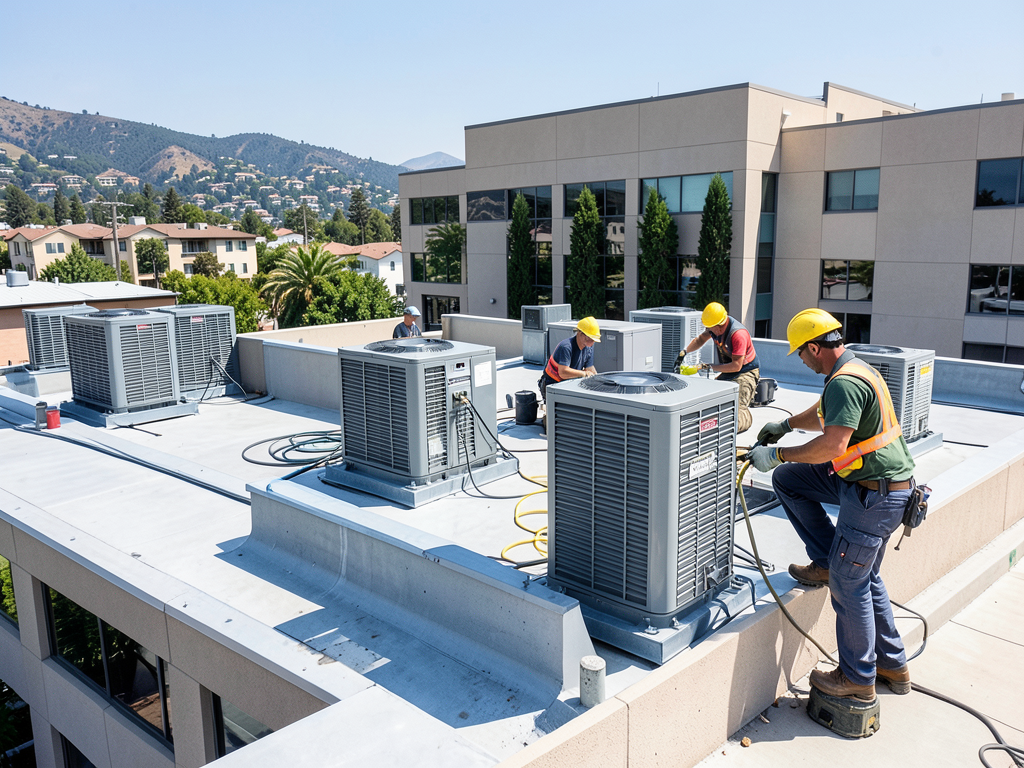
Preparing Your Sorrento Valley Office for a Hot and Productive Summer
Summer heat in Sorrento Valley can cripple productivity fast. When your air conditioning fails on a 95-degree day, employees sweat through meetings and equipment overheats. The problem isn’t just discomfort. It’s lost revenue, damaged electronics, and frustrated clients walking into a sweltering lobby.
Most office HVAC systems in Sorrento Valley weren’t designed for today’s cooling demands. They’re running 40% harder than when installed, with dirty coils, clogged filters, and failing capacitors. That’s why summer breakdowns happen. Not because the equipment is old, but because nobody maintained it properly. Zone Control Systems.
The good news. A comprehensive summer prep cuts cooling costs by 15-25% and prevents 90% of emergency repairs. Let’s walk through exactly what your Sorrento Valley office needs before the heat hits. EPA Section 608 Certification.
Why Sorrento Valley Offices Face Unique Cooling Challenges
Sorrento Valley sits in a coastal-inland transition zone. Morning marine layer gives way to afternoon heat spikes that inland areas like Poway experience all day. Your building absorbs that temperature swing twice daily.. Read more about How to Run Your Poway AC System Off a Backup Battery During Power Outages.
Many Sorrento Valley office parks were built in the 1980s and 1990s with rooftop units designed for milder conditions. Today’s heat waves push these systems past their limits. Add in the biotech labs and data centers that generate internal heat loads, and you’ve got a recipe for summer failures.
The other factor. Salt air from the coast corrodes condenser coils and electrical connections even five miles inland. That corrosion creates resistance, which creates heat, which makes your system work harder until something fails.
The Cost of Summer HVAC Failure in Business Hours
When your AC dies at 2 PM on a Tuesday, every minute costs money. Employees slow down. Computers throttle performance. Clients see a business that can’t control its environment.
Emergency service calls in Sorrento Valley run $350-500 just for dispatch during business hours. Add parts markup and overtime labor, and you’re looking at $1,200-2,500 for a basic repair. That’s if the part is in stock. If not, you’re down for days.
Compare that to preventive maintenance at $150-300 per visit. You get clean coils, tested capacitors, calibrated thermostats, and priority service status. The ROI is obvious.
Commercial HVAC Maintenance Checklist for Sorrento Valley Summer
Start with these tasks at least 30 days before summer heat arrives. This gives you time to order parts and schedule downtime.
- Clean Condenser Coils
Remove dirt, debris, and salt buildup from outdoor units. Dirty coils reduce efficiency by 30% and cause compressors to overheat.
- Replace Air Filters
Install high-efficiency filters rated MERV 8-11 for commercial spaces. Clogged filters restrict airflow and make systems work 20% harder.
- Test Refrigerant Levels
Low refrigerant causes ice buildup and compressor failure. A 10% undercharge increases energy use by 20%.
- Check Electrical Connections
Corroded terminals create resistance and heat. Tighten all connections and apply dielectric grease to prevent future corrosion.
- Calibrate Thermostats
Inaccurate thermostats cause short cycling and uneven cooling. Test against a calibrated thermometer and adjust as needed.
- Inspect Ductwork
Leaks waste 20-30% of cooled air. Seal accessible joints with mastic and check for insulation damage.
- Clean Drain Lines
Clogged condensate drains cause water damage and system shutdowns. Flush with vinegar solution to prevent algae growth.
Energy Efficiency Upgrades That Pay for Themselves
Beyond basic maintenance, several upgrades reduce summer cooling costs significantly.
Smart thermostats learn occupancy patterns and adjust temperatures automatically. They can cut cooling costs by 10-15% without sacrificing comfort. Modern commercial models integrate with building management systems and provide energy usage reports.
Variable frequency drives on rooftop units match fan speed to cooling demand instead of running at full blast constantly. This alone can reduce fan energy use by 30-50%.
High-efficiency filters with MERV 13 ratings capture more particles without restricting airflow when properly sized. This improves indoor air quality and reduces coil cleaning frequency.
UV light systems installed in air handlers kill mold and bacteria that grow in the cool, dark environment. This prevents coil fouling and maintains peak efficiency.
Understanding California Title 24 Energy Standards
California Title 24 mandates specific energy efficiency standards for commercial buildings. Your Sorrento Valley office must comply with these regulations or face fines and mandatory upgrades. California Title 24 Energy Standards.
For cooling systems installed after 2020, Title 24 requires minimum SEER ratings of 15 for packaged units and 16 for split systems. Older units with SEER 10-12 ratings consume 30-50% more energy.
The standards also mandate economizer controls that use cool outside air when available, demand-controlled ventilation, and proper duct sealing. Non-compliant systems can’t be legally operated in California.
Regular maintenance helps you stay compliant by documenting system performance and identifying efficiency issues before they become code violations. Humidity Issues Indoors.
Emergency Response Planning for Summer Heat Waves
Even with perfect maintenance, extreme heat can push any system to failure. Having a plan prevents chaos when it happens.
First, identify critical cooling zones. Server rooms, labs, and executive offices need priority restoration. Install temporary spot coolers in these areas as backup.
Second, establish a relationship with an HVAC contractor who offers 24/7 emergency service. Many Sorrento Valley businesses wait until failure to find help, then discover every contractor is booked for days.
Third, keep spare filters, capacitors, and contactors on site. These common failure points can be replaced in minutes if you have the parts.
Finally, train your facilities staff on basic troubleshooting. Knowing how to reset a breaker or clear a drain line can save hours of downtime.
Indoor Air Quality Considerations for Summer
Summer cooling brings indoor air quality challenges that affect employee health and productivity.
High humidity promotes mold growth in ductwork and on cooling coils. This releases spores into the air and creates musty odors. Dehumidification settings should maintain 40-50% relative humidity.
Pollen counts peak in summer, especially in Sorrento Valley’s transitional climate. High-efficiency filters capture these particles before they circulate through your office.
Off-gassing from office furniture and equipment increases in warm conditions. Proper ventilation and air exchange rates prevent buildup of volatile organic compounds.
Regular filter changes and coil cleaning address these issues before they impact air quality.
Cost-Benefit Analysis of Preventive vs. Reactive Maintenance
Let’s compare the real costs of different maintenance approaches over a five-year period.
| Maintenance Approach | Annual Cost | 5-Year Total | Emergency Repairs | Energy Savings |
|---|---|---|---|---|
| Preventive (Quarterly) | $1,200 | $6,000 | 1-2 minor | 15-25% |
| Reactive Only | $300 | $1,500 | 3-5 major | 0% |
| Hybrid (Annual + On-Demand) | $600 | $3,000 | 2-3 moderate | 5-10% |
Preventive maintenance costs more annually but saves money long-term through energy efficiency and avoided emergency repairs. The hybrid approach offers middle-ground savings but still leaves you vulnerable to major failures.
Common Summer HVAC Problems in Sorrento Valley
Understanding failure patterns helps you spot problems early.
Capacitor failure is the most common issue. These components degrade in heat and can’t start compressors when temperatures exceed 90 degrees. You’ll hear a clicking sound when the system tries to start but fails.
Refrigerant leaks often appear in summer when systems work hardest. Small leaks that were manageable in spring become catastrophic in July heat. Signs include ice on refrigerant lines and hissing sounds near coils.
Condensate drain clogs cause water damage and system shutdowns. Summer humidity increases condensate production, overwhelming partially blocked drains. You’ll see water pooling near indoor units.
Thermostat failures create uneven cooling and short cycling. Heat from direct sunlight or equipment can fool thermostats into thinking rooms are warmer than they are.
Selecting the Right HVAC Contractor for Sorrento Valley
Not all HVAC contractors understand Sorrento Valley’s unique needs. Look for these qualifications when choosing a service provider.
Experience with commercial rooftop units is essential. Many residential contractors lack the training and equipment to service large commercial systems safely.
EPA Section 608 certification is required for handling refrigerants. Ask for proof of current certification for all technicians who’ll work on your systems.
California C-20 license is mandatory for commercial HVAC work. Verify the license is active and in good standing with the California Contractors State License Board.
Local references from Sorrento Valley or nearby business parks demonstrate familiarity with your building type and common local issues.
Insurance coverage including workers’ compensation and general liability protects your business from liability if accidents occur on site.
Creating a Summer HVAC Maintenance Schedule
Timing matters for preventive maintenance. Here’s a schedule that maximizes efficiency and minimizes disruption.
Late April: Complete system inspection and cleaning. Test all components under load conditions similar to summer operation.
Early June: Second inspection focusing on refrigerant levels and electrical connections. Address any issues found in April.
Mid-July: Quick check of critical components during peak season. Replace filters and clean accessible areas.
Early September: Post-summer inspection to identify wear patterns and prepare for fall cooling reduction.
Mark these dates on your calendar and schedule contractors at least 30 days in advance. Summer is peak season for HVAC services.
Technology Integration for Smart Building Management
Modern building management systems (BMS) integrate HVAC control with other building systems for optimal efficiency.
Smart sensors monitor temperature, humidity, and occupancy in real-time. The system adjusts cooling output automatically, reducing energy waste in unoccupied areas.
Predictive maintenance algorithms analyze system performance data to identify potential failures before they occur. This allows scheduling repairs during planned downtime instead of emergency situations.
Energy usage dashboards show exactly where cooling dollars go. You can identify inefficient zones and make targeted improvements.
Integration with utility company programs can provide demand response capabilities that reduce peak energy costs.
Financial Incentives for Energy Efficiency Upgrades
SDG&E and federal programs offer rebates for energy-efficient HVAC upgrades that can offset significant costs.
High-efficiency rooftop units with SEER ratings above 16 may qualify for $500-1,000 rebates per unit. Variable frequency drives often have separate incentives of $300-600 each.
Smart thermostats for commercial buildings can earn $100-200 rebates when installed by certified contractors.
Federal tax credits for energy efficiency improvements can provide up to 10% of project costs as deductions on your next tax return.
These incentives change annually, so check current programs before making upgrade decisions.
Employee Comfort and Productivity Metrics
Comfortable employees are productive employees. Research shows optimal office temperatures range from 68-74 degrees Fahrenheit for knowledge work.
Temperature variations of more than 5 degrees across an office create hot and cold spots that distract workers. Proper system balancing eliminates these variations.
Humidity levels between 40-60% prevent that sticky feeling that makes people uncomfortable and reduces concentration.
Air velocity should be low enough that papers don’t blow around but high enough to distribute conditioned air evenly. This typically means 50-100 feet per minute at occupied levels.
Monitoring these factors helps you maintain an environment where people can focus on work instead of their discomfort.
Preparing for Extreme Heat Events
Climate change is making heat waves more frequent and intense in Southern California. Preparing for extreme events protects your business.
Install temporary spot coolers that can be deployed quickly when primary systems fail. These portable units provide immediate relief in critical areas.
Consider backup power options like generators or battery systems. AC units consume enormous power, and grid failures during heat waves leave you without cooling when you need it most.
Train employees on heat emergency procedures. Know when to send people home for safety and how to protect sensitive equipment during outages.
Keep contact information for all building tenants and key personnel updated. Communication is critical during emergencies.
Long-Term Planning for HVAC System Replacement
Even well-maintained systems eventually need replacement. Planning ahead prevents emergency decisions.
Most commercial rooftop units last 15-20 years with proper maintenance. Systems over 15 years old should be evaluated for replacement rather than repair.
Energy efficiency improvements in new equipment often provide 30-50% energy savings compared to units installed 15 years ago. The utility savings can justify replacement even if the old unit still works.
Phased replacement allows budgeting over several years instead of one large capital expense. Replace oldest units first and work forward.
Consider building expansion or usage changes when planning replacements. New equipment should accommodate future growth, not just current needs.
Final Summer Preparation Checklist
Before summer heat arrives, complete this final checklist to ensure your office is ready.
- Test all thermostats and verify they’re reading accurately
- Clean or replace all air filters
- Inspect and clean condenser coils
- Check refrigerant levels and pressures
- Test all electrical connections and components
- Verify condensate drains are clear and functioning
- Inspect ductwork for leaks and damage
- Test emergency backup systems if installed
- Review maintenance records for recurring issues
- Confirm 24/7 emergency service contact information
Completing these tasks gives you confidence that your Sorrento Valley office will stay cool and productive all summer long.
Frequently Asked Questions
How often should commercial HVAC systems be serviced in Sorrento Valley?
Commercial systems need quarterly maintenance in Sorrento Valley due to the coastal-inland climate transition. This schedule prevents salt air corrosion and addresses seasonal temperature swings that stress equipment.
What’s the typical lifespan of a commercial rooftop unit in San Diego?
Commercial rooftop units in San Diego typically last 15-20 years with proper maintenance. Salt air exposure and marine layer humidity can reduce lifespan to 12-15 years without regular cleaning and corrosion protection.
How much can preventive maintenance reduce energy costs?
Preventive maintenance typically reduces commercial cooling costs by 15-25% through improved efficiency. Clean coils, proper refrigerant levels, and calibrated controls all contribute to lower energy consumption during peak summer months.
What should we do if our AC fails during business hours?
Immediately contact your 24/7 emergency HVAC service. Move critical operations to cooler areas, provide fans for employee comfort, and protect sensitive equipment from heat exposure. Document downtime for insurance purposes.
Are there rebates available for HVAC upgrades in Sorrento Valley?
Yes, SDG&E offers rebates for high-efficiency commercial HVAC equipment, smart thermostats, and variable frequency drives. Federal tax credits may also apply. Check current programs before scheduling upgrades as incentives change annually.
Take Action Before Summer Heat Arrives
Don’t wait until your Sorrento Valley office is sweltering to address HVAC issues. The time to act is now, before summer heat waves hit and emergency service calls overwhelm every contractor in San Diego.
A comprehensive summer prep takes 2-3 weeks from scheduling to completion. That means you need to call today to ensure your office is ready when temperatures climb.
Call (619) 304-5777 today to schedule your summer HVAC inspection. Our technicians understand Sorrento Valley’s unique climate challenges and will ensure your system is ready for whatever summer brings.
Pick up the phone and call (619) 304-5777 before the next heat wave hits. Your employees, clients, and equipment will thank you for keeping them cool and productive all summer long.
{
“@context”: “https://schema.org”,
“@type”: “BlogPosting”,
“headline”: “Preparing Your Sorrento Valley Office for a Hot and Productive Summer”,
“description”: “Is your Sorrento Valley office ready for summer heat? Discover essential HVAC maintenance tips to keep your workspace cool, efficient, and productive all season long.”,
“wordCount”: 2431,
“datePublished”: “2026-06-02T10:42:00.000Z”,
“dateModified”: “2026-06-02T10:42:00.000Z”,
“inLanguage”: “en-US”,
“mainEntityOfPage”: {
“@type”: “WebPage”,
“@id”: “https://elitehvacsandiego.com”
},
“publisher”: {
“@type”: “LocalBusiness”,
“name”: “Elite HVAC San Diego”,
“url”: “https://elitehvacsandiego.com”
},
“author”: {
“@type”: “Organization”,
“name”: “Elite HVAC San Diego”,
“url”: “https://elitehvacsandiego.com”
},
“image”: {
“@type”: “ImageObject”,
“url”: “https://elitehvacsandiego.com/wp-content/uploads/2026/03/preparing-your-sorrento-valley-office-for-a-hot-an-1.png”
}
}
{
“@context”: “https://schema.org”,
“@type”: “HVACBusiness”,
“name”: “Elite HVAC San Diego”,
“url”: “https://elitehvacsandiego.com”,
“address”: {
“@type”: “PostalAddress”,
“addressLocality”: “San Diego”
},
“areaServed”: {
“@type”: “City”,
“name”: “San Diego”
}
}
{
“@context”: “https://schema.org”,
“@type”: “FAQPage”,
“mainEntity”: [
{
“@type”: “Question”,
“name”: “How often should commercial HVAC systems be serviced in Sorrento Valley?”,
“acceptedAnswer”: {
“@type”: “Answer”,
“text”: “Commercial systems need quarterly maintenance in Sorrento Valley due to the coastal-inland climate transition. This schedule prevents salt air corrosion and addresses seasonal temperature swings that stress equipment.”
}
},
{
“@type”: “Question”,
“name”: “What’s the typical lifespan of a commercial rooftop unit in San Diego?”,
“acceptedAnswer”: {
“@type”: “Answer”,
“text”: “Commercial rooftop units in San Diego typically last 15-20 years with proper maintenance. Salt air exposure and marine layer humidity can reduce lifespan to 12-15 years without regular cleaning and corrosion protection.”
}
},
{
“@type”: “Question”,
“name”: “How much can preventive maintenance reduce energy costs?”,
“acceptedAnswer”: {
“@type”: “Answer”,
“text”: “Preventive maintenance typically reduces commercial cooling costs by 15-25% through improved efficiency. Clean coils, proper refrigerant levels, and calibrated controls all contribute to lower energy consumption during peak summer months.”
}
},
{
“@type”: “Question”,
“name”: “What should we do if our AC fails during business hours?”,
“acceptedAnswer”: {
“@type”: “Answer”,
“text”: “Immediately contact your 24/7 emergency HVAC service. Move critical operations to cooler areas, provide fans for employee comfort, and protect sensitive equipment from heat exposure. Document downtime for insurance purposes.”
}
},
{
“@type”: “Question”,
“name”: “Are there rebates available for HVAC upgrades in Sorrento Valley?”,
“acceptedAnswer”: {
“@type”: “Answer”,
“text”: “Yes, SDG&E offers rebates for high-efficiency commercial HVAC equipment, smart thermostats, and variable frequency drives. Federal tax credits may also apply. Check current programs before scheduling upgrades as incentives change annually.”
}
}
]
}
{
“@context”: “https://schema.org”,
“@type”: “HowTo”,
“name”: “Summer HVAC Preparation Steps”,
“step”: [
{
“@type”: “HowToStep”,
“position”: 1,
“name”: “Clean Condenser Coils”,
“text”: “Remove dirt, debris, and salt buildup from outdoor units. Dirty coils reduce efficiency by 30% and cause compressors to overheat.”
},
{
“@type”: “HowToStep”,
“position”: 2,
“name”: “Replace Air Filters”,
“text”: “Install high-efficiency filters rated MERV 8-11 for commercial spaces. Clogged filters restrict airflow and make systems work 20% harder.”
},
{
“@type”: “HowToStep”,
“position”: 3,
“name”: “Test Refrigerant Levels”,
“text”: “Low refrigerant causes ice buildup and compressor failure. A 10% undercharge increases energy use by 20%.”
},
{
“@type”: “HowToStep”,
“position”: 4,
“name”: “Check Electrical Connections”,
“text”: “Corroded terminals create resistance and heat. Tighten all connections and apply dielectric grease to prevent future corrosion.”
},
{
“@type”: “HowToStep”,
“position”: 5,
“name”: “Calibrate Thermostats”,
“text”: “Inaccurate thermostats cause short cycling and uneven cooling. Test against a calibrated thermometer and adjust as needed.”
},
{
“@type”: “HowToStep”,
“position”: 6,
“name”: “Inspect Ductwork”,
“text”: “Leaks waste 20-30% of cooled air. Seal accessible joints with mastic and check for insulation damage.”
},
{
“@type”: “HowToStep”,
“position”: 7,
“name”: “Clean Drain Lines”,
“text”: “Clogged condensate drains cause water damage and system shutdowns. Flush with vinegar solution to prevent algae growth.”
}
],
“image”: “https://elitehvacsandiego.com/wp-content/uploads/2026/03/preparing-your-sorrento-valley-office-for-a-hot-an-1.png”
}
{
“@context”: “https://schema.org”,
“@type”: “BreadcrumbList”,
“itemListElement”: [
{
“@type”: “ListItem”,
“position”: 1,
“name”: “Home”,
“item”: “https://elitehvacsandiego.com”
},
{
“@type”: “ListItem”,
“position”: 2,
“name”: “Blog”,
“item”: “https://elitehvacsandiego.com/blog”
},
{
“@type”: “ListItem”,
“position”: 3,
“name”: “Preparing Your Sorrento Valley Office for a Hot and Productive Summer”
}
]
}
{
“@context”: “https://schema.org”,
“@type”: “Service”,
“serviceType”: “HVAC”,
“provider”: {
“@type”: “LocalBusiness”,
“name”: “Elite HVAC San Diego”,
“url”: “https://elitehvacsandiego.com”
},
“areaServed”: {
“@type”: “City”,
“name”: “San Diego”
},
“description”: “Is your Sorrento Valley office ready for summer heat? Discover essential HVAC maintenance tips to keep your workspace cool, efficient, and productive all season long.”
}