
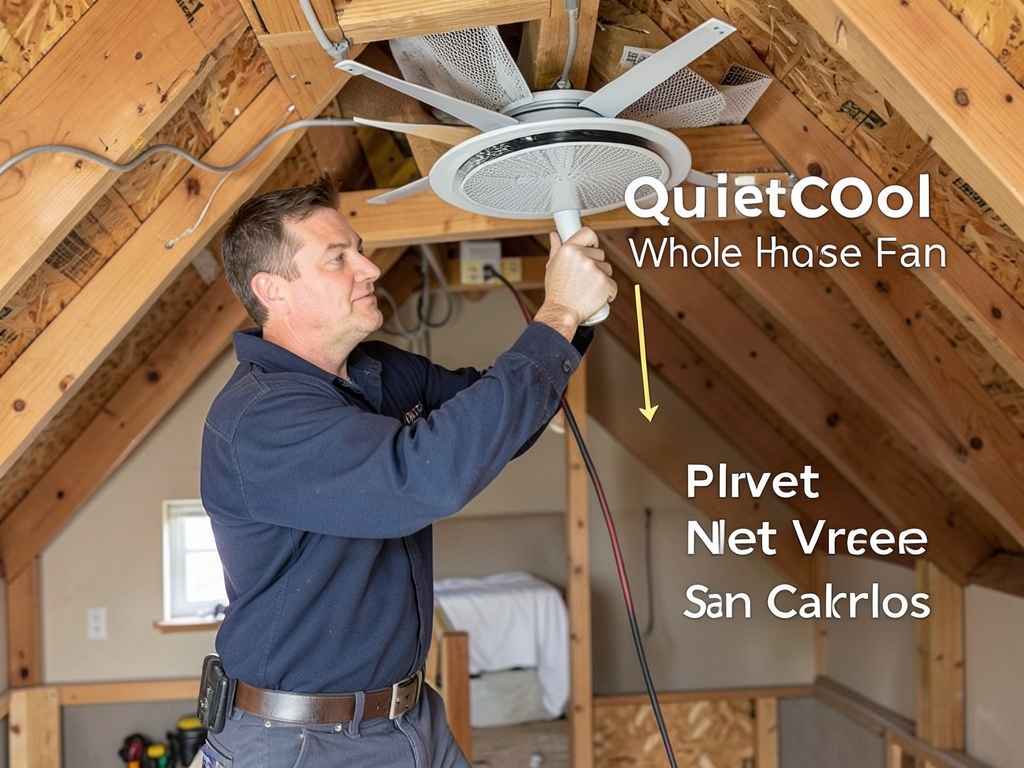
Is a Whole House Fan Better Than AC for Your San Carlos Home?
If you live in San Carlos and dread summer energy bills, you’re not alone. The question of whether a whole house fan beats traditional air conditioning comes down to your home’s layout, the local climate, and how you use cooling. Whole house fans pull cool evening air through your home and push hot air out the attic, while AC refrigerates indoor air. For many San Carlos homes, the right choice depends on evening temperatures, humidity, and attic ventilation. Energy Upgrade California.
How Whole House Fans and AC Actually Work
Whole house fans sit in the ceiling, usually in a central hallway, and move large volumes of air—often 1,500 to 5,000 CFM—when outdoor temperatures drop. They rely on San Diego’s diurnal temperature swing, where nights cool off quickly. Air conditioning, by contrast, uses refrigerant cycles to remove heat and moisture regardless of outdoor conditions. In San Carlos, where marine layer evenings are common, a whole house fan can cool a home in 30 to 60 minutes if the attic is properly vented. San Diego County Stormwater Quality Manual.
Cost Comparison: Whole House Fan vs. AC in San Carlos
Installing a whole house fan typically costs $1,200 to $2,500, while a new central AC system runs $5,000 to $12,000. Operating costs differ even more: a whole house fan uses about 200 to 700 watts, costing roughly $0.20 to $0.70 per night. A 3-ton AC unit can draw 3,500 watts, costing $3 to $5 per hour during peak SDG&E pricing. Over a summer, whole house fans can save San Carlos homeowners $50 to $150 monthly if used during cool evenings. How to Retrofit Central Air into Older North Park Homes.
The San Carlos Climate Factor
San Carlos sits in a transitional zone—close enough to the coast for cool marine layer nights but far enough inland to get warm afternoons. This makes whole house fans effective from late spring through early fall when nighttime lows dip into the 60s. During May Gray and June Gloom, humidity can rise above 70%, reducing fan efficiency. In those stretches, AC’s dehumidification becomes more valuable. Homes near Cowles Mountain or the canyon areas may need supplemental AC on still, warm nights. Humidity Issues Indoors.
Noise, Air Quality, and Installation Considerations
Modern units like QuietCool fans operate at 50 to 60 decibels from inside the home—quieter than a normal conversation. Traditional belt-driven fans can hit 70 dB. Whole house fans improve indoor air quality by flushing out stale air, pet dander, and VOCs, but they don’t filter incoming air like AC with MERV-rated filters. Installation requires adequate attic net free vent area—typically 1 square foot per 750 CFM of fan capacity per California Title 24. Without proper venting, pressure can build and reduce performance. The Best Quiet Air Conditioners for Hillcrest Apartments and Condos.
Pros and Cons Matrix
| Feature | Whole House Fan | Central AC |
|---|---|---|
| Initial Cost | $1,200 – $2,500 | $5,000 – $12,000 |
| Monthly Operating Cost | $15 – $30 | $150 – $300 |
| Noise Level (inside) | 50 – 60 dB | 40 – 50 dB |
| Air Filtration | None | MERV 8 – 16 |
| Humidity Control | None | Excellent |
| Best for San Carlos | Evening/night cooling | Daytime/consistent cooling |
Hybrid Cooling: Using Both Systems
Many San Carlos homeowners use a whole house fan during the first and last cooling months, then switch to AC in July and August. This cuts energy use by 30% to 50% while keeping indoor temperatures consistent. The fan pre-cools the home, reducing AC runtime. During heatwaves or high-humidity stretches, AC handles the load. A smart thermostat can automate the switch based on outdoor temperature and humidity.
Attic Ventilation Requirements
California Building Code requires net free vent area equal to 1/750 of the fan’s CFM rating. For a 3,000 CFM fan, you need at least 4 square feet of combined soffit and roof vent area. Without this, the fan can’t exhaust heat fast enough, leading to backdrafting or reduced airflow. Homes in San Carlos with minimal eaves or closed-off attics may need additional vents or a power attic ventilator to make a whole house fan effective.
Health and Air Quality Impact
Whole house fans exchange all indoor air within 3 to 5 minutes, dramatically reducing CO2, VOCs, and cooking odors. However, they also draw in pollen, dust, and outdoor pollutants. If anyone in your home has allergies, consider pairing the fan with a HEPA air purifier or using it only when outdoor air quality is good. AC recirculates and filters indoor air, maintaining consistent IAQ but trapping heat inside if not paired with ventilation.
Installation and Maintenance Differences
Installing a whole house fan takes 2 to 4 hours and requires cutting a ceiling hole, mounting the unit, and verifying attic venting. Maintenance is minimal—just clean the shutter and check the belt annually. Central AC installation takes 1 to 3 days, involves refrigerant lines, electrical work, and possibly duct modification. Annual maintenance includes coil cleaning, refrigerant checks, and filter replacement. For San Carlos homes with limited attic access, fan installation may require creative mounting solutions.
Energy Efficiency and Environmental Impact
A whole house fan uses 90% less electricity than a central AC unit, reducing your carbon footprint and easing strain on the SDG&E grid during peak hours. If your home has solar panels, running a fan during the day can be nearly free. AC efficiency is measured by SEER2 ratings; modern units start around SEER2 15, while fans have no equivalent rating because they don’t cool air—just move it. For San Carlos’ mild nights, the fan’s energy savings are substantial.
Common Mistakes and How to Avoid Them
Installing a fan that’s too small for your home’s square footage reduces effectiveness. A 2,000-square-foot home typically needs at least 2,500 CFM. Skipping attic venting is another error—without it, the fan just circulates hot air. Running the fan during the hottest part of the day wastes energy and can pull in hot attic air. Always use a thermostat or timer to activate the fan only when outdoor temps are lower than indoor temps.
Local Rebates and Incentives
San Diego Gas & Electric offers rebates for high-efficiency AC units, but not for whole house fans. However, some local utilities and energy upgrade programs provide incentives for attic insulation and ventilation improvements that complement fan performance. Check Energy Upgrade California for current offers. If you’re installing solar, the fan’s low power draw means you can cool your home without drawing from the grid during evening peak hours.
When to Choose One Over the Other
Choose a whole house fan if you have cool evening breezes, adequate attic venting, and want to cut energy costs. It’s ideal for single-story ranch homes or homes with open floor plans. Choose AC if you need consistent cooling during the day, have humidity issues, or live in a tightly sealed home. For two-story homes in San Carlos, a fan on the upper floor can pre-cool bedrooms while the lower level stays comfortable with minimal AC use.
Final Recommendation for San Carlos Homeowners
For most San Carlos homes, a whole house fan is the smarter first step. It costs less, uses far less energy, and works perfectly with the local climate for much of the year. Add central AC only if you find yourself uncomfortable during peak summer heat or if humidity becomes an issue. The hybrid approach—fan first, AC second—gives you the best balance of comfort, cost, and environmental impact.
Frequently Asked Questions
Can I install a whole house fan myself?
DIY installation is possible if you have electrical and carpentry experience, but proper attic venting and wiring are critical. Mistakes can reduce efficiency or create safety hazards. Professional installation ensures code compliance and optimal performance.
How long does a whole house fan last?
With proper maintenance, a quality whole house fan can last 15 to 20 years. The motor and bearings are the most common wear items. Regular cleaning and occasional belt replacement extend lifespan.
Will a whole house fan work in a two-story home?
Yes, but placement matters. Installing the fan on the upper floor draws heat from both levels. You may need additional attic vents or a second fan for very large homes. Zoning with dampers can direct airflow where needed.
Does a whole house fan remove smoke from wildfires?
It can help flush indoor smoke, but it also draws in outdoor air. During wildfire events, it’s safer to keep windows closed and use AC with HEPA filtration to maintain indoor air quality.
Ready to Cool Your San Carlos Home Efficiently?
Call (619) 304-5777 today to schedule your free home cooling assessment. We’ll evaluate your attic venting, recommend the right system, and show you exactly how much you can save on your SDG&E bill. Don’t wait for the next heat wave—pick up the phone and call (619) 304-5777 before summer arrives.
{
“@context”: “https://schema.org”,
“@type”: “BlogPosting”,
“headline”: “Is a Whole House Fan Better Than AC for Your San Carlos Home?”,
“description”: “Compare whole house fans vs. AC for San Carlos homes. Learn energy costs, QuietCool technology, and which system fits your coastal microclimate best.”,
“wordCount”: 1478,
“datePublished”: “2026-04-28T10:06:00.000Z”,
“dateModified”: “2026-04-28T10:06:00.000Z”,
“inLanguage”: “en-US”,
“mainEntityOfPage”: {
“@type”: “WebPage”,
“@id”: “https://elitehvacsandiego.com”
},
“publisher”: {
“@type”: “LocalBusiness”,
“name”: “Elite HVAC San Diego”,
“url”: “https://elitehvacsandiego.com”
},
“author”: {
“@type”: “Organization”,
“name”: “Elite HVAC San Diego”,
“url”: “https://elitehvacsandiego.com”
},
“image”: {
“@type”: “ImageObject”,
“url”: “https://elitehvacsandiego.com/wp-content/uploads/2026/03/is-a-whole-house-fan-better-than-ac-for-your-san-c-1.png”
}
}
{
“@context”: “https://schema.org”,
“@type”: “HVACBusiness”,
“name”: “Elite HVAC San Diego”,
“url”: “https://elitehvacsandiego.com”,
“address”: {
“@type”: “PostalAddress”,
“addressLocality”: “San Diego”
},
“areaServed”: {
“@type”: “City”,
“name”: “San Diego”
}
}
{
“@context”: “https://schema.org”,
“@type”: “FAQPage”,
“mainEntity”: [
{
“@type”: “Question”,
“name”: “Can I install a whole house fan myself?”,
“acceptedAnswer”: {
“@type”: “Answer”,
“text”: “DIY installation is possible if you have electrical and carpentry experience, but proper attic venting and wiring are critical. Mistakes can reduce efficiency or create safety hazards. Professional installation ensures code compliance and optimal performance.”
}
},
{
“@type”: “Question”,
“name”: “How long does a whole house fan last?”,
“acceptedAnswer”: {
“@type”: “Answer”,
“text”: “With proper maintenance, a quality whole house fan can last 15 to 20 years. The motor and bearings are the most common wear items. Regular cleaning and occasional belt replacement extend lifespan.”
}
},
{
“@type”: “Question”,
“name”: “Will a whole house fan work in a two-story home?”,
“acceptedAnswer”: {
“@type”: “Answer”,
“text”: “Yes, but placement matters. Installing the fan on the upper floor draws heat from both levels. You may need additional attic vents or a second fan for very large homes. Zoning with dampers can direct airflow where needed.”
}
},
{
“@type”: “Question”,
“name”: “Does a whole house fan remove smoke from wildfires?”,
“acceptedAnswer”: {
“@type”: “Answer”,
“text”: “It can help flush indoor smoke, but it also draws in outdoor air. During wildfire events, it’s safer to keep windows closed and use AC with HEPA filtration to maintain indoor air quality.”
}
},
{
“@type”: “Question”,
“name”: “Ready to Cool Your San Carlos Home Efficiently?”,
“acceptedAnswer”: {
“@type”: “Answer”,
“text”: “Call (619) 304-5777 today to schedule your free home cooling assessment. We’ll evaluate your attic venting, recommend the right system, and show you exactly how much you can save on your SDG&E bill. Don’t wait for the next heat wave—pick up the phone and call (619) 304-5777 before summer arrives.”
}
}
]
}
{
“@context”: “https://schema.org”,
“@type”: “BreadcrumbList”,
“itemListElement”: [
{
“@type”: “ListItem”,
“position”: 1,
“name”: “Home”,
“item”: “https://elitehvacsandiego.com”
},
{
“@type”: “ListItem”,
“position”: 2,
“name”: “Blog”,
“item”: “https://elitehvacsandiego.com/blog”
},
{
“@type”: “ListItem”,
“position”: 3,
“name”: “Is a Whole House Fan Better Than AC for Your San Carlos Home?”
}
]
}
{
“@context”: “https://schema.org”,
“@type”: “Service”,
“serviceType”: “HVAC”,
“provider”: {
“@type”: “LocalBusiness”,
“name”: “Elite HVAC San Diego”,
“url”: “https://elitehvacsandiego.com”
},
“areaServed”: {
“@type”: “City”,
“name”: “San Diego”
},
“description”: “Compare whole house fans vs. AC for San Carlos homes. Learn energy costs, QuietCool technology, and which system fits your coastal microclimate best.”
}