
How the Eastlake Hard Water Table Can Lead to Frequent AC Drain Clogs
Your Eastlake home’s air conditioning system faces a unique challenge that most San Diego homeowners don’t realize exists. The hard water table beneath Eastlake creates mineral-rich condensate that flows through your AC drain lines every day. This mineral content combined with our coastal humidity creates the perfect storm for drain line clogs that can shut down your cooling system when you need it most. Humidity Issues Indoors.
Eastlake sits on a geological formation where underground water contains higher mineral concentrations than other parts of Chula Vista. When your AC evaporator coil extracts moisture from the air, that water mixes with these minerals and flows into your drain line. Over time, calcium and magnesium deposits build up inside the PVC pipes, creating a rough surface where algae and mold can easily attach and grow. HVAC Vista.
The problem compounds because Eastlake’s proximity to San Diego Bay means higher humidity levels year-round. Your AC unit runs more frequently to combat this moisture, producing more condensate that carries more minerals through your drain system. This creates a cycle where mineral scaling and biological growth feed off each other, eventually blocking the narrow drain line completely.
Why Your AC Condensate Line Clogs The Top 5 Culprits
Understanding what causes these clogs helps you recognize the early warning signs before your system shuts down. Eastlake homes face all five common causes, but mineral scaling from hard water makes them happen faster than in other neighborhoods.
Algae and Mold Growth Common in High Humidity
San Diego’s coastal humidity creates ideal conditions for biological growth inside drain lines. When warm, moist air hits the cool evaporator coil, water condenses and carries airborne spores into the drain system. These spores settle on mineral deposits and multiply rapidly, forming a slimy biofilm that narrows the pipe diameter.
The biofilm acts like a sponge, trapping more minerals and creating a self-sustaining clog. You can often smell this growth before you see any water problems. A musty odor near your indoor unit indicates biological activity in the drain line.
Dust and Debris Accumulation
Eastlake’s location near construction zones and busy roads means more dust enters your home’s air supply. Your AC filter catches most of it, but fine particles slip through and settle on the evaporator coil. When condensation forms, it washes this debris down into the drain pan and eventually into the drain line.
During Santa Ana wind events, dust levels spike dramatically. This fine particulate matter can overwhelm even good filters and accelerate drain line clogging. The combination of dust and mineral-rich water creates a cement-like sludge that’s difficult to remove without professional equipment.
Sludge and Bacterial Buildup
The technical term for this is bacterial biomass, but most HVAC technicians call it “slime” because of how it spreads through the drain system. This living material forms when bacteria feed on organic matter in the condensate, creating a thick, gelatinous substance that adheres to pipe walls.
Slime grows fastest in the P-trap section of your drain line, where water sits stagnant between AC cycles. The slime creates a perfect environment for more bacteria to multiply, eventually forming a complete blockage that prevents water from flowing at all.
Insect Nests Wasps and Mud Daubers
Eastlake’s suburban environment provides perfect habitat for insects that target AC drain lines. Wasps and mud daubers see the small opening of your drain line as an ideal location for building nests. Once inside, they create paper-like structures that completely block water flow.
These nests form quickly during warm months and can go unnoticed until your AC shuts down. The insects are attracted to the moisture and cool environment inside the drain line, making your AC unit a target for repeated infestations.
Improper P-Trap Installation
Many Eastlake homes were built during rapid development phases when contractors rushed installations. An improperly installed P-trap can cause water to back up in the drain line, creating standing water that promotes biological growth. The trap might be too shallow, too deep, or installed at the wrong angle.
A correctly installed P-trap should hold exactly 2-4 inches of water to create the proper seal while allowing free drainage. When the angle is off by even a few degrees, water flow becomes restricted and debris accumulates faster.
Signs Your Drain Line is Already Blocked
Recognizing the early warning signs of a clogged drain line can save you from costly water damage and system shutdowns. Eastlake homeowners should watch for these specific indicators that appear before complete failure occurs.
Water in the secondary drip pan is the most obvious sign. Your AC has a primary drain pan under the evaporator coil and a secondary pan underneath that. When the primary pan overflows, water appears in the secondary pan, which usually has a float switch that shuts down the system.
Musty odors near vents indicate biological growth somewhere in your system. This smell comes from mold and bacteria releasing spores into the air. If you notice this odor only when the AC runs, the problem is likely in the drain line or evaporator coil area.
AC system shutting off unexpectedly often means the float switch in the secondary pan activated. This safety feature prevents water damage by turning off the compressor when it detects water where it shouldn’t be. If your system shuts down and won’t restart, check for water in the secondary pan.
Water damage on the ceiling or flooring appears when the secondary pan also overflows or when the drain line backs up into the air handler. This damage can be extensive because it often goes unnoticed until drywall or flooring shows visible signs of moisture.
The San Diego Factor How Local Humidity Impacts Your HVAC
Eastlake’s location creates unique humidity challenges that accelerate AC drain line problems. Our coastal proximity means relative humidity levels often exceed 70% during morning hours, even when inland areas are dry.
The marine layer that blankets Eastlake during summer mornings creates constant moisture that your AC must remove. This moisture carries salt particles and other contaminants that settle on your evaporator coil and wash into the drain system. The salt acts as a catalyst for corrosion and biological growth.
During Santa Ana wind events, the situation reverses dramatically. These hot, dry winds blow dust and debris through every opening in your home. Your AC filter works overtime, but fine particles still reach the evaporator coil. When the winds subside and humidity returns, this debris combines with moisture to form stubborn clogs.
The temperature differential between Eastlake’s coastal influence and inland heat creates condensation cycles that stress drain systems. Your AC might run continuously during heat waves, then sit idle during cool marine layer periods. This on-off cycling prevents proper drainage and allows standing water to stagnate in the P-trap. Zone Control Systems.
DIY Maintenance vs Professional Hydro-Jetting
Eastlake homeowners often wonder if they can handle drain line maintenance themselves or if professional service is necessary. The answer depends on your system’s condition and your comfort level with basic HVAC maintenance.
DIY maintenance works for prevention but rarely fixes existing clogs. You can pour a mixture of vinegar and hot water down the drain line to kill some biological growth and dissolve minor mineral deposits. However, this only works if the line isn’t already significantly blocked.
The vinegar method requires locating the drain line cleanout port, which many Eastlake homes don’t have. Without this access point, you can only treat the system from the condensate pan, which limits effectiveness. The treatment also needs to sit for several hours to work properly, during which time your AC cannot run.
Professional hydro-jetting uses high-pressure water to scour the entire drain line, removing all buildup including stubborn mineral deposits and biological growth. This process requires specialized equipment that generates 1,500-3,000 PSI of pressure. The technician can also inspect the line with a camera to identify problem areas.
Hydro-jetting costs more upfront but provides longer-lasting results. A professional cleaning typically lasts 12-18 months in Eastlake’s hard water conditions, while DIY treatments might need monthly repetition. The professional service also includes inspection of other components that could be contributing to the problem.
Eastlake’s Hard Water Table Specific Geological Challenges
The hard water table beneath Eastlake creates conditions that make AC drain clogs more frequent and severe than in other San Diego neighborhoods. Understanding this geological reality helps explain why standard maintenance schedules don’t work here.
Eastlake sits on sedimentary rock formations where groundwater has been dissolving minerals for thousands of years. This process concentrates calcium, magnesium, and other minerals in the water table. When your AC extracts moisture from the air, it also concentrates these minerals in the condensate.
The concentration effect works like this: air at 70% humidity might contain 0.01% mineral content by volume. When your AC removes the water vapor, those minerals become concentrated in the remaining liquid. A single AC cycle might concentrate minerals 10-20 times beyond their original airborne concentration.
Eastlake’s water table also contains higher levels of dissolved solids than the municipal water supply. These solids include not just calcium and magnesium but also iron, manganese, and trace elements that contribute to scaling and staining. The combination creates a mineral cocktail that’s particularly aggressive toward PVC pipe interiors.
Local soil composition affects how water moves through the ground and what minerals it picks up. Eastlake’s soil contains clay layers that slow water movement, allowing more time for mineral dissolution. This creates water with higher total dissolved solids than areas with sandy or rocky soil.
Preventative Maintenance Schedule for Eastlake Homes
Eastlake homeowners need a maintenance schedule that accounts for our unique environmental conditions. Following a generic maintenance calendar from other regions will leave your system vulnerable to the specific challenges we face.
Quarterly inspections work best for Eastlake homes. Check your drain line every three months, with additional attention during seasonal transitions. The most critical times are late spring before summer heat arrives and early fall after heavy use during warm months.
Spring maintenance should focus on removing winter buildup and preparing for summer demand. Clean the drain line thoroughly, replace filters, and check for any damage from winter storms. This is also the time to apply algaecide tablets to the condensate pan. EPA.
Summer maintenance becomes more frequent due to heavy usage. Check the drain line monthly during peak cooling season. Look for signs of slow drainage, such as water in the secondary pan or unusual odors. Keep vegetation trimmed away from the outdoor unit to prevent debris from entering the system.
Fall maintenance addresses the buildup from summer operation. Remove all biological growth, flush the entire drain system, and inspect for any damage from summer storms. This is also the time to consider professional hydro-jetting if you notice any signs of reduced drainage.
Winter maintenance focuses on preparation for the rainy season. Ensure all drain lines are clear so they can handle the increased moisture from winter humidity. Check that outdoor drains are free from leaves and debris that could cause backups.
Water Damage Risks to Flooring and Drywall
When AC drain lines clog in Eastlake homes, the resulting water damage can be extensive and costly. Understanding these risks helps you appreciate why addressing drain line issues promptly is so important.
Hardwood flooring is particularly vulnerable to AC condensate damage. Water seeping from a clogged drain line can warp boards, cause cupping, and create permanent stains. The damage often appears first along walls where the secondary drain pan sits, creating a pattern that indicates the source.
Drywall damage from AC leaks can be deceptive. Water might travel along the back side of the drywall for several feet before showing visible signs. By the time you see a stain, the damage extends much further than the visible area suggests. The paper facing on drywall provides food for mold growth, accelerating deterioration.
Ceiling damage in multi-story Eastlake homes can be severe when the air handler is in the attic. A clogged drain line can dump gallons of water onto ceiling drywall, causing immediate collapse in severe cases. The weight of water-soaked drywall can exceed 300 pounds per sheet, creating both property damage and safety hazards.
Electrical system damage represents a hidden risk when AC condensate leaks occur. Water can travel along conduit, into junction boxes, or across electrical panels. This creates shock hazards and can cause short circuits that damage expensive equipment or create fire risks.
Professional Solutions for Eastlake AC Drain Problems
Eastlake homeowners have several professional options for addressing chronic drain line issues. The right solution depends on your system’s age, the severity of your hard water problems, and your long-term maintenance preferences.
Complete drain line replacement might be necessary for systems with extensive mineral scaling. When calcium and magnesium deposits build up over years, they create rough surfaces that promote biological growth. Replacing the line with smooth, new PVC and installing proper cleanouts can solve recurring problems.
Condensate pump installation helps when gravity drainage isn’t optimal. Some Eastlake homes have air handlers in basements or low areas where natural drainage is difficult. A condensate pump can move water uphill to an appropriate drain, eliminating the P-trap issues that often cause problems.
Water treatment systems for your AC can reduce mineral content in condensate. These systems use small cartridges that filter minerals from water before it enters the drain line. While more expensive initially, they can extend the life of your drain system and reduce maintenance frequency.
UV light installation in the air handler kills biological growth before it enters the drain line. These lights are particularly effective in Eastlake’s humid conditions where algae and mold grow rapidly. The UV light also improves indoor air quality by reducing airborne spores.
Building Code Requirements for Condensate Disposal
San Diego County building codes specify how AC condensate must be handled to prevent property damage and public health issues. Understanding these requirements helps ensure your system meets local standards.
According to the California Mechanical Code Section 307.2.2, condensate must be disposed of to an approved plumbing fixture or disposal area. The code prohibits discharging condensate onto walkways, streets, or areas where it could create hazards. This means your AC drain cannot simply dump water onto the ground outside your Eastlake home.
The code also requires that condensate drains include a water trap to prevent air circulation and contamination. This P-trap must be accessible for cleaning and maintain a minimum water seal depth of 2 inches. Many Eastlake drain line problems stem from improperly installed or maintained traps that don’t meet these standards.
Secondary drain pans are required when the air handler is located where water damage could occur. This includes attic installations common in Eastlake’s two-story homes. The pan must be at least 1.5 inches deep and sloped toward the drain connection to ensure complete water removal.
Float switches that shut down the system when water accumulates are mandatory in secondary drain pans. This safety feature prevents the extensive water damage that occurs when primary drains fail completely. The switch must be installed according to manufacturer specifications and tested regularly.
Cost Factors for Professional Drain Line Service
Eastlake homeowners should understand the cost factors that affect professional AC drain line service. Several variables influence pricing, and knowing these helps you evaluate quotes and avoid unexpected charges.
System accessibility significantly impacts service costs. Air handlers in tight attic spaces or difficult-to-reach mechanical closets require more time and specialized equipment to service. Eastlake’s mix of single-story ranch homes and multi-level properties means accessibility varies widely between properties.
The severity of the clog affects both time and equipment requirements. A simple algae blockage might clear in 30 minutes with basic tools, while a mineral-encrusted line could require several hours of hydro-jetting and camera inspection. The latter scenario also might reveal additional problems that need addressing.
After-hours service calls carry premium pricing. AC drain line problems often become apparent on hot weekend days when systems work hardest. Emergency service during these times can cost 50-100% more than standard business hours, making preventative maintenance more economical long-term.
Additional repairs might be necessary if the clog caused damage to other components. A backed-up drain line can overflow into the air handler, damaging fan motors, control boards, or insulation. These secondary repairs add to the total cost but are essential for full system restoration.
Seasonal Timing for Eastlake AC Maintenance
Eastlake’s unique climate patterns create specific timing considerations for AC maintenance that differ from other San Diego areas. Understanding these seasonal factors helps you schedule service when it’s most effective and economical.
Late March through April represents the ideal window for comprehensive AC maintenance in Eastlake. During this period, temperatures are moderate enough that you can afford system downtime, but before summer heat creates emergency demand for HVAC services. This timing also allows you to address any winter-related issues before peak cooling season.
May through September requires more frequent monitoring rather than full service. Check your drain line monthly during these months when your system runs most heavily. This is also when you’re most likely to notice problems developing, as increased usage accelerates any existing issues.
October through November is another critical service window. After months of heavy use, your system likely has significant buildup that needs addressing before winter humidity creates additional problems. This timing also prepares your system for the temperature swings common in Eastlake during fall.
December through February might seem like a maintenance lull, but it’s actually when many problems develop unnoticed. Your AC might run intermittently during warm spells, and the system sits idle long enough for biological growth to establish in drain lines. A quick check during this period can prevent spring surprises.
Comparing Drain Line Materials and Longevity
The material choice for your AC drain line significantly impacts how well it resists Eastlake’s hard water challenges. Understanding the pros and cons of different materials helps you make informed decisions about replacements or upgrades.
| Material | Cost | Hard Water Resistance | Typical Lifespan in Eastlake | Best Use Case |
|---|---|---|---|---|
| Schedule 40 PVC | $$ | Moderate | 5-8 years | Standard residential |
| CPVC | $$ | Good | 8-12 years | Hot water applications |
| PEX | $$$ | Excellent | 12-15 years | Corrosion resistance needed |
| Copper | $$$$ | Poor | 3-5 years | Not recommended for condensate |
Schedule 40 PVC remains the most common choice for Eastlake homes because it balances cost and performance adequately. However, its moderate resistance to mineral scaling means you’ll need more frequent cleaning than with premium materials. The smooth interior helps somewhat, but mineral deposits still accumulate over time.
CPVC offers better resistance to the hot condensate that can occur during heavy system use. Its higher temperature tolerance and smoother interior surface slow mineral buildup compared to standard PVC. The cost increase is modest, making it worth considering for new installations.
PEX tubing represents the premium option for Eastlake’s challenging conditions. Its flexibility allows for easier installation around obstacles, and its chemical resistance to minerals and biological growth is superior to plastic options. The higher cost is offset by longer service life and reduced maintenance needs.
Copper should be avoided for condensate drains despite its durability in other applications. The slightly acidic nature of condensate, combined with Eastlake’s mineral content, causes rapid corrosion in copper piping. Many homeowners have learned this lesson the hard way after replacing PVC with copper.
Advanced Diagnostic Techniques for Drain Line Issues
Professional HVAC technicians use several advanced diagnostic techniques to identify and solve Eastlake’s unique drain line problems. These methods go beyond simple visual inspection to pinpoint issues that aren’t immediately apparent.
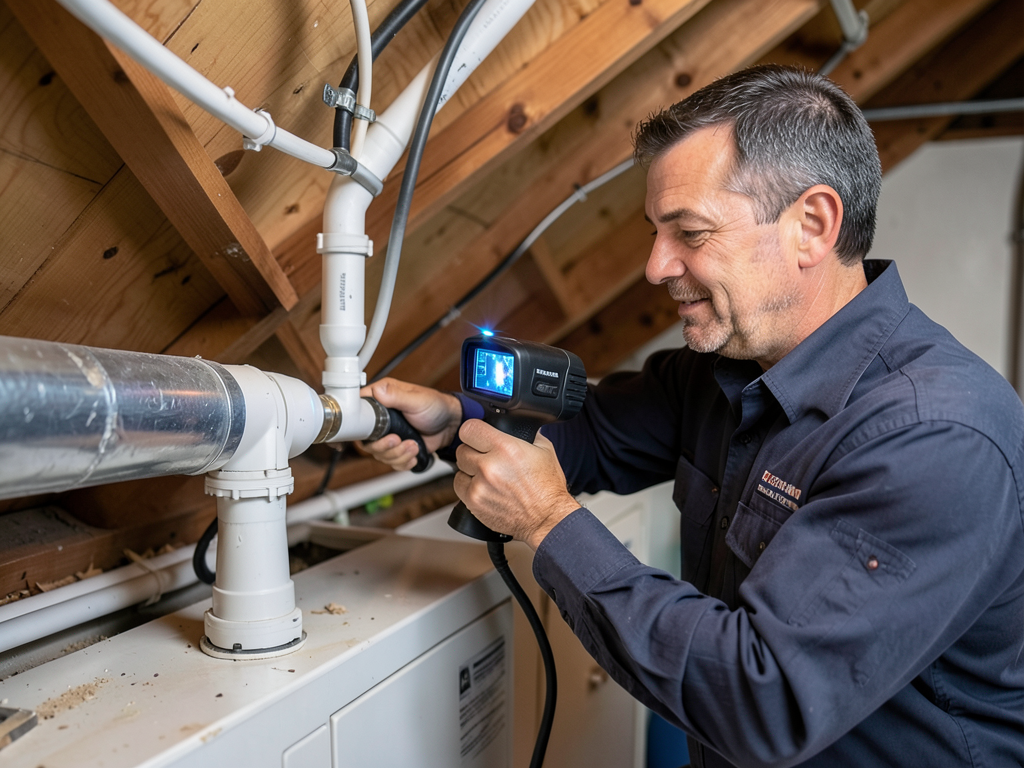
Thermal imaging cameras detect temperature variations that indicate restricted flow or standing water in drain lines. When condensate flow is restricted, the water in the line stays cooler than surrounding materials, creating a temperature signature that’s visible through infrared imaging. This technique can identify partial blockages before they cause complete system shutdowns.
Endoscopic cameras allow technicians to inspect the interior of drain lines without complete disassembly. These small cameras, mounted on flexible cables, can travel through PVC pipes to identify mineral scaling, biological growth, or physical damage. The camera reveals the exact location and extent of problems, allowing targeted repairs rather than complete line replacement.
Flow testing measures the actual drainage rate of your system under controlled conditions. Technicians can introduce measured amounts of water into the drain line and time how long drainage takes. This quantitative approach identifies gradual flow restrictions that might not be obvious during casual inspection.
Water quality testing of the condensate itself can reveal mineral content and pH levels that contribute to drain line problems. High mineral content or unusual pH can indicate specific issues with your system or local water conditions that require targeted solutions.
Impact of Home Age on Drain Line Reliability
Eastlake’s development history means homes of various ages face different drain line challenges. Understanding how your home’s age affects your AC system helps you anticipate and prevent problems specific to your situation.
Homes built before 2000 often have original drain lines that have never been replaced. These lines might be undersized by current standards, made from materials that have degraded, or installed with techniques that don’t meet current code requirements. The mineral buildup in these older lines is typically severe and requires complete replacement rather than cleaning.
2000-2010 construction represents a transition period where building practices improved but some shortcuts remained common. Many of these homes have drain lines that were adequate when new but are now reaching the end of their useful life due to Eastlake’s hard water conditions. These systems often benefit from proactive replacement before complete failure occurs.
Post-2010 homes generally have better drain line installations with proper sizing, cleanouts, and material selection. However, even these newer systems face Eastlake’s mineral challenges and require regular maintenance. The main advantage is that any problems are likely due to environmental factors rather than installation defects.
Remodeled homes present unique challenges because drain line modifications might not have been done to current standards. When homeowners upgrade HVAC equipment but not the associated drain infrastructure, capacity mismatches can occur that lead to premature clogging and overflow issues.
Energy Efficiency Impact of Drain Line Problems
Clogged AC drain lines don’t just cause water damage and system shutdowns; they also reduce your system’s energy efficiency. Understanding this connection helps you appreciate why addressing drain line issues promptly benefits both your comfort and your utility bills.
When drain lines restrict flow, the condensate backs up into the air handler and can trigger safety switches that shut down the compressor. This safety shutdown means your system runs less efficiently because it can’t complete full cooling cycles. The compressor uses the most energy during startup, so frequent short cycling dramatically increases power consumption.
Restricted drainage can also affect the evaporator coil’s ability to transfer heat. When water backs up around the coil, it insulates the metal surfaces and reduces heat absorption efficiency. Your system must run longer to achieve the same cooling effect, increasing both energy use and wear on components.
Microbial growth in drain lines can spread to the evaporator coil itself, creating an insulating layer of biofilm on the coil surfaces. This contamination reduces heat transfer efficiency by up to 30%, forcing your system to work much harder to cool your Eastlake home. The energy waste compounds over an entire cooling season.
Float switch activation due to clogged drains often causes systems to run in a degraded mode where efficiency drops significantly. Some systems continue operating the fan while shutting down the compressor, creating a situation where you’re paying for electrical consumption without getting cooling benefits.
Environmental Considerations for Condensate Disposal
Eastlake homeowners increasingly want to understand the environmental impact of their AC condensate disposal. While condensate is essentially distilled water, the minerals and biological matter it carries require thoughtful disposal practices.
Direct discharge of condensate onto soil can affect local plant life depending on the mineral content. The concentrated minerals in Eastlake’s condensate might alter soil pH or create salt buildup that affects sensitive plants. This is particularly relevant for homes with extensive landscaping or garden areas near outdoor AC units.
Storm drain discharge of AC condensate is regulated in San Diego County to prevent contamination of local waterways. While condensate itself is relatively clean, the biological matter and trace chemicals it might carry require proper filtration before entering the storm system. Many Eastlake neighborhoods have specific requirements for condensate routing.
Rainwater harvesting systems can capture and reuse AC condensate for irrigation, reducing both water consumption and discharge volume. However, the mineral content requires consideration for which plants can tolerate this water. Succulents and native plants typically handle the mineral content better than acid-loving species.
Evaporative discharge through gravel beds or specialized media can eliminate visible runoff while allowing natural filtration. This approach works well in Eastlake’s climate where evaporation rates are moderate year-round. The key is ensuring the discharge area doesn’t create mosquito breeding grounds or erosion issues.
Future Technologies for Drain Line Maintenance
Emerging technologies promise to make AC drain line maintenance easier and more effective for Eastlake homeowners. Understanding these developments helps you make forward-thinking decisions about system upgrades and replacements.
Smart drain line sensors can detect flow restrictions before they cause system problems. These devices monitor water flow rates and temperature changes that indicate developing clogs. When abnormalities are detected, they send alerts to your smartphone, allowing you to address issues during convenient times rather than emergency situations.
Self-cleaning drain line systems use automated mechanisms to prevent buildup. These systems might employ timed flush cycles, ultrasonic vibration to prevent scaling, or continuous antimicrobial treatment. While currently more common in commercial applications, residential versions are becoming available for Eastlake’s challenging conditions.
Advanced materials with antimicrobial properties are being developed for drain line construction. These materials resist biological growth inherently, reducing the need for chemical treatments. Some incorporate copper nanoparticles or specialized polymers that create surfaces where algae and bacteria cannot establish themselves.
Water softening integration for AC systems represents a targeted approach to Eastlake’s hard water problems. Small-scale water softening units installed specifically for the AC system can reduce mineral content in condensate before it enters the drain line. This prevents scaling while avoiding the cost and complexity of whole-house water softening.
Commercial vs Residential Drain Line Considerations
Eastlake’s mix of residential and light commercial properties means different drain line requirements and solutions. Understanding these differences helps business owners and property managers address their specific needs effectively.
Commercial AC systems typically produce much more condensate than residential units, requiring larger drain lines and more robust disposal systems. A small office building might generate 10-20 gallons of condensate daily during peak cooling season, compared to 1-2 gallons for a typical Eastlake home. This volume difference means commercial systems need more frequent maintenance and larger capacity components.
Commercial properties often have multiple air handlers feeding into a common drain system, creating complexity that residential setups don’t face. A blockage in one branch line can affect the entire system, potentially shutting down multiple zones. Commercial drain designs typically include cleanouts at strategic locations to isolate and address problems quickly.
Regulatory requirements for commercial condensate disposal are typically more stringent than residential standards. Eastlake businesses might need permits for drain line modifications, and some commercial applications require additional treatment of condensate before disposal. Restaurants, medical facilities, and laboratories face the strictest requirements due to contamination concerns.
Commercial maintenance contracts often include scheduled drain line service as a standard component, recognizing that drain problems cause expensive business interruptions. The cost of lost productivity from an AC shutdown usually far exceeds preventative maintenance expenses, making regular service a sound business decision.
Emergency Response for Severe Drain Line Failures
When AC drain line failures become emergencies in Eastlake homes, knowing the proper response can minimize damage and restore comfort quickly. Understanding what constitutes an emergency helps you make informed decisions about when to call for immediate service.
Complete system shutdown with water in the secondary pan qualifies as an emergency, especially during heat waves when indoor temperatures can become dangerous for vulnerable occupants. The combination of no cooling and potential water damage requires immediate attention to prevent both comfort and property issues.
Visible water damage spreading across ceilings or walls indicates a severe drain line failure that’s already causing property damage. The water might be coming from a primary pan overflow or a break in the drain line itself. In either case, the situation will worsen until the underlying problem is addressed.
Electrical hazards from water contact with AC components require immediate professional response. If you notice water near electrical panels, disconnect switches, or wiring, shut off power to the affected area and call for emergency service. Water and electricity create shock and fire hazards that need professional handling.
Multiple system failures often indicate a severe drain line problem affecting critical components. If your AC won’t start, the fan runs erratically, or you notice burning smells along with drain issues, the problem has likely spread beyond the drain system and requires comprehensive diagnosis.
Insurance Considerations for AC Water Damage
Eastlake homeowners should understand how insurance policies typically handle water damage from AC drain line failures. Knowing your coverage helps you make informed decisions about preventative maintenance versus repair costs.
Most homeowner insurance policies cover sudden and accidental water damage but exclude damage from lack of maintenance. This means if your drain line clogs due to normal wear and causes overflow damage, you might be responsible for repairs. However, if a pipe suddenly breaks due to freezing or other covered peril, the damage might be covered.
The distinction between covered and excluded damage often comes down to documentation of maintenance. If you can show regular professional maintenance of your AC system, insurance companies are more likely to consider claims favorably. This makes preventative maintenance not just a practical choice but potentially an insurance requirement.
Secondary damage claims can be complex when AC water damage affects multiple areas of your home. Water might travel through walls, damage flooring in adjacent rooms, or affect electrical systems. Documenting all affected areas thoroughly helps ensure complete coverage for necessary repairs.
Business interruption claims for commercial properties require different considerations than residential claims. Eastlake businesses might need to demonstrate lost revenue or additional expenses caused by AC system downtime. Keeping detailed records of maintenance, system age, and previous problems supports these claims.
DIY Diagnostic Tools for Homeowners
Eastlake homeowners can use several simple diagnostic tools to monitor their AC drain line health between professional service visits. These tools help you catch problems early and make informed decisions about when professional service is needed.
A basic wet-dry vacuum can help diagnose and sometimes clear minor drain line clogs. By connecting the vacuum to the drain line outlet outside your home, you can often suck out debris causing slow drainage. This technique works best for clogs near the drain line exit and can confirm whether the line is completely blocked.
Moisture meters provide objective data about whether water is present where it shouldn’t be. These inexpensive devices can check for moisture in secondary drain pans, around air handlers, or in walls near AC components. Elevated moisture readings indicate developing problems that need attention before they cause visible damage.
Temperature guns help identify abnormal cooling patterns that might indicate drain line issues. When drain lines restrict flow, the evaporator coil might run colder than normal, creating temperature patterns you can detect with an infrared thermometer. Comparing temperatures at different vents can reveal developing problems.
Endoscopic inspection cameras, while more expensive, allow you to actually see inside drain lines. These small cameras on flexible cables can travel several feet into drain lines, revealing blockages, buildup, or damage. This visual confirmation helps you decide whether DIY methods might work or if professional service is needed.
Building a Maintenance Partnership with Your HVAC Contractor
Eastlake homeowners benefit from developing a long-term relationship with an HVAC contractor who understands local conditions. This partnership approach to AC maintenance provides better results than sporadic service calls to different companies.
Consistent service from one contractor builds knowledge about your specific system and home conditions. The technician learns the quirks of your installation, the history of previous problems, and the effectiveness of past solutions. This historical knowledge leads to more accurate diagnoses and targeted recommendations.
Priority service during emergencies often comes with established customer relationships. When heat waves hit Eastlake and AC problems spike across the area, contractors typically prioritize customers with maintenance agreements or long-term relationships. This priority access can mean same-day service versus waiting days for an available appointment.
Detailed maintenance records from one contractor provide valuable documentation for warranty claims, insurance purposes, and home sale situations. When you can show a comprehensive maintenance history from a single provider, it demonstrates responsible ownership and can support various financial and legal situations.
Volume discounts often apply to customers who combine multiple services or commit to regular maintenance schedules. Your contractor might offer better pricing on repairs, replacements, or additional services when you’re part of their regular customer base. These discounts can offset the cost of maintenance agreements over time.
Frequently Asked Questions
How often should I have my AC drain line cleaned in Eastlake?
Eastlake homes should have professional drain line cleaning every 12-18 months due to our hard water conditions. Homes with older systems or those in areas with higher humidity might need service every 6-12 months. Watch for signs like musty odors or water in the secondary pan between scheduled services.
Can I use bleach to clean my AC drain line?
Household bleach can kill algae and bacteria in drain lines, but it should be diluted (1 cup bleach to 1 gallon water) and used cautiously. Vinegar is often preferred because it’s less harsh on PVC pipes while still effective against biological growth. Never mix cleaning chemicals.
What causes my AC to shut off unexpectedly?
Unexpected AC shutdowns often result from the float switch activating in the secondary drain pan. This safety feature turns off the system when it detects water where it shouldn’t be, typically due to a clogged primary drain line. Check the secondary pan for water if your system won’t restart.
How much does professional drain line cleaning cost in Eastlake?
Professional drain line cleaning in Eastlake typically costs $150-300, depending on system accessibility and the severity of the clog. Complex jobs requiring hydro-jetting or camera inspection might cost $300-500. Emergency service during heat waves often carries premium pricing.
Can a clogged drain line damage my AC compressor?
Yes, severe drain line clogs can lead to compressor damage. When water backs up into the air handler, it can cause electrical shorts, bearing damage, or trigger safety switches that stress the compressor during restart attempts. Prompt attention to drain issues prevents these expensive secondary problems.
What’s the difference between a primary and secondary drain pan?
The primary drain pan sits directly under the evaporator coil and catches normal condensation. The secondary pan is located beneath the entire air handler as a backup. If the primary pan overflows due to a clog, the secondary pan catches the water and typically has a float switch to shut down the system.
How can I prevent insects from nesting in my AC drain line?
Install screened caps on outdoor drain line openings to prevent insect access while allowing water flow. Regular treatment with algaecide tablets also discourages biological growth that attracts insects. Some homeowners use mesh filters at the drain line entrance, but these require frequent cleaning to prevent their own blockages.
Is it normal for my AC to produce a lot of water?
Yes, AC systems in Eastlake’s humid climate can produce significant condensation. A typical residential system might generate 5-20 gallons of water on a hot, humid day. The amount varies based on indoor humidity, outdoor temperature, and how long the system runs. This water should drain freely through the condensate line.
What should I do if I notice water around my indoor AC unit?
First, turn off the AC at the thermostat to prevent further water damage. Check the secondary drain pan for water, which indicates a primary drain clog. If you’re comfortable doing so, you can try vacuuming the drain line outlet outside. Otherwise, call for professional service immediately to prevent extensive damage.
How long does it take to clean a severely clogged AC drain line?
Severely clogged drain lines typically require 1-3 hours for complete cleaning, depending on the blockage severity and system accessibility. Simple clogs might clear in 30 minutes, while mineral-encrusted lines might need hydro-jetting and camera inspection, extending the service to several hours. Emergency service often prioritizes speed over thoroughness.
Take Action Before Your AC Drain Line Causes Major Problems
Eastlake’s unique combination of hard water and coastal humidity creates drain line problems that most homeowners don’t anticipate until their system shuts down on the hottest day of the year. The mineral content in our local water table accelerates buildup that would take years to develop in other areas, while our humidity promotes rapid biological growth that compounds the problem.
Don’t wait for emergency service calls and water damage repairs. The cost of preventative maintenance is always less than emergency repairs and property damage restoration. A simple drain line cleaning and inspection can identify developing problems before they cause system shutdowns or expensive water damage to your Eastlake home.
Elite HVAC San Diego understands the specific challenges Eastlake homeowners face with their AC systems. Our technicians know exactly what to look for in your drain lines, how to address the mineral scaling unique to our area, and how to implement solutions that provide lasting results rather than temporary fixes.
Call (619) 304-5777 today to schedule your comprehensive AC drain line inspection and cleaning. Our team will evaluate your entire system, identify any developing issues, and recommend the most cost-effective solutions for your specific situation. Whether you need routine maintenance or emergency service, we’re ready to help keep your Eastlake home cool and dry throughout the cooling season.
Don’t let hard water and humidity problems catch you off guard. Pick up the phone and call (619) 304-5777 before the next heat wave hits. Your comfort and your home’s protection are worth the proactive investment in professional AC maintenance.
Eastlake homeowners trust Elite HVAC San Diego because we understand your specific needs. We’re not just fixing AC units; we’re protecting Eastlake homes from the unique environmental challenges our area presents. Let us put our local expertise to work for you. For more information, visit IICRC.
{
“@context”: “https://schema.org”,
“@type”: “BlogPosting”,
“headline”: “How the Eastlake Hard Water Table Can Lead to Frequent AC Drain Clogs”,
“description”: “Eastlake’s hard water table causes frequent AC drain clogs. Learn how mineral-rich condensate creates unique HVAC challenges and discover prevention solutions.”,
“wordCount”: 6412,
“datePublished”: “2026-05-18T09:01:00.000Z”,
“dateModified”: “2026-05-18T09:01:00.000Z”,
“inLanguage”: “en-US”,
“mainEntityOfPage”: {
“@type”: “WebPage”,
“@id”: “https://elitehvacsandiego.com”
},
“publisher”: {
“@type”: “LocalBusiness”,
“name”: “Elite HVAC San Diego”,
“url”: “https://elitehvacsandiego.com”
},
“author”: {
“@type”: “Organization”,
“name”: “Elite HVAC San Diego”,
“url”: “https://elitehvacsandiego.com”
},
“image”: {
“@type”: “ImageObject”,
“url”: “https://elitehvacsandiego.com/wp-content/uploads/2026/03/how-the-eastlake-hard-water-table-can-lead-to-freq-1.png”
}
}
{
“@context”: “https://schema.org”,
“@type”: “HVACBusiness”,
“name”: “Elite HVAC San Diego”,
“url”: “https://elitehvacsandiego.com”,
“address”: {
“@type”: “PostalAddress”,
“addressLocality”: “San Diego”
},
“areaServed”: {
“@type”: “City”,
“name”: “San Diego”
}
}
{
“@context”: “https://schema.org”,
“@type”: “FAQPage”,
“mainEntity”: [
{
“@type”: “Question”,
“name”: “How often should I have my AC drain line cleaned in Eastlake?”,
“acceptedAnswer”: {
“@type”: “Answer”,
“text”: “Eastlake homes should have professional drain line cleaning every 12-18 months due to our hard water conditions. Homes with older systems or those in areas with higher humidity might need service every 6-12 months. Watch for signs like musty odors or water in the secondary pan between scheduled services.”
}
},
{
“@type”: “Question”,
“name”: “Can I use bleach to clean my AC drain line?”,
“acceptedAnswer”: {
“@type”: “Answer”,
“text”: “Household bleach can kill algae and bacteria in drain lines, but it should be diluted (1 cup bleach to 1 gallon water) and used cautiously. Vinegar is often preferred because it’s less harsh on PVC pipes while still effective against biological growth. Never mix cleaning chemicals.”
}
},
{
“@type”: “Question”,
“name”: “What causes my AC to shut off unexpectedly?”,
“acceptedAnswer”: {
“@type”: “Answer”,
“text”: “Unexpected AC shutdowns often result from the float switch activating in the secondary drain pan. This safety feature turns off the system when it detects water where it shouldn’t be, typically due to a clogged primary drain line. Check the secondary pan for water if your system won’t restart.”
}
},
{
“@type”: “Question”,
“name”: “How much does professional drain line cleaning cost in Eastlake?”,
“acceptedAnswer”: {
“@type”: “Answer”,
“text”: “Professional drain line cleaning in Eastlake typically costs $150-300, depending on system accessibility and the severity of the clog. Complex jobs requiring hydro-jetting or camera inspection might cost $300-500. Emergency service during heat waves often carries premium pricing.”
}
},
{
“@type”: “Question”,
“name”: “Can a clogged drain line damage my AC compressor?”,
“acceptedAnswer”: {
“@type”: “Answer”,
“text”: “Yes, severe drain line clogs can lead to compressor damage. When water backs up into the air handler, it can cause electrical shorts, bearing damage, or trigger safety switches that stress the compressor during restart attempts. Prompt attention to drain issues prevents these expensive secondary problems.”
}
},
{
“@type”: “Question”,
“name”: “What’s the difference between a primary and secondary drain pan?”,
“acceptedAnswer”: {
“@type”: “Answer”,
“text”: “The primary drain pan sits directly under the evaporator coil and catches normal condensation. The secondary pan is located beneath the entire air handler as a backup. If the primary pan overflows due to a clog, the secondary pan catches the water and typically has a float switch to shut down the system.”
}
},
{
“@type”: “Question”,
“name”: “How can I prevent insects from nesting in my AC drain line?”,
“acceptedAnswer”: {
“@type”: “Answer”,
“text”: “Install screened caps on outdoor drain line openings to prevent insect access while allowing water flow. Regular treatment with algaecide tablets also discourages biological growth that attracts insects. Some homeowners use mesh filters at the drain line entrance, but these require frequent cleaning to prevent their own blockages.”
}
},
{
“@type”: “Question”,
“name”: “Is it normal for my AC to produce a lot of water?”,
“acceptedAnswer”: {
“@type”: “Answer”,
“text”: “Yes, AC systems in Eastlake’s humid climate can produce significant condensation. A typical residential system might generate 5-20 gallons of water on a hot, humid day. The amount varies based on indoor humidity, outdoor temperature, and how long the system runs. This water should drain freely through the condensate line.”
}
},
{
“@type”: “Question”,
“name”: “What should I do if I notice water around my indoor AC unit?”,
“acceptedAnswer”: {
“@type”: “Answer”,
“text”: “First, turn off the AC at the thermostat to prevent further water damage. Check the secondary drain pan for water, which indicates a primary drain clog. If you’re comfortable doing so, you can try vacuuming the drain line outlet outside. Otherwise, call for professional service immediately to prevent extensive damage.”
}
},
{
“@type”: “Question”,
“name”: “How long does it take to clean a severely clogged AC drain line?”,
“acceptedAnswer”: {
“@type”: “Answer”,
“text”: “Severely clogged drain lines typically require 1-3 hours for complete cleaning, depending on the blockage severity and system accessibility. Simple clogs might clear in 30 minutes, while mineral-encrusted lines might need hydro-jetting and camera inspection, extending the service to several hours. Emergency service often prioritizes speed over thoroughness.”
}
}
]
}
{
“@context”: “https://schema.org”,
“@type”: “BreadcrumbList”,
“itemListElement”: [
{
“@type”: “ListItem”,
“position”: 1,
“name”: “Home”,
“item”: “https://elitehvacsandiego.com”
},
{
“@type”: “ListItem”,
“position”: 2,
“name”: “Blog”,
“item”: “https://elitehvacsandiego.com/blog”
},
{
“@type”: “ListItem”,
“position”: 3,
“name”: “How the Eastlake Hard Water Table Can Lead to Frequent AC Drain Clogs”
}
]
}
{
“@context”: “https://schema.org”,
“@type”: “Service”,
“serviceType”: “HVAC”,
“provider”: {
“@type”: “LocalBusiness”,
“name”: “Elite HVAC San Diego”,
“url”: “https://elitehvacsandiego.com”
},
“areaServed”: {
“@type”: “City”,
“name”: “San Diego”
},
“description”: “Eastlake’s hard water table causes frequent AC drain clogs. Learn how mineral-rich condensate creates unique HVAC challenges and discover prevention solutions.”
}