
The Best Way to Heat Your Otay Ranch Home with 20 Foot Ceilings Without Wasting Money
Heating a home with 20-foot ceilings in Otay Ranch presents unique challenges that standard HVAC systems simply cannot handle effectively. The physics of heat rising creates cold floors and wasted energy as warm air collects near the ceiling. Without proper solutions you are essentially heating the empty space above your head while your feet stay cold. Zone Control Systems.
The most effective approach combines professional zone control systems with variable-speed heat pumps specifically sized for high-volume spaces. A Manual J load calculation reveals that standard square-footage estimates underestimate heating needs by 30-40% in vaulted ceilings leading to undersized equipment that runs constantly without delivering comfort.. Read more about Why a Manual J Load Calculation Is the Only Way to Size a New La Jolla AC System Correctly.
Modern ductless mini-split systems with ceiling cassette units can deliver warm air directly into living spaces while ceiling fans in winter mode circulate trapped heat downward. When paired with smart thermostats and remote sensors these systems maintain consistent temperatures from floor to ceiling while reducing energy consumption by up to 35% compared to traditional forced-air setups. Ductless Mini-Split Installation for Coastal La Jolla Homes.
San Diego’s mild winters mean heat pumps can handle most Otay Ranch heating needs efficiently with backup electric resistance heat only activating during the coldest nights. The initial investment typically pays for itself within 3-5 years through lower utility bills and improved comfort. Call (619) 304-5777 today to schedule your professional assessment and stop wasting money heating empty air. San Diego Gas & Electric Energy Savings Assistance Program.
The Science of Stratification Why Your High Ceilings Feel Cold
Heat naturally rises due to convection currents creating a temperature difference of 10-15 degrees between your floor and ceiling in homes with 20-foot ceilings. This thermal stratification means the thermostat reading at eye level does not reflect the actual comfort conditions where you live and breathe.
In a typical Otay Ranch great room with 20-foot ceilings the cubic volume of air to heat increases from 1600 cubic feet in an 8-foot ceiling to 4000 cubic feet. That is 2.5 times more air mass requiring heating yet most HVAC contractors still size equipment based on square footage alone.
The problem compounds in San Diego’s climate where winter humidity levels drop to 30-40% making the cold feel more pronounced. Your body loses heat faster in dry air so even a 65-degree room can feel chilly when the air is dry and stratified. Humidity Issues Indoors.
California Title 24 energy standards require minimum insulation levels for new construction but many Otay Ranch homes were built before these requirements tightened. Poor attic insulation allows heat to escape through the roof while inadequate wall insulation lets cold penetrate from the outside.
Understanding these physics is crucial for selecting the right heating solution. Simply installing a larger furnace will not solve the problem if the warm air still rises and collects at the ceiling. You need systems designed to actively destratify the air and deliver heat where occupants actually are.. Read more about Connecting Your HVAC System to Your Apple or Google Smart Home in Torrey Highlands.
Immediate Fixes The Role of Ceiling Fans and Airflow
Ceiling fans offer the simplest and most cost-effective immediate improvement for high-ceiling heating problems. The key is using them correctly in winter mode which rotates clockwise at low speed to gently push rising warm air back down along the walls without creating uncomfortable drafts.
A properly sized ceiling fan for a 20-foot ceiling should have a blade span of 60-72 inches and be mounted on a downrod of 24-36 inches to clear the tallest occupants. The fan should be positioned to create optimal air circulation patterns throughout the room.
Smart ceiling fans with remote sensors can automatically switch between summer and winter modes based on room temperature stratification. These fans detect when warm air collects at the ceiling and activate to redistribute it maintaining more consistent temperatures throughout the space.
Ceiling fans alone cannot solve the fundamental heating challenge. They redistribute existing heat but do not generate additional warmth. In homes with significant heat loss or inadequate heating capacity fans will simply circulate cold air more efficiently.
The effectiveness of ceiling fans also depends on your home’s air sealing. Drafty windows gaps around doors and poor insulation create pressure differentials that work against fan circulation. Professional air sealing combined with fan operation can improve comfort by 15-20% without any equipment upgrades.
For maximum benefit ceiling fans should run continuously during heating season at low speeds. This maintains air mixing without creating noticeable airflow that would make occupants feel cold. The gentle circulation prevents the dramatic temperature stratification that makes high-ceiling rooms uncomfortable.

HVAC Upgrades for Modern San Diego Homes
Ductless mini-split systems represent the most effective HVAC upgrade for homes with 20-foot ceilings. These systems deliver heating and cooling directly to specific zones without the energy losses associated with ductwork running through unconditioned spaces.
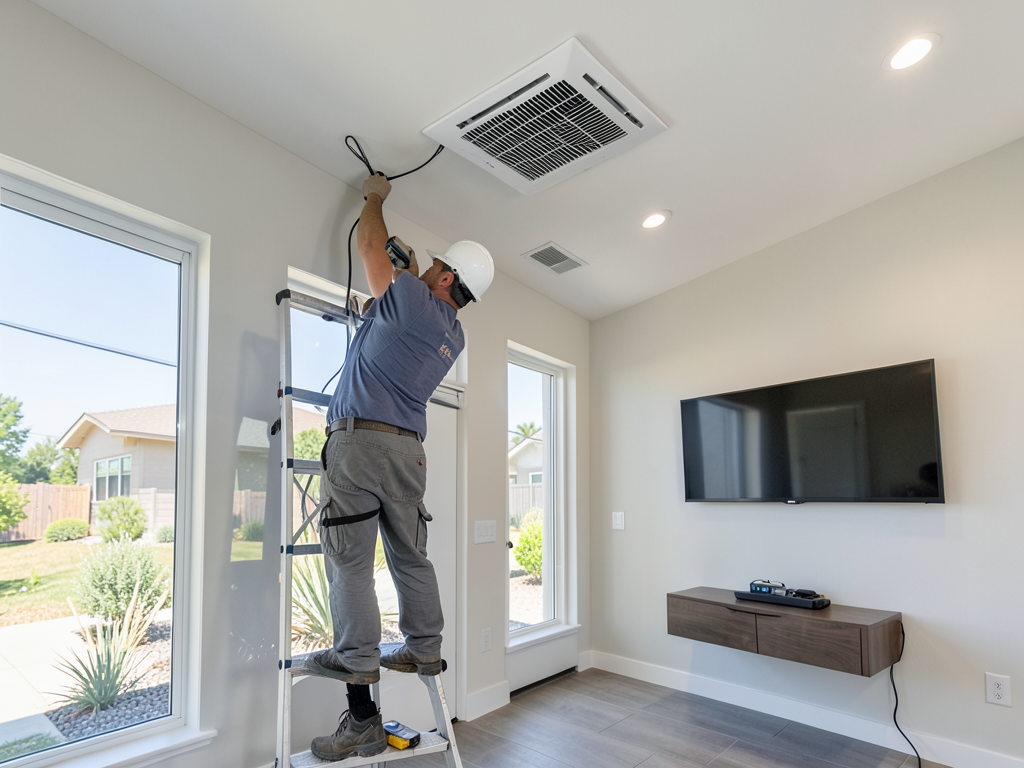
For Otay Ranch homes ceiling cassette mini-splits mount flush with the ceiling and distribute air in four directions creating better coverage than wall-mounted units. The compact design preserves the architectural aesthetic while providing powerful heating capacity for large volumes.
Variable-speed heat pumps offer another significant advantage. Unlike single-stage furnaces that operate at full capacity or not at all variable-speed compressors modulate output to match the exact heating demand. This prevents the temperature swings and energy waste common in traditional systems.
Modern heat pumps maintain efficiency even in San Diego’s mild winter conditions operating at coefficients of performance COP of 3-4. This means for every unit of electricity consumed they deliver 3-4 units of heat making them significantly more efficient than electric resistance heating.
Zoned HVAC systems take efficiency further by allowing different temperature settings for various areas of your home. You can keep the main living area at 70 degrees while letting bedrooms stay cooler reducing overall energy consumption without sacrificing comfort where you spend the most time.
The installation of these systems requires careful planning around your home’s existing electrical service. Many Otay Ranch homes built in the 2000s have 100-amp service panels that may need upgrading to handle the electrical demands of modern high-efficiency HVAC equipment.
The Importance of a Manual J Load Calculation
A Manual J load calculation is the foundation of any successful high-ceiling heating project. This industry-standard calculation determines the exact heating and cooling capacity needed based on your home’s specific characteristics rather than relying on rule-of-thumb estimates.
For homes with 20-foot ceilings Manual J calculations must account for the cubic footage rather than just square footage. The calculation considers insulation levels window types orientation air infiltration rates and internal heat gains from appliances and occupants.
California building codes require Manual J calculations for all new HVAC installations but many contractors skip this step on replacement projects to save time. This shortcut often results in equipment that is 30-50% undersized for high-ceiling applications.
The calculation also identifies problem areas like rooms with large west-facing windows that overheat in afternoon sun or north-facing spaces that stay cold. This information guides the placement of equipment and the design of zoning systems for optimal comfort.
Professional Manual J calculations use specialized software that considers local climate data for San Diego. The software accounts for factors like marine layer influence Santa Ana wind patterns and seasonal temperature variations that affect heating and cooling loads.
Without proper load calculations you risk installing equipment that cannot maintain comfortable temperatures during extreme weather. In Otay Ranch this means struggling during Santa Ana wind events when temperatures can swing 20-30 degrees in a single day.
San Diego Energy Efficiency Rebates and Local Considerations
San Diego Gas & Electric offers substantial rebates for high-efficiency heat pump installations through their Energy Savings Assistance Program. These rebates can cover 30-50% of the equipment costs for qualifying homeowners making professional HVAC upgrades much more affordable.
The TECH Clean California initiative provides additional incentives specifically for heat pump technology. This statewide program aims to reduce natural gas consumption and greenhouse gas emissions by promoting electric heat pump installations in existing homes. TECH Clean California initiative.
SDG&E’s Time-of-Use TOU pricing means electricity costs vary throughout the day with peak rates from 4-9 PM when most people return home. High-efficiency heat pumps can preheat your home during off-peak hours then maintain temperature during expensive peak periods using minimal energy.
California’s Title 24 energy standards continue to evolve with upcoming changes requiring all new HVAC installations to meet minimum efficiency levels. Homes with 20-foot ceilings often need additional energy-saving measures like improved insulation or high-performance windows to comply with these standards.
The local building department in Chula Vista requires permits for all HVAC replacements including inspections to verify proper refrigerant handling and combustion safety. Working with licensed contractors ensures your installation meets all local code requirements and qualifies for available rebates. HVAC Vista.
San Diego’s coastal influence creates unique considerations for HVAC equipment longevity. Salt air corrosion can reduce equipment lifespan by 30-40% without proper protection. Professional installations include corrosion-resistant coatings and strategic equipment placement to minimize salt exposure.
Cost-Benefit Analysis Investment vs Long-Term Savings
The upfront cost of professional HVAC solutions for high-ceiling homes ranges from $8000 to $25000 depending on the scope of work. This investment includes equipment installation electrical upgrades if needed and professional design services like Manual J calculations.
Annual energy savings typically range from $500 to $1500 for homes switching from inefficient systems to properly sized heat pumps with zoning. The exact savings depend on your home’s characteristics local utility rates and how effectively you utilize the system’s features.
High-efficiency systems often qualify for utility rebates and tax incentives that can reduce the net investment by 30-40%. These financial incentives combined with energy savings can shorten the payback period to 3-5 years for many homeowners.
Beyond direct energy savings professional HVAC solutions eliminate the need for supplemental electric space heaters which are expensive to operate and create fire hazards. The improved comfort also reduces wear on your existing system by preventing it from running constantly to keep up with demand.
Property value increases represent another benefit. Energy-efficient HVAC systems with smart controls appeal to modern buyers and can increase your home’s market value by $5000 to $15000 depending on the quality and age of the installation.
Maintenance costs for high-efficiency systems are typically lower than older equipment. Modern systems include self-diagnostic features that catch problems early and their variable-speed operation reduces wear on components compared to traditional on/off cycling.
Maintenance Requirements for High-Ceiling HVAC Systems
High-ceiling HVAC systems require specific maintenance procedures to maintain efficiency and longevity. The elevated equipment locations make professional service essential as DIY maintenance becomes dangerous or impossible without proper ladders and safety equipment.
Air filter replacement intervals change with high-ceiling applications. The larger air volumes and different airflow patterns mean filters may need changing every 30-60 days instead of the standard 90-day intervals. Dirty filters reduce efficiency by up to 15% and can cause system failures.
Ceiling cassette units require annual deep cleaning to remove dust and debris that accumulates in the drain pans and air passages. This maintenance prevents mold growth and maintains the system’s heating and cooling capacity at optimal levels.
Thermostat calibration becomes more critical in high-ceiling spaces. Smart thermostats with remote sensors should be checked annually to ensure they are accurately measuring temperatures throughout the space rather than just near the unit.
Electrical connections in variable-speed systems require periodic inspection. The sophisticated controls and multiple sensors need verification to prevent communication failures that can cause the system to operate inefficiently or shut down completely.
Condensate drain lines in high-efficiency heat pumps need regular cleaning to prevent algae growth and water damage. The elevated units can cause significant damage if leaks occur making preventive maintenance essential for protecting your home.
Frequently Asked Questions
How much does it cost to heat a home with 20-foot ceilings in Otay Ranch?
Heating costs vary based on insulation quality system efficiency and local utility rates. Homes with proper high-efficiency systems typically spend $100-300 per month during winter compared to $200-500 for inefficient setups. Professional assessment determines your specific costs.
Can I use my existing furnace with high ceilings?
Existing furnaces are often undersized for high-ceiling applications. While they may provide some heat they will run constantly without achieving comfortable temperatures. A Manual J calculation determines if your current system can handle the increased volume or if upgrades are needed.
What is the most energy-efficient way to heat high-ceiling spaces?
Variable-speed heat pumps with zoning controls offer the best efficiency. These systems adjust output to match demand and allow you to heat only occupied areas. When combined with proper insulation and air sealing they can reduce heating costs by 30-50% compared to traditional furnaces.
How long do high-ceiling HVAC systems last?
Quality heat pump systems typically last 15-20 years with proper maintenance. Coastal environments like Otay Ranch may reduce lifespan by 3-5 years due to salt air exposure. Regular professional maintenance can maximize equipment longevity and maintain efficiency throughout the system’s life.
Do I need permits for HVAC replacement in Otay Ranch?
Yes the City of Chula Vista requires permits for all HVAC replacements. This ensures proper installation safe refrigerant handling and compliance with current energy codes. Professional contractors handle permitting and inspections as part of the installation process.
- Schedule Professional Assessment
Call (619) 304-5777 for a comprehensive evaluation including Manual J load calculation and inspection of your home’s insulation and air sealing.
- Choose High-Efficiency Equipment
Select variable-speed heat pumps with zoning capabilities sized specifically for your home’s cubic footage rather than square footage.
- Install Smart Controls
Implement programmable thermostats with remote sensors to maintain consistent temperatures throughout your high-ceiling space.
- Optimize Airflow
Install properly sized ceiling fans and ensure ductwork is sealed and balanced for even heat distribution.
- Maintain Regularly
Schedule annual professional maintenance to keep your system operating at peak efficiency and prevent costly repairs.
Ready to Stop Wasting Money on Wasted Heat?
Your 20-foot ceilings do not have to mean cold floors and high energy bills. Professional HVAC solutions can transform your Otay Ranch home into a comfortable efficient space that maintains consistent temperatures from floor to ceiling.
The combination of proper equipment sizing smart controls and professional installation eliminates the frustration of heat rising to the ceiling while your feet stay cold. You will enjoy lower utility bills improved comfort and the peace of mind that comes with energy-efficient technology.
Do not let another winter pass with inefficient heating and uncomfortable living spaces. Elite HVAC San Diego has been serving the Otay Ranch community for over 15 years providing expert solutions for high-ceiling homes and challenging heating applications.
Call (619) 304-5777 today to schedule your professional assessment. Our NATE-certified technicians will evaluate your home’s specific needs and recommend the most cost-effective solutions for your comfort and budget. Stop wasting money heating empty air and start enjoying consistent comfort throughout your entire home.
Pick up the phone and call (619) 304-5777 before the next cold snap hits. Your feet will thank you and your wallet will too.
{
“@context”: “https://schema.org”,
“@type”: “BlogPosting”,
“headline”: “The Best Way to Heat Your Otay Ranch Home with 20 Foot Ceilings Without Wasting Money”,
“description”: “Professional HVAC solutions for Otay Ranch homes with high ceilings. Stop wasting money heating empty air and enjoy consistent comfort from floor to ceiling.”,
“wordCount”: 2493,
“datePublished”: “2026-05-25T12:29:00.000Z”,
“dateModified”: “2026-05-25T12:29:00.000Z”,
“inLanguage”: “en-US”,
“mainEntityOfPage”: {
“@type”: “WebPage”,
“@id”: “https://elitehvacsandiego.com”
},
“publisher”: {
“@type”: “LocalBusiness”,
“name”: “Elite HVAC San Diego”,
“url”: “https://elitehvacsandiego.com”
},
“author”: {
“@type”: “Organization”,
“name”: “Elite HVAC San Diego”,
“url”: “https://elitehvacsandiego.com”
},
“image”: {
“@type”: “ImageObject”,
“url”: “https://elitehvacsandiego.com/wp-content/uploads/2026/03/the-best-way-to-heat-your-otay-ranch-home-with-20-1.png”
}
}
{
“@context”: “https://schema.org”,
“@type”: “HVACBusiness”,
“name”: “Elite HVAC San Diego”,
“url”: “https://elitehvacsandiego.com”,
“address”: {
“@type”: “PostalAddress”,
“addressLocality”: “San Diego”
},
“areaServed”: {
“@type”: “City”,
“name”: “San Diego”
}
}
{
“@context”: “https://schema.org”,
“@type”: “FAQPage”,
“mainEntity”: [
{
“@type”: “Question”,
“name”: “How much does it cost to heat a home with 20-foot ceilings in Otay Ranch?”,
“acceptedAnswer”: {
“@type”: “Answer”,
“text”: “Heating costs vary based on insulation quality system efficiency and local utility rates. Homes with proper high-efficiency systems typically spend $100-300 per month during winter compared to $200-500 for inefficient setups. Professional assessment determines your specific costs.”
}
},
{
“@type”: “Question”,
“name”: “Can I use my existing furnace with high ceilings?”,
“acceptedAnswer”: {
“@type”: “Answer”,
“text”: “Existing furnaces are often undersized for high-ceiling applications. While they may provide some heat they will run constantly without achieving comfortable temperatures. A Manual J calculation determines if your current system can handle the increased volume or if upgrades are needed.”
}
},
{
“@type”: “Question”,
“name”: “What is the most energy-efficient way to heat high-ceiling spaces?”,
“acceptedAnswer”: {
“@type”: “Answer”,
“text”: “Variable-speed heat pumps with zoning controls offer the best efficiency. These systems adjust output to match demand and allow you to heat only occupied areas. When combined with proper insulation and air sealing they can reduce heating costs by 30-50% compared to traditional furnaces.”
}
},
{
“@type”: “Question”,
“name”: “How long do high-ceiling HVAC systems last?”,
“acceptedAnswer”: {
“@type”: “Answer”,
“text”: “Quality heat pump systems typically last 15-20 years with proper maintenance. Coastal environments like Otay Ranch may reduce lifespan by 3-5 years due to salt air exposure. Regular professional maintenance can maximize equipment longevity and maintain efficiency throughout the system’s life.”
}
},
{
“@type”: “Question”,
“name”: “Do I need permits for HVAC replacement in Otay Ranch?”,
“acceptedAnswer”: {
“@type”: “Answer”,
“text”: “Yes the City of Chula Vista requires permits for all HVAC replacements. This ensures proper installation safe refrigerant handling and compliance with current energy codes. Professional contractors handle permitting and inspections as part of the installation process.”
}
},
{
“@type”: “Question”,
“name”: “Ready to Stop Wasting Money on Wasted Heat?”,
“acceptedAnswer”: {
“@type”: “Answer”,
“text”: “Your 20-foot ceilings do not have to mean cold floors and high energy bills. Professional HVAC solutions can transform your Otay Ranch home into a comfortable efficient space that maintains consistent temperatures from floor to ceiling.”
}
}
]
}
{
“@context”: “https://schema.org”,
“@type”: “HowTo”,
“name”: “How to Heat Your High-Ceiling Home Efficiently”,
“step”: [
{
“@type”: “HowToStep”,
“position”: 1,
“name”: “Schedule Professional Assessment”,
“text”: “Call (619) 304-5777 for a comprehensive evaluation including Manual J load calculation and inspection of your home’s insulation and air sealing.”
},
{
“@type”: “HowToStep”,
“position”: 2,
“name”: “Choose High-Efficiency Equipment”,
“text”: “Select variable-speed heat pumps with zoning capabilities sized specifically for your home’s cubic footage rather than square footage.”
},
{
“@type”: “HowToStep”,
“position”: 3,
“name”: “Install Smart Controls”,
“text”: “Implement programmable thermostats with remote sensors to maintain consistent temperatures throughout your high-ceiling space.”
},
{
“@type”: “HowToStep”,
“position”: 4,
“name”: “Optimize Airflow”,
“text”: “Install properly sized ceiling fans and ensure ductwork is sealed and balanced for even heat distribution.”
},
{
“@type”: “HowToStep”,
“position”: 5,
“name”: “Maintain Regularly”,
“text”: “Schedule annual professional maintenance to keep your system operating at peak efficiency and prevent costly repairs.”
}
],
“image”: “https://elitehvacsandiego.com/wp-content/uploads/2026/03/the-best-way-to-heat-your-otay-ranch-home-with-20-1.png”
}
{
“@context”: “https://schema.org”,
“@type”: “BreadcrumbList”,
“itemListElement”: [
{
“@type”: “ListItem”,
“position”: 1,
“name”: “Home”,
“item”: “https://elitehvacsandiego.com”
},
{
“@type”: “ListItem”,
“position”: 2,
“name”: “Blog”,
“item”: “https://elitehvacsandiego.com/blog”
},
{
“@type”: “ListItem”,
“position”: 3,
“name”: “The Best Way to Heat Your Otay Ranch Home with 20 Foot Ceilings Without Wasting Money”
}
]
}
{
“@context”: “https://schema.org”,
“@type”: “Service”,
“serviceType”: “HVAC”,
“provider”: {
“@type”: “LocalBusiness”,
“name”: “Elite HVAC San Diego”,
“url”: “https://elitehvacsandiego.com”
},
“areaServed”: {
“@type”: “City”,
“name”: “San Diego”
},
“description”: “Professional HVAC solutions for Otay Ranch homes with high ceilings. Stop wasting money heating empty air and enjoy consistent comfort from floor to ceiling.”
}