
The Best HVAC Options for High Ceiling Great Rooms in 4S Ranch
High ceiling great rooms in 4S Ranch homes create stunning architectural spaces but present unique cooling challenges. The physics of heat rising creates temperature stratification where the ceiling area can be 8-12 degrees warmer than the living zone. This means your standard HVAC system struggles to deliver comfort where you actually live and breathe.
4S Ranch experiences inland San Diego heat patterns with summer temperatures regularly climbing into the high 90s. The area’s newer construction boom means many homes feature open-concept great rooms with 12-20 foot ceilings that standard HVAC designs never intended to cool efficiently. Understanding how to properly condition these spaces requires specific technical knowledge about airflow dynamics and local climate factors.
Understanding Thermal Stratification in High Ceiling Spaces
Thermal stratification occurs when warm air rises and creates distinct temperature layers in a room. In a standard 8-foot ceiling room this effect is minimal. But in great rooms with 15+ foot ceilings the temperature difference between floor and ceiling can reach 15 degrees Fahrenheit. This creates several problems: your thermostat reads the wrong temperature cool air never reaches the occupied zone and your HVAC system runs longer than necessary.
The science behind this involves air density changes. As air warms it becomes less dense and naturally rises. In high ceiling spaces this creates a continuous cycle where cool air from your vents gets trapped near the ceiling while the occupied zone remains uncomfortably warm. This is why simply adding a larger air conditioner often fails to solve the problem.
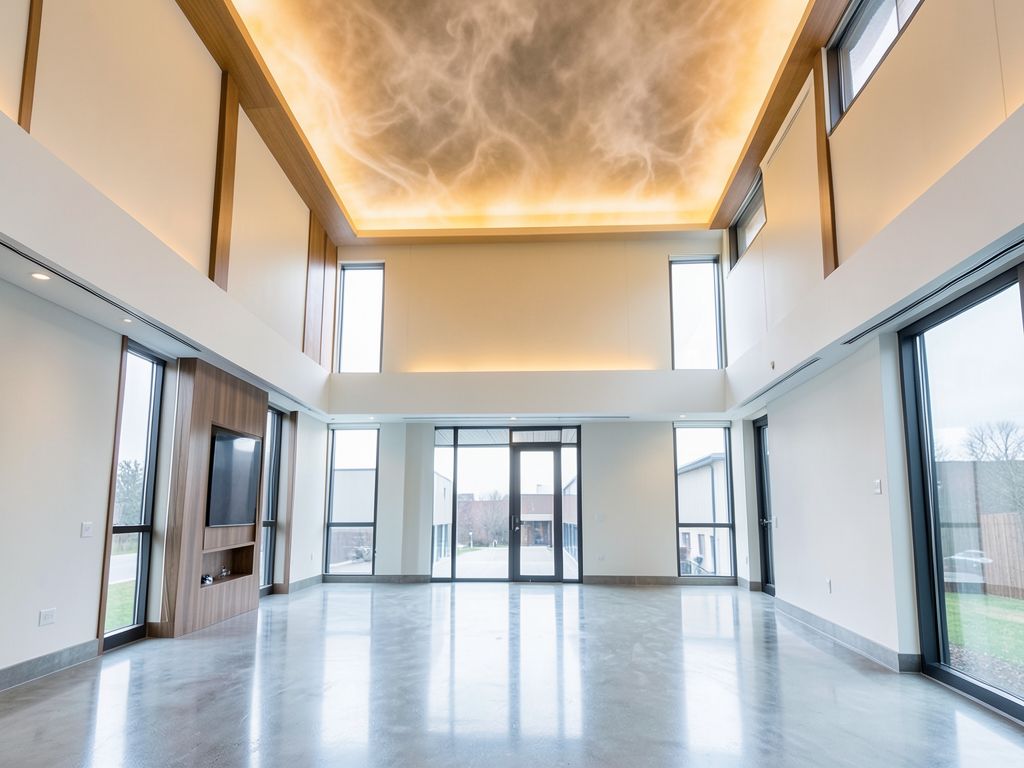
Diagram showing thermal stratification layers in a 15-foot ceiling great room with temperature gradients at different heights.
Five Effective Strategies for Cooling High Ceiling Great Rooms
Reversible Ceiling Fans: The First Line of Defense
Ceiling fans with reversible motors can break up thermal stratification by pushing warm air down during summer months. Set your fan to rotate counterclockwise at high speed to create a downward airflow that mixes the air layers. This simple solution can reduce the temperature difference between floor and ceiling by 3-5 degrees.
For 4S Ranch homes we recommend fans with blade spans of at least 60 inches for great rooms over 400 square feet. The blade pitch should be 12-15 degrees for optimal air movement. Many homeowners don’t realize that running fans clockwise in winter can also help by gently pushing warm air trapped near the ceiling down along the walls.
Ductless Mini-Split Systems: Targeted Cooling Power
Ductless mini-split systems excel in high ceiling applications because they deliver cooling directly where needed without relying on ductwork distribution. These systems consist of an outdoor compressor unit connected to one or more indoor air handlers mounted high on walls. Ductless Mini-Split Installation for Coastal La Jolla Homes.
For 4S Ranch great rooms we typically recommend 18000-24000 BTU mini-splits depending on ceiling height and room volume. The high mounting position takes advantage of the natural air stratification while the powerful fans can push cool air down to the occupied zone. Mini-splits also offer superior SEER2 ratings which matters in San Diego’s high electricity cost environment.
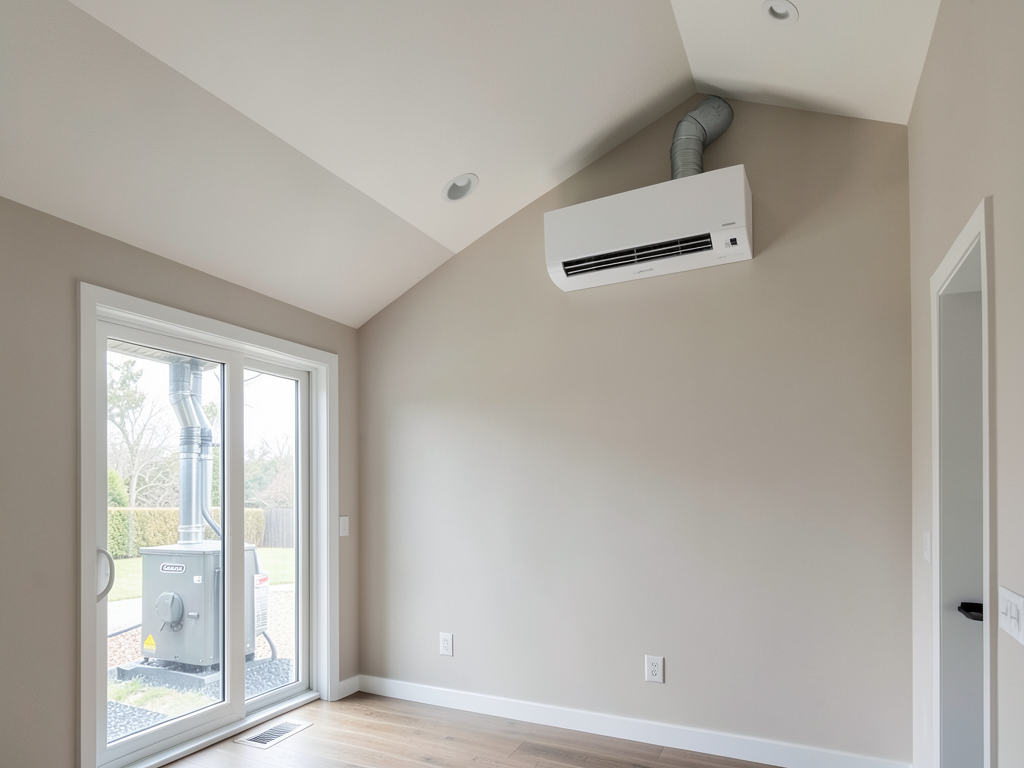
Photo of a ductless mini-split installation in a high ceiling great room showing the indoor unit placement and ceiling height considerations.
Strategic Return Vent Placement and Sizing
Traditional HVAC designs place return vents low on walls but this works against you in high ceiling spaces. The return vent should be positioned to capture the stratified warm air near the ceiling while allowing cool air to settle in the occupied zone.
According to California Title 24 energy standards Section 150.0(h) return air systems must provide adequate circulation for the calculated cubic footage. For a 20-foot ceiling great room this often means upsizing return ducts by 30-40% compared to standard designs. The return should be placed high on the wall or in the ceiling to capture the warmest air before it escapes through the roof. California Title 24 energy standards.
Variable-Speed Air Handlers and Smart Thermostats
Variable-speed air handlers can run at lower speeds for longer periods which improves air mixing without the temperature swings of single-speed units. These systems maintain more consistent temperatures and use less energy over time. Zone Control Systems.
Smart thermostats with remote sensors can be placed at the occupied zone level rather than near the floor. This provides more accurate temperature readings for the space where you actually spend time. Some advanced systems can even control ceiling fan direction automatically based on temperature readings at different heights.
High-Velocity Cooling Systems for Maximum Air Movement
High-velocity systems use small flexible ducts and powerful blowers to create high air movement that can overcome thermal stratification. These systems deliver cooling through small nearly invisible outlets in ceilings or walls.
The key advantage is the high air velocity breaks up temperature layers and delivers cooling to the occupied zone quickly. For 4S Ranch great rooms with unusual ceiling heights or complex layouts high-velocity systems often provide the most effective solution despite higher installation costs.
BTU Requirements for High Volume Spaces
Calculating cooling needs for high ceiling spaces requires accounting for cubic footage rather than just square footage. Standard HVAC calculations assume 8-foot ceilings but great rooms often have 12-20 foot ceilings dramatically increasing the cooling load.
Here’s a comparison of standard versus high ceiling cooling requirements:
| Room Size | Standard 8ft Ceiling | 12ft Ceiling | 16ft Ceiling | 20ft Ceiling |
|---|---|---|---|---|
| 400 sq ft | 10000 BTU | 15000 BTU | 20000 BTU | 25000 BTU |
| 600 sq ft | 15000 BTU | 22500 BTU | 30000 BTU | 37500 BTU |
| 800 sq ft | 20000 BTU | 30000 BTU | 40000 BTU | 50000 BTU |
Additional factors that increase cooling requirements in 4S Ranch include west-facing windows that receive intense afternoon sun dark ceiling colors that absorb heat and the area’s inland heat that can push outdoor temperatures above 100 degrees during heat waves.
Local San Diego Climate Considerations for 4S Ranch
4S Ranch sits in San Diego’s inland climate zone experiencing significantly hotter temperatures than coastal areas. Summer afternoon temperatures regularly exceed 95 degrees creating higher cooling loads than the same space would need in La Jolla or Coronado. Why Salt Air Destroys La Jolla AC Units and How to Protect Yours.
The inland location also means lower humidity levels which actually helps cooling efficiency since dry air transfers heat more effectively than humid air. However the intense sun exposure common in 4S Ranch homes requires careful consideration of window treatments and insulation to reduce solar heat gain. Humidity Issues Indoors.
SDG&E’s Time-of-Use rates make energy efficiency crucial for 4S Ranch homeowners. Running high-capacity cooling systems during peak hours (4-9 PM) can dramatically increase electric bills. This makes high-efficiency equipment with smart controls particularly valuable for managing both comfort and costs.
California’s Title 24 energy standards require specific insulation levels and window performance ratings for new construction. Many 4S Ranch homes were built to these standards but older homes may benefit from insulation upgrades to reduce cooling loads and improve HVAC efficiency.
Window Treatments and Solar Heat Gain Management
Large windows are a hallmark of great room design but can contribute significantly to heat gain. The Solar Heat Gain Coefficient (SHGC) measures how much solar radiation passes through windows. Lower SHGC values mean less heat enters your home.
For 4S Ranch homes we recommend windows with SHGC ratings of 0.25 or lower for west and south-facing glass. Dual-pane windows with low-E coatings can reduce heat gain by 40-60% compared to single-pane glass. Exterior shading devices like overhangs or awnings can provide additional protection during the hottest parts of the day.
Interior window treatments also play a crucial role. Cellular shades with reflective backing can reduce heat gain by up to 80% while still allowing natural light. For great rooms with floor-to-ceiling windows motorized shades that can be programmed to close during peak sun hours offer both convenience and energy savings.
Professional Load Calculations and System Design
Every high ceiling great room requires a professional Manual J load calculation to determine the exact cooling requirements. This calculation considers not just square footage and ceiling height but also insulation levels window orientation local climate data and even the number of occupants.
The calculation produces a detailed report showing the required cooling capacity in BTUs the optimal equipment size and specific duct design requirements. This prevents the common problem of oversized equipment that short-cycles and undersized equipment that runs constantly without achieving comfort.
According to ACCA (Air Conditioning Contractors of America) standards load calculations must be performed by certified technicians using approved software. This ensures compliance with California energy codes and provides the most accurate sizing for your specific space. ACCA Manual J load calculation.
Smart Home Integration for High Ceiling Comfort
Modern smart home systems can dramatically improve comfort in high ceiling spaces by coordinating multiple comfort devices. Smart thermostats can communicate with ceiling fans to automatically adjust fan direction based on temperature readings at different heights.
Whole-house fans can be programmed to run during cooler evening hours to flush out accumulated heat reducing the cooling load on your AC system. Smart vents can direct more airflow to areas that need it most creating a more balanced temperature throughout your home.
For 4S Ranch homeowners with SDG&E’s Time-of-Use rates smart systems can pre-cool your home during off-peak hours and maintain comfort during expensive peak periods. This integration can reduce cooling costs by 15-25% while actually improving comfort levels.
Maintenance Considerations for High Ceiling HVAC Systems
High ceiling HVAC systems require specific maintenance approaches. Ceiling-mounted air handlers and high wall-mounted mini-split units need regular cleaning of filters and coils that may be difficult to access without ladders or special equipment.
The increased air volume in high ceiling spaces means air filters may need more frequent replacement. We recommend checking filters monthly and replacing them when they show signs of dirt accumulation which might be every 30-60 days depending on your home’s dust levels.
Condensate drain lines in high ceiling applications may need additional attention since the increased cooling capacity can produce more condensation. Regular inspection and cleaning of drain lines prevents water damage and maintains system efficiency.
Cost Considerations and ROI for High Ceiling Solutions
High ceiling cooling solutions require higher upfront investment than standard HVAC systems. Ductless mini-splits typically cost $4000-8000 for a single great room while high-velocity systems can run $8000-15000 including installation.
However the improved comfort and energy efficiency often provide good return on investment. High-efficiency systems with SEER2 ratings above 18 can reduce cooling costs by 30-40% compared to standard equipment. Over a 10-year period these savings can offset much of the initial investment.
Many 4S Ranch homeowners find that addressing high ceiling cooling issues also improves overall home comfort reducing hot and cold spots throughout the house. This whole-home improvement often justifies the investment beyond just the great room comfort.
Frequently Asked Questions
Can I just add a bigger air conditioner to cool my high ceiling great room?
Simply upsizing your air conditioner often makes the problem worse. Oversized equipment short-cycles meaning it turns on and off frequently without properly mixing the air or removing humidity. This leaves you with cold spots near vents and warm areas elsewhere. A properly designed system with appropriate air movement is more effective than brute force cooling.
How much does it cost to install a ductless mini-split in a high ceiling great room?
For a typical 4S Ranch great room with 15-20 foot ceilings a ductless mini-split installation costs between $4500-7500 depending on the unit size installation complexity and any necessary electrical upgrades. This includes the outdoor compressor indoor air handler mounting hardware and professional installation by certified technicians.
Will ceiling fans really make a difference in a room with 20-foot ceilings?
Yes but you need the right type of ceiling fan. Fans with blade spans of 72 inches or larger and high CFM ratings can move enough air to break up thermal stratification even in very tall spaces. The key is using the correct fan direction (counterclockwise in summer) and running the fan at higher speeds to create sufficient air movement.
How do I know if my current HVAC system is properly sized for my high ceiling great room?
Signs of improper sizing include the system running constantly without achieving comfort large temperature differences between floor and ceiling and high energy bills. The only way to know for sure is to have a professional Manual J load calculation performed which will show whether your current system meets the actual cooling requirements of your space.
Are there any rebates available for high-efficiency cooling systems in San Diego?
Yes SDG&E offers rebates for high-efficiency HVAC equipment including ductless mini-splits with SEER2 ratings above 16. The California rebate programs also provide incentives for energy-efficient home improvements. These rebates can reduce the cost of new equipment by $300-1000 depending on the specific system and its efficiency ratings.
Call (619) 304-5777 today to schedule your professional load calculation and discover the best HVAC solution for your high ceiling great room. Our certified technicians understand the unique cooling challenges of 4S Ranch homes and can design a system that delivers true comfort where you need it most.
Don’t let another summer pass with an uncomfortably warm great room. Pick up the phone and call (619) 304-5777 before the next heat wave hits. We’ll evaluate your specific space explain all your options and provide a detailed quote with no pressure or hidden fees.
{
“@context”: “https://schema.org”,
“@type”: “BlogPosting”,
“headline”: “The Best HVAC Options for High Ceiling Great Rooms in 4S Ranch”,
“description”: “Discover expert HVAC solutions for high ceiling great rooms in 4S Ranch. Learn about ductless mini-splits, ceiling fans, and proper sizing to beat the San Diego heat.”,
“wordCount”: 2235,
“datePublished”: “2026-04-29T14:52:00.000Z”,
“dateModified”: “2026-04-29T14:52:00.000Z”,
“inLanguage”: “en-US”,
“mainEntityOfPage”: {
“@type”: “WebPage”,
“@id”: “https://elitehvacsandiego.com”
},
“publisher”: {
“@type”: “LocalBusiness”,
“name”: “Elite HVAC San Diego”,
“url”: “https://elitehvacsandiego.com”
},
“author”: {
“@type”: “Organization”,
“name”: “Elite HVAC San Diego”,
“url”: “https://elitehvacsandiego.com”
},
“image”: {
“@type”: “ImageObject”,
“url”: “https://elitehvacsandiego.com/wp-content/uploads/2026/03/the-best-hvac-options-for-high-ceiling-great-rooms-1.png”
}
}
{
“@context”: “https://schema.org”,
“@type”: “HVACBusiness”,
“name”: “Elite HVAC San Diego”,
“url”: “https://elitehvacsandiego.com”,
“address”: {
“@type”: “PostalAddress”,
“addressLocality”: “San Diego”
},
“areaServed”: {
“@type”: “City”,
“name”: “San Diego”
}
}
{
“@context”: “https://schema.org”,
“@type”: “FAQPage”,
“mainEntity”: [
{
“@type”: “Question”,
“name”: “Can I just add a bigger air conditioner to cool my high ceiling great room?”,
“acceptedAnswer”: {
“@type”: “Answer”,
“text”: “Simply upsizing your air conditioner often makes the problem worse. Oversized equipment short-cycles meaning it turns on and off frequently without properly mixing the air or removing humidity. This leaves you with cold spots near vents and warm areas elsewhere. A properly designed system with appropriate air movement is more effective than brute force cooling.”
}
},
{
“@type”: “Question”,
“name”: “How much does it cost to install a ductless mini-split in a high ceiling great room?”,
“acceptedAnswer”: {
“@type”: “Answer”,
“text”: “For a typical 4S Ranch great room with 15-20 foot ceilings a ductless mini-split installation costs between $4500-7500 depending on the unit size installation complexity and any necessary electrical upgrades. This includes the outdoor compressor indoor air handler mounting hardware and professional installation by certified technicians.”
}
},
{
“@type”: “Question”,
“name”: “Will ceiling fans really make a difference in a room with 20-foot ceilings?”,
“acceptedAnswer”: {
“@type”: “Answer”,
“text”: “Yes but you need the right type of ceiling fan. Fans with blade spans of 72 inches or larger and high CFM ratings can move enough air to break up thermal stratification even in very tall spaces. The key is using the correct fan direction (counterclockwise in summer) and running the fan at higher speeds to create sufficient air movement.”
}
},
{
“@type”: “Question”,
“name”: “How do I know if my current HVAC system is properly sized for my high ceiling great room?”,
“acceptedAnswer”: {
“@type”: “Answer”,
“text”: “Signs of improper sizing include the system running constantly without achieving comfort large temperature differences between floor and ceiling and high energy bills. The only way to know for sure is to have a professional Manual J load calculation performed which will show whether your current system meets the actual cooling requirements of your space.”
}
},
{
“@type”: “Question”,
“name”: “Are there any rebates available for high-efficiency cooling systems in San Diego?”,
“acceptedAnswer”: {
“@type”: “Answer”,
“text”: “Yes SDG&E offers rebates for high-efficiency HVAC equipment including ductless mini-splits with SEER2 ratings above 16. The California rebate programs also provide incentives for energy-efficient home improvements. These rebates can reduce the cost of new equipment by $300-1000 depending on the specific system and its efficiency ratings.”
}
}
]
}
{
“@context”: “https://schema.org”,
“@type”: “BreadcrumbList”,
“itemListElement”: [
{
“@type”: “ListItem”,
“position”: 1,
“name”: “Home”,
“item”: “https://elitehvacsandiego.com”
},
{
“@type”: “ListItem”,
“position”: 2,
“name”: “Blog”,
“item”: “https://elitehvacsandiego.com/blog”
},
{
“@type”: “ListItem”,
“position”: 3,
“name”: “The Best HVAC Options for High Ceiling Great Rooms in 4S Ranch”
}
]
}
{
“@context”: “https://schema.org”,
“@type”: “Service”,
“serviceType”: “HVAC”,
“provider”: {
“@type”: “LocalBusiness”,
“name”: “Elite HVAC San Diego”,
“url”: “https://elitehvacsandiego.com”
},
“areaServed”: {
“@type”: “City”,
“name”: “San Diego”
},
“description”: “Discover expert HVAC solutions for high ceiling great rooms in 4S Ranch. Learn about ductless mini-splits, ceiling fans, and proper sizing to beat the San Diego heat.”
}